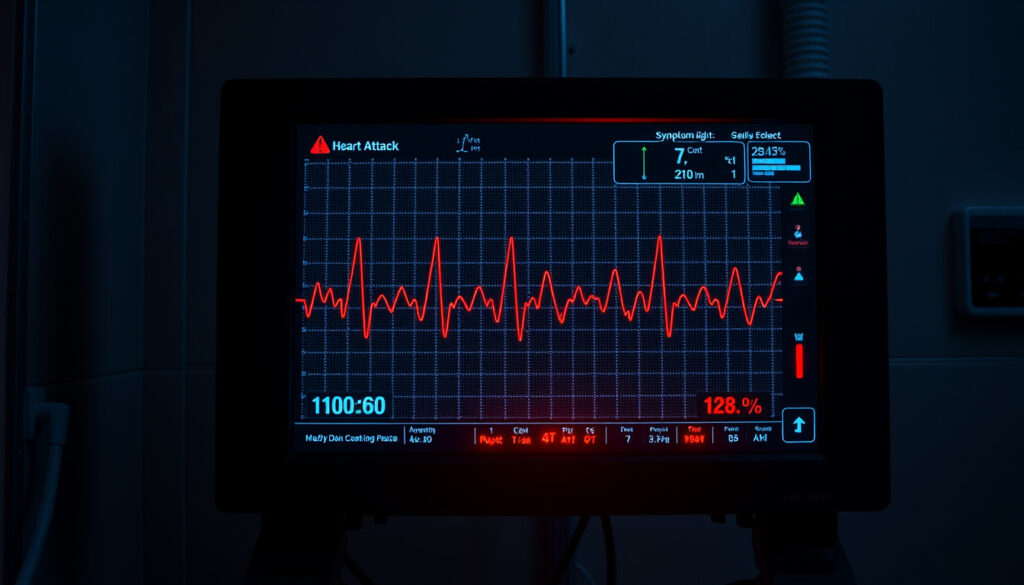
Signs of a Heart Attack: Symptoms & Early Warnings
When something feels off — a tightness in the chest that won’t quit, breathlessness after climbing stairs you’ve done a thousand times — it’s easy to talk yourself out of worry. But heart disease kills more women in the US than any other condition, and some of its warning signs arrive weeks before a crisis. Understanding what your body may be signaling could be the difference between acting in time and missing a window that doctors call the golden hour.
Primary Symptom: Chest pain or discomfort · Spreading Pain: To arm, neck, jaw, back · Emergency Call: Dial 999 or 112 immediately · Common in Women: Shortness of breath, nausea · Golden Hour: First hour critical
Quick snapshot
- Chest pain is the most common symptom across all patients (American Heart Association)
- A heart attack strikes someone about every 40 seconds in the US (American Heart Association)
- Exact pre-signs vary by individual — no universal sequence fits everyone
- The precise timeline between early warnings and actual event differs case by case
- 95% of women experience prodromal symptoms weeks or months before a cardiac event (Manhattan Cardiology)
- Research published in 2018 linked silent heart attacks to a 35% increase in heart failure risk (Franciscan Health)
- Call emergency services immediately — do not drive yourself to hospital (Cleveland Clinic)
- Silent heart attacks cause the same damage as noticeable ones but often go undetected for weeks or months (Cleveland Clinic)
Key emergency numbers and symptom thresholds from major cardiac organisations are summarised in the table below.
| Label | Value |
|---|---|
| Immediate Action | Dial 999 or 112 |
| Top Symptom | Chest tightness |
| Duration Concern | Lasts more than minutes |
| Golden Hour | Act within 60 minutes |
What are the first signs of having a heart attack?
Chest discomfort is the signal most people expect, and it remains the most reported symptom. According to the American Heart Association, the chest pain or pressure can feel like squeezing, fullness, or an uncomfortable pressure sitting in the centre of the chest that lasts more than a few minutes or comes and goes.
Chest discomfort
The sensation varies: some describe it as a crushing weight; others feel a tight band around their chest. What distinguishes heart-related chest pain from, say, heartburn is that it often spreads to other parts of the body and does not ease with antacids or changing position.
Pain in arms or jaw
Pain that radiates outward from the chest toward the left arm is a classic red flag, though the right arm or both arms can be affected. The Dignity Health notes that pain in the neck, jaw, shoulder, upper back, or abdomen also frequently occurs in women and is easy to dismiss as muscle strain or a stiff neck.
Shortness of breath may accompany chest discomfort or appear on its own. The Harvard Health reports that non-classic symptoms like breathlessness are more common in women and older adults, meaning that someone expecting crushing chest pain might miss a quieter warning.
The implication: waiting for the dramatic scene from television — someone clutching their chest and collapsing — risks missing the actual early signals your body sends. Women are particularly likely to experience subtle changes that don’t fit that stereotype.
What are a mini heart attack symptoms?
A mini heart attack, clinically referred to as a silent myocardial infarction (SMI), produces milder symptoms that are often mistaken for something less urgent. The Cleveland Clinic describes how silent heart attack symptoms can mimic indigestion, a sore muscle, jaw ache, or flu-like fatigue — complaints easy to rationalise away.
Subtle indicators
Mild chest discomfort, unusual fatigue, or a feeling of heartburn that lingers may be the only clues. Go Red for Women reports that silent heart attacks can also present with cold sweats, lightheadedness, or nausea without the dramatic crushing sensation most people anticipate.
Silent variants
The danger with silent variants is that damage occurs without the patient seeking help. According to Franciscan Health, silent heart attacks cause the same scarring to heart tissue as their more obvious counterparts, yet they are often undetected for weeks or months, allowing complications to develop unchecked.
What this means: a person who brushes off a bout of indigestion or attributes lingering tiredness to busy schedules may be living with cardiac damage they do not know about. The Journal of the American College of Cardiology found that silent heart attacks increase the risk of heart failure by 35% compared to people without evidence of a prior event.
What are the 5 P’s of a heart attack?
The 5 P’s serve as a mnemonic to help people recognise heart attack symptoms quickly, especially in situations where anxiety might scramble thinking. Pain is the obvious anchor, but the full list covers additional signs that can appear alongside or instead of chest pressure.
- Pallor — sudden paleness or a greyish tinge to the skin
- Perspiration — cold, clammy sweats unrelated to heat or exercise
- Pounding heart — palpitations or a sensation that the heart is racing or irregular
- Pain — in the chest, arm, jaw, neck, shoulder, back, or abdomen
- Progressive weakness — unusual fatigue that worsens with minimal activity
The pattern: most people focus only on Pain, but the supporting signs — particularly Pallor and Progression weakness — often appear first and can be the earliest clue that something is wrong. Healthcare professionals use this framework because it works across genders, though women’s experience frequently emphasises fatigue and shortness of breath alongside the pain.
What are the 7 warning signs before a heart attack?
Prodromal symptoms — early warnings that emerge weeks or months before an acute event — are more commonly reported by women than by men. Research from Manhattan Cardiology suggests that 95% of women experience some form of early signal in the lead-up to their cardiac event.
A month before signs
The Ochsner Health Blog lists nine early warnings that can appear weeks before a heart attack:
- Unusual fatigue or extreme exhaustion without clear cause
- Indigestion, nausea, or upset stomach mimicking gastrointestinal complaints
- Dizziness or lightheadedness, particularly in women
- Shortness of breath with or without accompanying chest pain
- Pain in the back, neck, jaw, stomach, or arms — more gradual in onset in women
- Swelling in legs, ankles, or feet indicating fluid retention linked to heart strain
- Irregular heartbeat or palpitations
- Cold sweats unrelated to temperature or physical exertion
- Sleep disturbances including difficulty falling or staying asleep
6 signs variant
A condensed list focusing on the most clinically significant early warnings includes unusual fatigue, shortness of breath, upper back pressure described as a squeezing rope, arm or jaw discomfort, nausea, and palpitations. These overlap substantially with the month-before signs, reinforcing that the body rarely gives only one signal.
The catch: because these symptoms are vague and common to dozens of benign conditions, they are easy to dismiss. Women, in particular, may attribute persistent exhaustion to work stress or sleep disruption rather than reading it as a warning their heart is struggling.
What is the golden hour in a heart attack?
The golden hour refers to the critical 60-minute window following the onset of heart attack symptoms during which prompt medical intervention most effectively limits permanent damage to heart muscle. Every minute matters: the longer blood flow remains blocked, the more tissue dies.
Why first hour matters
When a coronary artery becomes blocked, the heart muscle supplied by that artery begins to die within minutes. Emergency treatment — whether clot-busting medication or catheter-based intervention — works best when delivered as soon as possible after symptoms begin. Waiting, hoping symptoms will pass, or trying to drive to a hospital without calling ahead all waste time that cannot be recovered.
Calling emergency services rather than arranging private transport means paramedics can begin assessment and treatment en route, shaving precious minutes off the total ischaemia time. Patients who reach hospital by ambulance consistently receive faster treatment than those who self-present.
The implication: hesitation is not a neutral choice. Delaying action during a heart attack trades a survivable window for irreversible damage, and the outcomes for those who wait are materially worse than for those who call immediately.
Understanding what doctors confirm and what remains uncertain
Several aspects of heart attack warning signs are well established by clinical evidence, while others depend on individual variation that science has yet to fully map.
Confirmed facts
- Chest pain or pressure is the most commonly reported heart attack symptom across patient groups
- Symptoms that last more than a few minutes and do not resolve with rest warrant immediate emergency evaluation
- Women experience higher rates of subtle symptoms — fatigue, nausea, back pain — that can be misattributed to other conditions
- Silent heart attacks cause measurable damage to heart muscle, as confirmed by imaging studies
What remains unclear
- The precise timeline between early prodromal signs and an acute event varies between individuals
- Whether specific symptom combinations reliably predict severity or outcome has not been conclusively established
- The relationship between high cholesterol and acute symptom onset is understood as an indirect risk factor rather than a direct trigger
According to the American Heart Association, women’s most common symptom is chest pain or discomfort, but upper back pressure and subtle fatigue are also frequently reported.
The Cleveland Clinic notes that silent heart attack symptoms mimic flu, sore muscles, jaw ache, or indigestion — warnings easy to rationalise away.
The paradox: the symptoms most likely to be dismissed as minor are precisely those most common in women, who also bear the disproportionate burden of heart disease as the leading cause of death for women in the US. This mismatch between lived experience and medical urgency deserves far more attention than it currently receives.
Heart disease kills more women in the US than any other condition, yet its warning signs — particularly the subtle ones appearing weeks earlier — are chronically underrecognised. The difference between survival with full recovery and long-term heart failure often comes down to whether someone acts within that first hour.
Related reading: Is Coffee Good for You? Benefits, Risks & Research · How to Make Friends: Steps for Adults & Introverts
While classic chest pain grabs attention, six signs a month before often emerge quietly in women, offering a critical early alert to impending cardiac risk.
Frequently asked questions
What causes a heart attack?
Most heart attacks result from coronary artery disease, where a blockage — typically a blood clot forming on top of fatty deposits called plaque — stops blood from reaching heart muscle. The heart muscle then begins to die without oxygenated blood, which is why restoring flow quickly is so critical.
What is heart attack treatment?
Treatment aims to restore blood flow to the heart as rapidly as possible. This may involve medication to dissolve clots, a catheter-based procedure to open the blocked artery (percutaneous coronary intervention), or bypass surgery in more complex cases. Rehabilitation and long-term medication follow to reduce the risk of another event.
What are pre heart attack symptoms in females?
Women frequently experience unusual fatigue, shortness of breath, nausea or indigestion, upper back pressure, jaw or neck pain, and arm discomfort in the weeks leading up to a heart attack. These prodromal symptoms are widely reported but often attributed to stress, poor sleep, or ordinary illness.
What are 6 signs of heart attack a month before?
Common early warnings include persistent fatigue, shortness of breath, upper back or abdominal pressure, arm or jaw discomfort, nausea, and palpitations. Research from Ochsner Health identifies a broader set of nine signs that can appear a month before, including swelling in the legs, cold sweats, and sleep disturbances.
What are 3 warning signs of a heart attack in females?
Three of the most underrecognised early warnings in women are unusual fatigue persisting even after rest, shortness of breath with minimal exertion, and upper back pressure that feels like a tight rope around the torso. These three appear consistently across clinical reports and are frequently missed because they do not fit the classic chest-clutching picture.
What are 5 warning signs of a heart attack?
Chest discomfort or pain, spreading pain to the arm or jaw, shortness of breath, cold sweats, and sudden fatigue are five core warning signs. The Dignity Health adds that nausea, upper back pressure, and neck or shoulder discomfort are also common, particularly in women.
What is a silent heart attack?
A silent heart attack, or silent myocardial infarction (SMI), produces mild or atypical symptoms that are easily mistaken for other conditions. The Cleveland Clinic reports that symptoms may include mild chest discomfort, fatigue, heartburn, or jaw ache. Like a conventional heart attack, it causes real damage to heart muscle — but the event often goes unrecognised for weeks or months.
For women who have been dismissing persistent fatigue or attributing indigestion to a demanding week, the choice is straightforward: treat these signals as worth investigating. Scheduling a cardiac evaluation — particularly if multiple prodromal signs are present — takes hours. Waiting through a genuine heart attack costs far more.
More related posts
 What Time Is Evening? Start, End Times & Cultural Guide
 Flights to Queenstown NZ: Routes, Airlines & Tips
 156 cm in Feet – Exact Conversion to 5 Ft 1.42 In
 Tauranga Airport Flights Cancelled: Current Status
 Time in England Now: Current UK Time & Clock Changes 2026
 One Punch Man Manga: Read Online, Volumes & Updates
 Buy XRP in New Zealand: Step-by-Step Guide & Tax (2026)
 James Bond Movies in Order: Chronological Guide (1962–2021)
