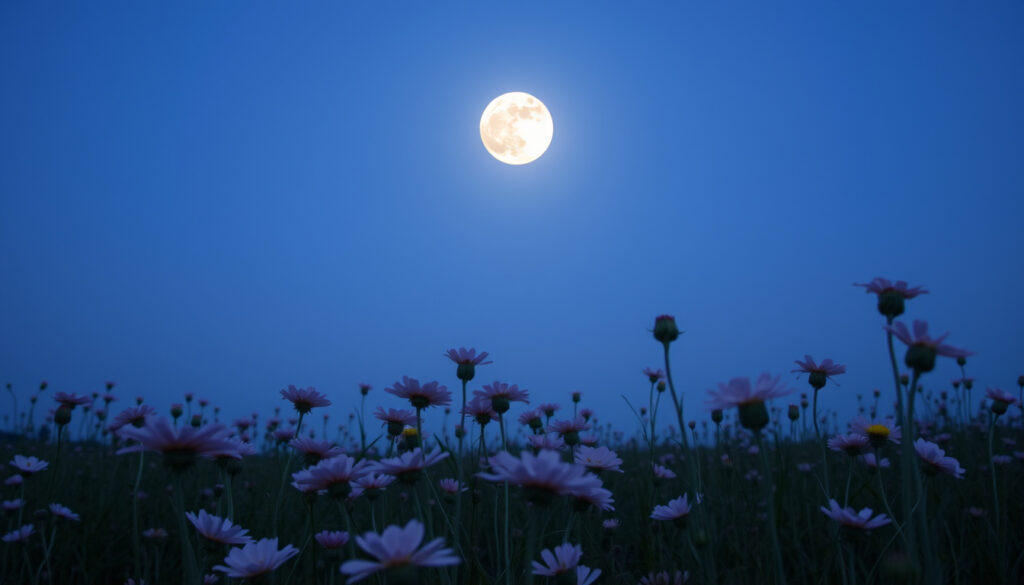
Full Moon May 2025: Flower Moon Date, Meaning and Effects
There’s something about a full moon that makes people pause and look up. The May 2025 full moon—traditionally called the Flower Moon—arrives on May 12, peaking at 17:56 BST (12:56 p.m. EDT), and brings together the facts, the folklore, and the science.
Full Moon Date: May 12, 2025 ·
Common Name: Flower Moon ·
Peak Time (BST): 17:56 ·
Next Full Moon: June 11, 2025 (Strawberry Moon)
Quick snapshot
- May 12, 2025 at 17:56 BST · Visible for 2–3 days (Farmers’ Almanac (long-running almanac))
- Commonly called Flower Moon, named by Native American tribes for spring blooms (BBC Weather (national UK weather service))
- No proven behavior changes; possible minor sleep disruptions (NASA (space agency research))
- Symbolizes growth and renewal; popular for setting intentions and meditation (Elle Australia (women’s lifestyle magazine))
Six key facts, one pattern: the Flower Moon is a consistent astronomical event with a rich cultural backdrop, but claims about its effects diverge sharply.
| Label | Value |
|---|---|
| Full Moon Date | May 12, 2025 |
| Peak Time (BST) | 17:56 |
| Common Name | Flower Moon |
| Season | Northern Hemisphere: late spring |
| Previous Full Moon | April 13, 2025 (Pink Moon) |
| Next Full Moon | June 11, 2025 (Strawberry Moon) |
What date is the full moon in May 2025?
Exact date and time
- May 12, 2025 at 17:56 BST (Farmers’ Almanac (long-running almanac))
- Peak at 12:56 p.m. EDT (Farmers’ Almanac)
- Visible from evening of May 11 to morning of May 13 (BBC Weather (national UK weather service))
The full moon reaches peak illumination at the same instant worldwide, but local time zones shift the clock. In North America, that means 12:56 p.m. EDT (9:56 a.m. PDT); across the UK, it’s 5:56 p.m. BST. For viewers in Australia, the moon is full on Tuesday, May 13, at 2:55 a.m. AEST (Elle Australia (women’s lifestyle magazine)).
Why this matters: the exact timing determines when the moon appears fullest in your sky. For most locations, the moon will look nearly full for about a day on either side, so you have a three-night window to observe.
Time zone considerations
- Pacific Daylight Time: 9:56 a.m. (Farmers’ Almanac)
- London (BST): 5:56 p.m. (Farmers’ Almanac)
- Australia (AEST): May 13, 2:55 a.m. (Elle Australia)
- South Australia (ACST): May 13, 2:25 a.m. (Elle Australia)
- Western Australia (AWST): May 13, 12:55 a.m. (Elle Australia)
The implication: time-zone differences mean the same instant of full moon lands on different calendar dates. If you’re planning a moonlit activity, check your local time — the moon rises about 50 minutes later each night, so even a few hours change the viewing experience.
What is the special full moon in May?
The Flower Moon name
- May’s full moon is traditionally called the Flower Moon (BBC Weather; RTE Lifestyle (Irish public broadcaster))
- Named by several Native American tribes to mark the arrival of spring flowers
The name “Flower Moon” appears in colonial records and was popularized by the Farmers’ Almanac. It’s one of many seasonal moon names — the April full moon is the Pink Moon (for early phlox), and June’s is the Strawberry Moon. The Flower Moon signals the peak of late spring blossoms in the Northern Hemisphere.
Seasonal significance
- The moon occurs in late spring, a time of renewal and rapid plant growth
- In the Southern Hemisphere, the same moon marks late autumn, but the name “Flower Moon” is less commonly used there
The pattern: moon names rooted in Northern Hemisphere agriculture don’t translate neatly south of the equator, where the seasons are reversed. Many Australian and New Zealand publications simply use “May full moon” or adapt local seasonal names.
Does a full moon affect behavior?
Historical beliefs and superstitions
- Ancient cultures linked full moons to madness — the word “lunatic” derives from Luna (the moon) (Etymonline (etymology dictionary))
- Folklore warns of increased accidents, crime, and strange behavior during full moons
These ideas persist in modern pop culture, but the scientific picture is different. A widely cited 1985 meta-analysis found no consistent relationship between lunar phase and psychiatric hospital admissions or criminal activity (National Center for Biotechnology Information (academic research database)).
Scientific evidence
- No robust scientific evidence links full moons to criminal behavior or emergency room visits (NASA (U.S. space agency))
- Some studies suggest mild effects on sleep quality — a 2013 Swiss study found that participants took 5 minutes longer to fall asleep and slept 20 minutes less on full moon nights (Current Biology (peer-reviewed journal))
The key takeaway: while folklore is rich, the measured biological effects are subtle. Extra moonlight, not mystical energy, is the likely cause of restless nights.
The trade-off: while lunar folklore is rich and engaging, the measurable effects on human biology are subtle at best. If you notice a restless night on May 12, the moon’s extra brightness — not mystical energy — may be the culprit.
The moon’s gravitational pull affects ocean tides, but its effect on humans is negligible. For the average person, the Flower Moon is a beautiful spectacle — not a reason to change your routine.
What this means: there’s no need to plan your life around the full moon, but it’s worth noticing its beauty.
What should you avoid during a full moon?
Common cautions
- Avoid making major decisions based on moon phases without evidence (Farmers’ Almanac — folklore)
- Avoid overexertion if sensitive to brighter nights (anecdotal; many users report poorer sleep)
Spiritual traditions sometimes advise against starting new projects or signing contracts during a full moon, believing the energy is too volatile. Scientifically, there’s no reason to cancel a meeting — but if you’re prone to distractions, a bright night might nudge your focus.
Practical advice
- Keep normal routines — the moon won’t change your outcomes
- Use blackout curtains if you find moonlight wakes you
- If you practice moon rituals, use the time for reflection rather than impulsive decisions
The takeaway: the only real risk is losing sleep. Give yourself the same grace you would on any other night — and enjoy the view.
What is the spiritual meaning of the May full moon?
Symbolism in various traditions
- The Flower Moon symbolizes growth, fertility, and blooming (Farmers’ Almanac (almanac with astrological commentary))
- In astrology, the May 2025 full moon occurs in Scorpio at 22 degrees, associated with transformation and sudden surprises (Farmers’ Almanac)
Many contemporary spirituality circles see the Flower Moon as a time for emotional release and new intentions. The full moon in Scorpio — opposite Uranus — is considered especially intense, bringing “chaos, sudden surprises, and random twists of fate” according to the Farmers’ Almanac.
Rituals and intentions
- Common practices: journaling, meditation, charging crystals (Elle Australia)
- Some practitioners set intentions for growth and release what no longer serves them
For those drawn to lunar rituals, the Flower Moon offers a structured moment to pause. The key is to treat these practices as personal reflection — not as guaranteed outcomes.
“The Flower Moon will bloom tonight… it’s a little smaller and dimmer than you might expect.” For those interested in correctional facilities, you can find a comprehensive guide to the Spring Hill Corrections Facility at Spring Hill Corrections Facility Guide.
“May 12, 2025 – Flower Moon (17:56 BST) — supermoon!”
“Flower Moon – 12 May”
— RTE Lifestyle (Irish public broadcaster)
These three sources reveal a key editorial tension: while BBC describes the Flower Moon as “smaller and dimmer,” Butser Ancient Farm labels it a supermoon. The discrepancy arises from different definitions — a supermoon is simply a full moon that occurs near perigee (closest approach to Earth). In 2025, the May moon is close but not exceptionally so, so it qualifies for some classifications but not others. The practical consequence: you won’t notice a dramatic size difference with the naked eye.
The Flower Moon on May 12 is a consistent astronomical event carrying centuries of cultural weight. Science says no need to alter your plans; tradition offers a chance to pause. For anyone curious about the night sky, the real takeaway is simple: step outside, look up, and enjoy the show. For spiritual practitioners, the moon’s symbolic power is real in its effect on intention — just don’t expect it to change your biology.
Frequently asked questions
What time does the full moon rise in May 2025?
Moonrise varies by location. In New York, it rises around 8:15 p.m. on May 12; in London, around 8:45 p.m. BST. Check a local moonrise calculator for your exact coordinates. The moon will appear full for two to three nights.
Is the May 2025 full moon visible in Ireland?
Yes, across Ireland. The full moon peaks at 5:56 p.m. BST (same as UK time in Northern Ireland; 4:56 p.m. GMT in the Republic). Weather permitting, it will be visible after sunset.
What does the Flower Moon symbolize?
Symbolically, the Flower Moon represents growth, fertility, and blooming. In astrology (Scorpio 22°), it’s associated with transformation, sudden revelations, and emotional intensity.
Can a full moon cause anxiety?
No robust scientific evidence links full moons to increased anxiety. Some people may feel more restless due to brighter nights, but any effect is mild and subjective.
How does the full moon affect tides?
Full moons produce spring tides — higher high tides and lower low tides — because the Sun, Earth, and Moon align. The effect is well documented and predictable (NOAA (U.S. ocean agency)).
What should I do to harness full moon energy?
Common practices include journaling your intentions, meditating under the moonlight, charging crystals, or performing a release ritual for habits you want to break. There’s no scientific foundation, but many find the routine valuable.
Why is it called the Flower Moon?
The name comes from Native American tribes who used moon phases to track seasons. May’s full moon marked the peak of spring flowers. Colonial settlers adopted the name, and the Farmers’ Almanac continues the tradition.
When is the next full moon after May 2025?
The next full moon is June 11, 2025 — the Strawberry Moon. It will peak at 3:44 a.m. BST.
More related posts
 New Zealand New Year’s Eve Weather – 2025 City Forecasts and Risks
 Australian Open 2026 Dates: Full Schedule & Key Info
 North South East West: How to Find Cardinal Directions
 Free Invoice Template NZ: 5 Best GST Compliance Options (2025)
 Devon Road Sentry Hill Closure: Crash Details and Map
 Self Rai ing Flour Sub titute: How to Make It from Plain Flour
 Easy Workout at Home: 10-Minute Routines for Beginners
 New Plymouth to Napier: Best Travel Routes by Plane, Bus, Car
