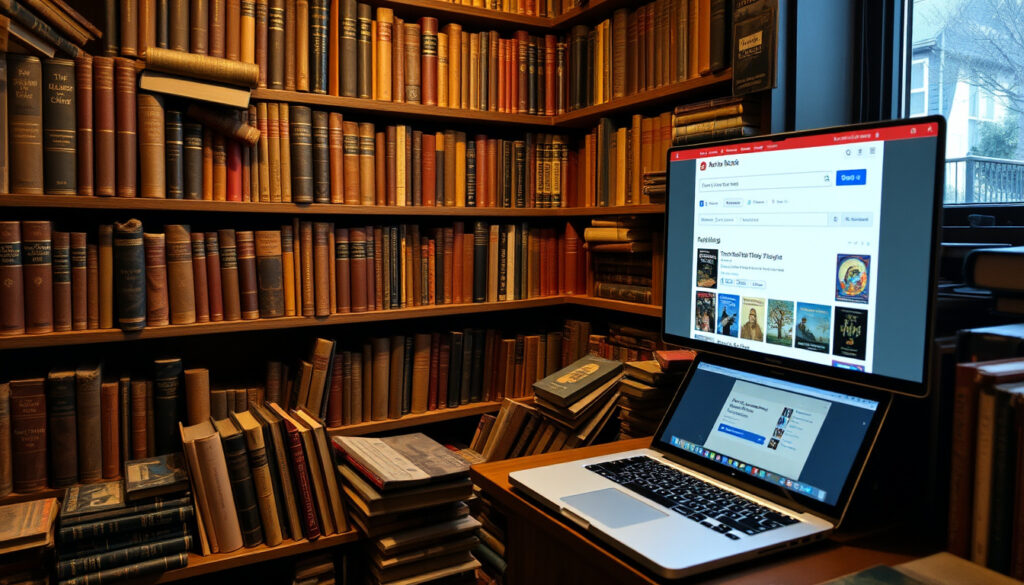
Where to Find Hard to Find Books Online & in NZ
Anyone who has spent an evening hunting for an out-of-print favourite knows the mix of hope and frustration. A book you read once, remembered, and then watched vanish from every listings page — but good news: there are more ways to track down hard to find books than ever, from global aggregators to independent stores that have held on for decades.
Booksellers on BookFinder: 100,000+ ·
Years of Hard to Find Books store (Auckland): 37 ·
Curated list size on Hard to Find Books: 50
Quick snapshot
- BookFinder compiles offers from over 100,000 booksellers (BookFinder.com)
- Hard to Find Books store in Auckland has been open for 37 years (AbeBooks seller profile)
- Project Gutenberg offers over 60,000 free ebooks (Project Gutenberg)
- Whether Hard to Find Books store in Auckland will close permanently
- How many rare books are truly findable online
- The long-term future of physical rare book stores globally
- Hard to Find Books store opened c. 1988 in Onehunga, Auckland (AbeBooks seller profile)
- Faced a closure threat in 2017, saved by public campaign (RNZ article)
- Again faced closure in 2025 (RNZ article)
- More rare book inventories moving entirely online
- Growth of digitisation via Internet Archive and libraries
- Community-sourced tips gaining traction on Reddit and forums
Four key numbers tell the story of this guide — each one a different kind of source for hard to find books.
| Metric | Value |
|---|---|
| Booksellers on BookFinder | 100,000+ |
| Years of Hard to Find Books store (Auckland) | 37 |
| Curated list size on Hard to Find Books | 50 |
| Out of print books available on WorldCat | Hundreds of millions of catalog records |
Where can I find hard to find books online?
What are the best online marketplaces for rare books?
The first place most searchers land is a marketplace aggregator. These platforms don’t own the books — they compile listings from thousands of independent sellers worldwide.
Aggregators offer breadth, but the buyer loses the personal curation a specialist shop provides. For a rare title, the price difference between two listings on the same site can be 10×.
| Platform | Type | Coverage | Best Use |
|---|---|---|---|
| BookFinder | Aggregator | 100,000+ sellers | Price comparison across many dealers |
| AbeBooks | Specialist network | Thousands of rare book dealers | Rare and collectible titles |
| Amazon | General marketplace | Large but variable | Mass market used books |
| eBay | Auction/listing | Variable | Finding niche titles through auctions |
| Alibris | Aggregator | Large selection | Used and out-of-print books |
How to use BookFinder to compare prices?
BookFinder lets you search by ISBN, title, or author and returns prices from every major seller side by side. Shipping costs are listed separately, so for a New Zealand buyer the total can vary by $20 or more between sellers.
- Identify the book’s exact ISBN or title.
- Go to BookFinder.com and enter the search.
- Filter by condition and price range.
- Compare shipping costs from each seller.
- Check seller ratings and return policies.
- Complete the purchase.
A MetaFilter discussion recommends checking Booko NZ — a local bookshop aggregator that shows prices with shipping to New Zealand (Ask MetaFilter community discussion).
The implication: BookFinder saves time by centralising the search, but the savvy buyer still needs to factor in shipping currency and condition notes.
How to find out of print books?
What are out of print books?
An out-of-print book is no longer published by its original publisher. It may still exist in used copies, library holdings, or digital scans — but the publisher won’t print more. That is what makes it “hard to find.”
Which databases track out of print titles?
- WorldCat — the global library catalog with hundreds of millions of records; shows which libraries hold a copy
- Internet Archive — digitises many out-of-print works and offers free borrowing
- Google Books — often has previews or full scans of out-of-print academic titles
- Specialised dealers like Hard to Find Books maintain out-of-print stock from Auckland and Dunedin (AbeBooks seller profile)
WorldCat and Internet Archive together represent the largest free databases of out-of-print books. For a New Zealand user, the local library’s WorldCat listing can eliminate international shipping entirely.
Where can I get hard to find books for free?
Are there legal free sources for rare books?
Yes, but with a major caveat: free sources only work for books whose copyright has expired. Modern rare books usually still require purchase.
- Project Gutenberg — over 70,000 free ebooks in the public domain (Project Gutenberg official site)
- Internet Archive — millions of free texts including out-of-copyright and out-of-print works
- Google Books — limited previews, sometimes full copies of older academic titles
What is Give a Little and how does it help?
Give a Little is a New Zealand donation platform. The Hard to Find Books store has used it for fundraising during closure threats. It does not sell books — it supports the store’s survival (RNZ article).
The catch: free access is largely limited to pre-1928 works in the US. For a 1970s out-of-print novel, the digital copy likely does not exist legally — you will need a secondhand copy.
Where to find hard to find books in New Zealand?
Which bookstores in New Zealand specialise in rare books?
New Zealand has a small but active trade in antique and rare books. The most notable player is Hard to Find Books, which operates both physical shops and a large online presence.
Hard to Find Books describes itself as the largest quality secondhand and antiquarian bookdealer in New Zealand (AbeBooks seller profile for Hard to Find Books NZ (Internet) Ltd.). It has been under the same family management since 1983 and has been online since 1997.
The store has two locations: a Dunedin shop at 20 Dowling Street and an Auckland shop at 2-8 St Benedicts Street, Eden Terrace (AbeBooks seller profile). All internet-listed stock is kept at the Dunedin location.
- Hard to Find Books — Auckland and Dunedin, hardtofind.co.nz (Hard To Find Books official site)
- Book Hero — New Zealand’s online book store with a huge range ready to ship overnight from Auckland (Book Hero)
- Hard To Find Secondhand Bookshop (Dunedin) — known for a huge range and a strong New Zealand literature section (Tripadvisor reviews)
“We are the largest quality secondhand and antiquarian bookdealer in New Zealand.” — AbeBooks seller profile for Hard to Find Books (AbeBooks seller profile)
How to visit Hard to Find Books in Auckland?
The Auckland shop is at 2-8 St Benedicts Street in Eden Terrace. It has operated for 37 years and faced closure threats in 2017 and again in 2025 (RNZ article). For those unable to visit in person, the store’s entire internet-listed stock can be browsed online and shipped from Dunedin.
“After 37 years, we are facing our toughest challenge yet,” the owner told RNZ. (RNZ article)
For assistance finding a specific book for New Zealand delivery, you can email the store at books@hardtofind.co.nz (AbeBooks seller profile).
Hard to Find Books is the closest thing New Zealand has to a national rare book institution. Its survival — through two closure threats — matters for collectors and casual readers alike because it maintains a local alternative to shipping from overseas.
What are the best strategies for finding rare and collectible books?
How to weigh online vs. physical stores?
Online marketplaces offer speed and breadth. Physical stores offer curation and expertise. A serious collector uses both.
Upsides
- Online: Wide selection, 24/7 access, price comparison
- Physical: Curation, expert advice, can inspect before buying
Downsides
- Online: Cannot inspect condition, shipping costs, risk of misdescription
- Physical: Limited stock, restricted hours, may not have online inventory
- Online first — use BookFinder and AbeBooks for initial price discovery
- Then local — check Hard to Find Books and Book Hero for local stock
- Community tips — Reddit’s r/books community shares personal strategies for obscure titles through persistent searching and local bookshops
For more reading recommendations, see our guide on Best Books for Emotional Intelligence.
Should you use auction houses or estate sales?
Auction houses like Christies and Sothebys sell rare books but typically at high prices. Estate sales can produce unexpected finds for a fraction of the price. The International League of Antiquarian Booksellers (ILAB) provides a directory of trusted dealers worldwide.
The trade-off: estate sales require patience and luck. BookFinder’s broad network saves time but you pay a premium for convenience.
What does the future hold for hard to find books?
Independent rare book stores like Hard to Find Books in Auckland survive on a mix of loyal local customers and online orders. The store’s 2025 closure threat is part of a broader pattern: rising rents, online competition, and declining walk-in traffic have pushed many antiquarian shops to the edge. For a country like New Zealand, where international shipping costs can exceed the price of the book itself, losing that local option would leave collectors reliant on overseas sellers. The choice for New Zealand readers is clear: visit the shop, order online from hardtofind.co.nz, or watch the local option disappear.
If you enjoyed this, check out A Good Girl’s Guide to Murder.
Frequently asked questions
Are hard to find books always valuable?
Not necessarily. “Hard to find” means scarce in the market. Value depends on condition, edition, demand, and rarity. A common book that is simply out of stock may not be valuable.
How do I know if a book is rare?
Check WorldCat for how many libraries hold a copy, and search completed sales on eBay or AbeBooks to see how often it trades. A book with fewer than 10 library holdings and few recent sales is likely rare.
What is the difference between out-of-print and rare?
Out-of-print means the publisher no longer prints it. Rare means the book is difficult to find in the market — it can be out-of-print or simply in limited supply.
Can I sell hard to find books online?
Yes. AbeBooks, eBay, Amazon, and specialist platforms like Biblio allow individuals to list books. Condition grading and accurate descriptions are essential for trust.
How do I get a book appraised?
Contact the International League of Antiquarian Booksellers (ILAB) for a list of qualified appraisers in your region. In New Zealand, Hard to Find Books can provide informal valuations.
Is it legal to copy an out-of-print book?
If the book is still under copyright, copying is generally illegal. Public domain works (typically pre-1928 in the US) can be freely copied. Check copyright status per your jurisdiction.
What are the most common hard to find books?
Popular out-of-print novels from the 1960s-1980s, academic monographs from small presses, and first editions of modern classics are among the most searched for.
More related posts
 AA Car Insurance Login: How to Access Your Account Online
 Punjab Kings vs Chennai Super Kings Timeline: IPL Head-to-Head
 Infusion Skin Body Hair Nails Reviews: Worth It
 Easy Workout at Home: 10-Minute Routines for Beginners
 What Is a PDF Reader? Free Viewers, Apps & Necessity Guide
 First Home Buyers Grant NZ: Status, Eligibility & Alternatives
 Corsair Bay Beach Closure: What Happened and Next Steps
 How Many Cups is 250g Flour? Accurate Conversion Guide
