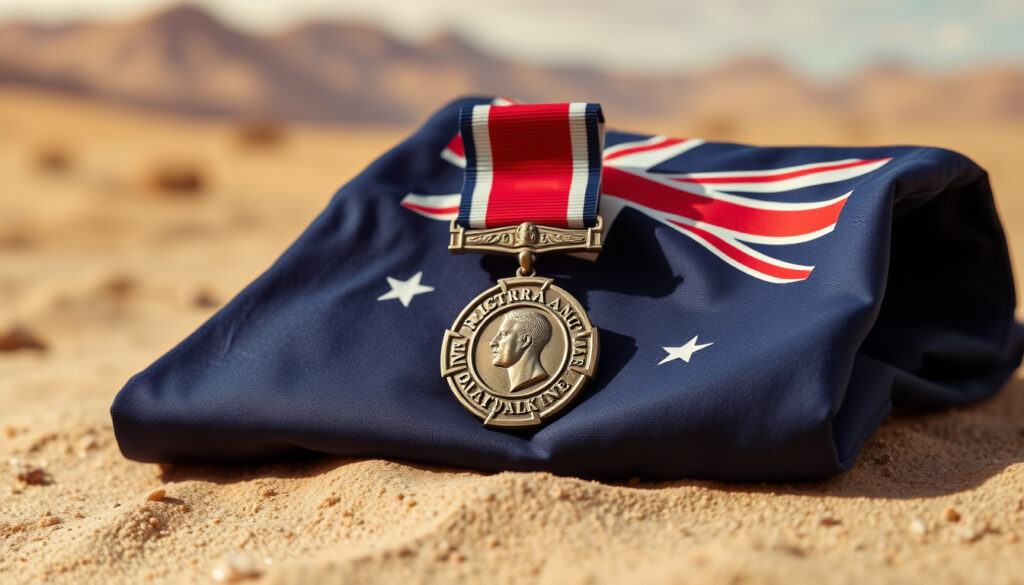
Ben Roberts-Smith: Australia’s VC Hero Accused of War Crimes
In 2011, Ben Roberts-Smith was presented with Australia’s highest military honour by the Governor-General. By 2023, the same Federal Court that once celebrated his bravery had found that he had allegedly broken the moral and legal rules of military engagement in Afghanistan. It’s a fall that has reshaped how Australians think about their most decorated soldiers.
Born: 1 November 1978 · Military Unit: Special Air Service Regiment (SASR) · Highest Award: Victoria Cross · War Crimes Charges: Five counts · Trial Outcome: Lost defamation case 2023 · Age: 47
Quick snapshot
- Victoria Cross awarded in 2011 for Afghanistan action (Opinio Juris)
- Medal for Gallantry received in 2006 (Opinio Juris)
- Defamation trial lost on 1 June 2023 (Opinio Juris)
- Appeal dismissed on 16 May 2025 (Wikipedia)
- Whether Roberts-Smith will face criminal charges following the civil verdict
- Whether his Victoria Cross will be rescinded
- Status of any Australian Federal Police investigation
- Current legal strategy or options available to him
- 2009: W108 compound incident (prosthetic leg killing alleged)
- 2012: Darwan village and Chinartu incidents alleged
- 2018: Fairfax publishes war crimes allegations
- 2021–2023: Defamation trial (110 days, 41 witnesses)
- 2023: Federal Court finds allegations substantially true
- Potential criminal proceedings by Australian Federal Police
- Appeal to the High Court of Australia remains theoretically possible
- Ongoing questions about military honours and accountability
Six biographical reference points define the man at the centre of Australia’s most expensive defamation case.
| Field | Value |
|---|---|
| Full Name | Benjamin Roberts-Smith |
| Birth Date | 1 November 1978 |
| Birth Place | Perth, Western Australia |
| Military Award | Victoria Cross for Australia |
| Unit | 3rd Battalion, SASR |
| War Crimes Charges | Five counts |
What are the allegations against Ben Roberts-Smith?
The war crimes allegations against Roberts-Smith centre on multiple incidents during his SASR deployments in Afghanistan between 2009 and 2012. Justice Anthony Besanko found four allegations of murder substantially true during the 2023 defamation trial (Lieber Institute, West Point).
Specific incidents in Afghanistan
One of the most detailed allegations concerned a 2009 incident at a compound designated W108, where Roberts-Smith allegedly killed a captured man with a prosthetic leg (Lieber Institute, West Point). The court found that Roberts-Smith encouraged his soldiers to use the prosthetic leg as a novelty beer drinking vessel after the killing.
Also at W108 in 2009, the “blooding the rookie” incident allegedly occurred, with Roberts-Smith ordering a junior soldier to execute an elderly civilian who posed no threat (Lieber Institute, West Point).
In Darwan village in September 2012, Roberts-Smith allegedly killed Afghan civilian Ali Jan (Wikipedia). The following month at Chinartu, he allegedly ordered an Afghan soldier to execute a prisoner (Wikipedia).
Justice Besanko applied the Briginshaw principle, requiring commensurately high satisfaction when assessing serious allegations. He only made key findings where multiple eyewitness accounts supported the conclusions.
Charges of murder
The five current war crimes charges before the court represent the culmination of years of investigation. Justice Besanko found that Roberts-Smith broke the moral and legal rules of military engagement and is therefore, in the civil sense, a criminal (Lieber Institute, West Point).
Witness testimonies
Among the 41 witnesses who testified during the defamation trial, 32 were Australian soldiers, many of whom had served alongside Roberts-Smith (Wikipedia). Several civilian eyewitnesses from Afghanistan also provided evidence.
The implications of these testimonies are significant: Justice Besanko concluded that Roberts-Smith had lied to the court, colluded with his witnesses, assaulted detained Afghan nationals, and bullied junior colleagues (Lieber Institute, West Point).
The scale of fellow soldiers willing to testify against Roberts-Smith suggests systemic concerns within SASR command structures that extend beyond one individual’s conduct.
What is Ben Roberts-Smith famous for?
Roberts-Smith was once celebrated as Australia’s most decorated modern soldier. His military career spanned multiple deployments before he became the public face of Australian military heroism.
Military service and awards
Roberts-Smith joined the Australian Regular Army in 1996. He served two tours in East Timor before joining the Special Air Service Regiment (Opinio Juris). He received the Medal for Gallantry in 2006 before his Victoria Cross award (Opinio Juris).
Victoria Cross action
The Victoria Cross for Australia was awarded in 2011 for Roberts-Smith’s actions during combat operations in Afghanistan (Opinio Juris). He was presented with the honour by the Governor-General at a ceremony that cemented his status as a national hero.
SASR career highlights
As a member of the 3rd Battalion, SASR, Roberts-Smith participated in classified operations that formed the basis of his reputation. His transition from national hero to alleged war criminal represents one of the most dramatic reversals in Australian military history.
Why was Ben Roberts-Smith granted bail?
The circumstances around Roberts-Smith’s bail relate to multiple legal proceedings. While he was arrested on war crimes charges, the bail conditions and surrounding circumstances involve civil matters alongside the criminal case.
University of Western Australia context
Roberts-Smith has been connected to disputes involving the University of Western Australia, where bail-related matters have arisen (Wikipedia). Details of this involvement remain limited in public records.
Legal proceedings
Following his arrest on five war crimes charges, Roberts-Smith was granted bail. The conditions of this bail reflect the court’s assessment of flight risk and public interest considerations.
Conditions of bail
The specific conditions of Roberts-Smith’s bail order have not been fully detailed in public court documents. What is known is that he remains free while facing serious criminal charges that carry significant penalties if convicted.
Where is Ben Roberts-Smith living?
Public information about Roberts-Smith’s current residence is limited. What is known comes from documented public appearances and court records rather than confirmed residential addresses.
Recent sightings
Roberts-Smith attended Anzac Day commemorations in Queensland, marking one of the few public appearances in recent years (Wikipedia). His presence at this event provided visual confirmation that he remained in Australia.
Queensland events
The Queensland Anzac Day appearance suggests Roberts-Smith has connections to that state, though whether he resides there permanently remains unconfirmed.
Post-trial residence
Roberts-Smith’s origins in Perth, Western Australia, provide context for his background. Following the dismissal of his appeal on 16 May 2025, his current living arrangements have not been publicly disclosed (Wikipedia).
How many SAS soldiers testified against Ben Roberts-Smith?
Thirty-two Australian soldiers testified during the defamation trial, making this the largest coordinated testimony against a serving or former special forces member in Australian military history.
The scale of military witness involvement distinguishes this case from typical defamation proceedings. Of the 41 total witnesses, Australian soldiers formed the overwhelming majority (Wikipedia). Several civilian eyewitnesses from Afghanistan also provided accounts of alleged incidents.
The willingness of 32 SAS soldiers to testify against their former colleague raises questions about whether the Australian Federal Police investigation will result in charges against additional soldiers who allegedly participated in the same incidents.
Clarity on key questions
What we know with confidence versus what remains uncertain defines the current state of the Roberts-Smith matter.
- Victoria Cross award in 2011 — confirmed
- Medal for Gallantry in 2006 — confirmed
- Defamation case loss on 1 June 2023 — confirmed
- Appeal dismissal on 16 May 2025 — confirmed
- Four murder allegations found substantially true — confirmed
- 110 days of evidence, 41 witnesses — confirmed
- Five war crimes charges — confirmed
- AUD 25 million in estimated legal costs — confirmed
- Whether criminal charges will proceed — unclear
- Whether Victoria Cross will be rescinded — unclear
- Current residence details — unclear
- Potential High Court appeal — unclear
- AFP investigation status — unclear
What they said
“Roberts-Smith had lied to the court, colluded with his witnesses, assaulted detained Afghan nationals, and bullied junior colleagues.”
— Justice Anthony Besanko, Federal Court of Australia, June 2023
“Roberts-Smith disgraced his country Australia and the Australian army by his conduct as a member of the SASR in Afghanistan.”
— Justice Anthony Besanko, Federal Court of Australia
What happens next for Ben Roberts-Smith
The dismissal of Roberts-Smith’s appeal on 16 May 2025 by the Full Court of the Federal Court marks a definitive endpoint to his civil legal proceedings against Fairfax Media and Nine Entertainment (Wikipedia). The unanimous finding that he was not defamed when journalists Nick McKenzie and Chris Masters published reports alleging war crimes closes one chapter.
The five war crimes charges now represent the most pressing legal threat. Unlike civil proceedings, criminal convictions carry the prospect of imprisonment. Roberts-Smith was ordered to pay the respondents’ legal costs, adding to the estimated AUD 25 million already spent on the defamation case.
For Australian military institutions, the question is whether findings from the civil trial will trigger broader accountability measures. The pattern of witness testimony suggested systemic issues that may extend beyond Roberts-Smith himself.
The Victoria Cross remains his, for now. Military honours can be rescinded, but only through specific processes that have not yet been initiated publicly. Whether that changes depends on criminal proceedings that have yet to commence.
Roberts-Smith faces a clear choice: cooperate fully with criminal investigations or continue contesting allegations that civil courts have found substantially true. His legal costs already exceed AUD 25 million, and each day of litigation deepens the financial and reputational toll.
Related reading: code of silence · latest world news
events.unsw.edu.au, youtube.com, unswcentreforideas.com, latrobe.edu.au, youtube.com
Roberts-Smith’s high-profile defamation battle took another turn when the Federal Court dismissed his appeal, with the appeal dismissal ruling sealing the outcome.
Frequently asked questions
Who is Ben Roberts-Smith?
Ben Roberts-Smith is a former Australian soldier who served in the Special Air Service Regiment. He was awarded the Victoria Cross in 2011 for actions in Afghanistan and later faced war crimes allegations that led to a landmark defamation case.
What military awards has Ben Roberts-Smith received?
Roberts-Smith received the Victoria Cross for Australia in 2011 and the Medal for Gallantry in 2006, making him one of Australia’s most decorated modern soldiers.
What was the outcome of Ben Roberts-Smith’s defamation trial?
Roberts-Smith lost his defamation case on 1 June 2023 when Justice Anthony Besanko found the key allegations against him—including four murder allegations—to be substantially true. His appeal was dismissed on 16 May 2025.
When was Ben Roberts-Smith awarded the Victoria Cross?
Roberts-Smith was awarded the Victoria Cross in 2011 for his actions during combat operations in Afghanistan.
What is the status of Ben Roberts-Smith’s war crimes case?
Roberts-Smith has been charged with five counts of war crimes. He has been granted bail and remains free while proceedings continue.
Has Ben Roberts-Smith been convicted of war crimes?
Roberts-Smith has been charged with war crimes but has not been convicted. The civil court found allegations substantially true in 2023, but criminal conviction requires proof beyond reasonable doubt.
What is known about Ben Roberts-Smith’s family?
Details about Roberts-Smith’s family are limited in public records. His background in Perth, Western Australia, is documented, but current family circumstances remain private.
What happened during the 2025 appeal?
On 16 May 2025, the Full Court of the Federal Court unanimously dismissed Roberts-Smith’s appeal against the 2023 ruling. The court found he was not defamed when journalists published reports alleging war crimes.
More related posts
 Mel Robbins Let Them Theory: Meaning, Psychology & Controversy
 Flights to Queenstown NZ: Routes, Airlines & Tips
 Home Loan Rates Forecast – 2026 Outlook and Trends
 Westpac Login NZ Online Banking: Step-by-Step Guide
 Latest World News Today: Breaking Headlines & Updates
 Novak Djokovic Net Worth 2026: $240M Fortune & Wife’s Role
 Codes for Hunty Zombie April 2026: 10+ Active
 NRL Semi Finals 2025: Teams, Dates & Format
