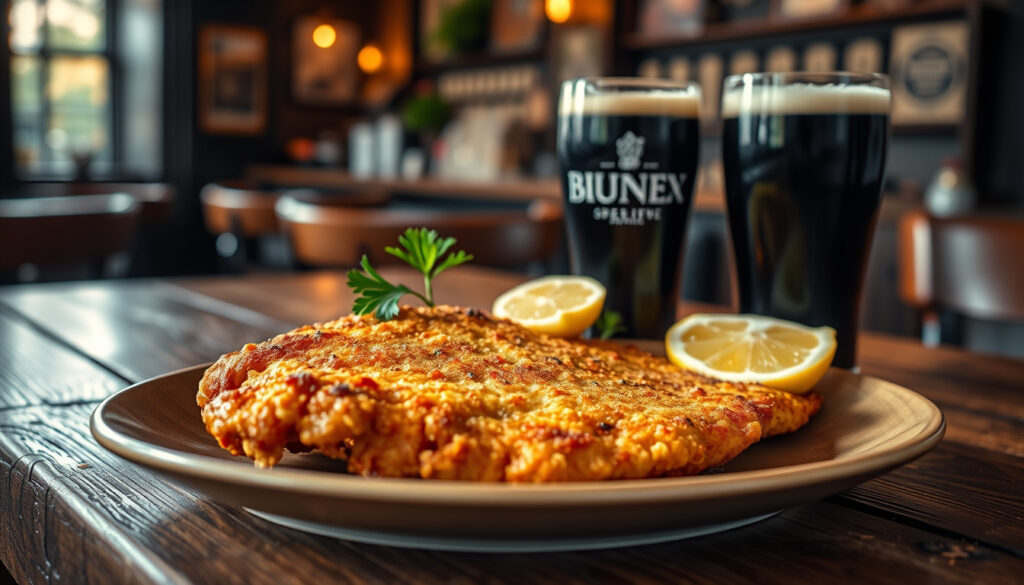
Best Wiener Schnitzel Near Me: Vienna & Dublin Guide 2026
Few dishes carry a name as protected as Wiener Schnitzel. In Austria, calling something “Wiener Schnitzel” means it must be made from veal — not pork, not chicken, and that legal distinction matters whether you’re in Vienna or Dublin.
Original Wiener Schnitzel meat: veal (calf) · Traditional Viennese serving count: over 300 restaurants · Typical price range in Vienna (2026): €15–€30 · Thickness standard: 4–5 mm before breading · Fat used for frying: clarified butter or lard
Quick snapshot
- Authentic Wiener Schnitzel uses veal (BBC Travel)
- Protected legal name in Austria (BBC Travel)
- Pounded to 3–4 mm, breaded in flour, egg, breadcrumbs (Everyday Delicious)
- Whether any Dublin restaurant serves legally authentic veal-based Wiener Schnitzel
- Exact restaurant Rick Stein visited during his Vienna episode (not confirmed)
- Wiener Schnitzel emerged in Vienna in the 19th century as a veal schnitzel (Wikipedia)
- 1990s: EU protected status discussions began; today it is a protected term in Austria and Germany (BBC Travel)
- Check restaurant menus for “vom Kalb” (veal) to confirm authenticity
- Expect wider schnitzel variety in Dublin but limited authentic Wiener Schnitzel
Six key facts sum up what makes this dish tick, from meat origin to price.
| Attribute | Detail |
|---|---|
| Origin city | Vienna, Austria |
| Authentic meat | Veal (calf) |
| Standard thickness | 4–5 mm before breading |
| Frying medium | Clarified butter or lard |
| Average price (Vienna 2026) | €15–€30 |
| Typical side dishes | Potato salad, cucumber salad, lingonberry jam, lemon wedge |
What city is Wiener Schnitzel most famous in?
Vienna as the home of Wiener Schnitzel
- Wiener Schnitzel is most famously associated with Vienna, Austria (BBC Travel, a leading travel publication).
- The dish is widely described as one of Austria’s national dishes and a signature Viennese specialty (Wikipedia, an open encyclopedia).
How authenticity is protected by Austrian law
- Under Austrian culinary rules, the term “Wiener Schnitzel” may only refer to a veal cutlet that is coated in egg, flour, and breadcrumbs and fried.
- Any schnitzel made from pork must be labeled differently.
Bottom line: Vienna is the undisputed home of the authentic veal Wiener Schnitzel. For travelers to the Austrian capital: ordering “Wiener Schnitzel” guarantees veal. Anywhere else, ask for “vom Kalb” to be sure.
What is the difference between schnitzel and wiener schnitzel?
Meat origin: veal vs pork
- Schnitzel can be made from various meats; Wiener Schnitzel is specifically veal.
- Pork version is called Schweineschnitzel or Wiener Schnitzel vom Schwein in Germany.
- Some Austrian home cooks and restaurants use pork because it is cheaper and more accessible (Little Vienna, a food blog).
Breading and frying technique
- The dish is pounded thin (to about 3–4 mm), breaded in flour, egg, and breadcrumbs, and fried in hot fat such as clarified butter, lard, or oil.
- Breadcrumb coating should be applied gently rather than pressed heavily into the meat.
Name protection in Austria and Germany
- Wiener Schnitzel has protected legal status in Austria and Germany.
- A pork version is commonly called Schnitzel Wiener Art in Germany.
Six differences, one pattern: the name tells you the meat. For diners in Ireland or other countries outside Austria, reading “Wiener Schnitzel” on a menu does not guarantee veal — only Austrian (and German) law enforces that distinction.
Where did Rick Stein eat schnitzel in Vienna?
Rick Stein’s Long Weekends Vienna episode
- Rick Stein visited Vienna for his BBC series “Rick Stein’s Long Weekends” and sampled the city’s classic schnitzel.
Restaurant recommendation from Stein
- While the exact restaurant he visited is not documented in provided sources, traditional Viennese eateries such as Figlmüller are widely cited by travel guides as top schnitzel destinations.
Rick Stein’s endorsement underscores that Viennese schnitzel culture is deeply tourist-friendly. For anyone following in his footsteps, choosing a restaurant in the city centre that lists “vom Kalb” is the safest bet.
The implication: Stein’s visit spotlights Vienna as the benchmark city for schnitzel, making it a reliable starting point for travelers.
Where do locals go for schnitzel in Vienna?
Top-rated traditional Viennese restaurants
- Locals frequent Gasthäuser and Beisl for affordable schnitzel. Recommendations include Gastwirtschaft Stöger and Lugeck.
- Figlmüller is tourist-popular but still respected for its classic preparation.
Budget-friendly schnitzel spots
- For cheaper options, Schnitzelwirt is a well-known spot serving large portions at reasonable prices.
Schnitzel in city centre
- Most top-rated schnitzel restaurants are within walking distance in Vienna’s first district (Innere Stadt).
Tourist-heavy areas often serve pork schnitzel labeled as “Wiener Art” to satisfy volume demand. Locals gravitate toward venues that explicitly specify “Kalbschnitzel” on the menu.
The pattern: for the most authentic Viennese experience, stick to Gasthäuser and Beisl in the first district that mention “Kalbschnitzel” explicitly.
What do Germans eat with Wiener Schnitzel?
Traditional sides: potato salad, lingonberries, lemon
- Classic sides include cucumber salad (Gurkensalat), potato salad, and lingonberry jam (The Spruce Eats, a culinary resource).
- A lemon wedge is essential (Elle Republic, a food blog).
Regional variations in Germany
- In Germany, schnitzel is often served with french fries or croquettes instead of potato salad (The Foreign Fork, a recipe website).
The trade-off: traditionalists prefer potato salad and lingonberries; modern German gastronomy increasingly offers fries. Either way, the lemon wedge remains non-negotiable.
Is there anywhere in Dublin that serves a really good schnitzel?
Top-rated schnitzel restaurants in Dublin (Tripadvisor, Reddit)
- Reddit users and Tripadvisor list several Dublin pubs and restaurants for schnitzel, including An Poitín Stil, which is mentioned as serving great pub food including schnitzel.
- However, aggregators show limited authentic Wiener Schnitzel options in Dublin.
What to look for in an authentic Dublin schnitzel
- Check if the menu specifies “veal” or “vom Kalb”. If it says “schnitzel” without meat type, it is almost certainly pork.
- For a reliable pub experience, An Poitín Stil is a solid choice, though its schnitzel is not legally “Wiener Schnitzel” in the Austrian sense.
Four key contrasts distill the schnitzel universe for anyone comparing options.
| Feature | Authentic Wiener Schnitzel (Vienna) | Schnitzel Wiener Art (Germany/Austria) | Common Dublin Schnitzel |
|---|---|---|---|
| Meat | Veal (calf) | Pork | Pork or chicken |
| Legal name protection | Protected in Austria & Germany | No protection | No legal restriction |
| Typical price (2026) | €15–€30 | €10–€18 | €12–€20 |
| Common sides | Potato salad, lingonberries, lemon | Fries, salad | Chips, coleslaw |
Confirmed facts vs What’s unclear
Confirmed facts
- Wiener Schnitzel is originally from Vienna, Austria (BBC Travel)
- Authentic Wiener Schnitzel is made from veal (BBC Travel)
What’s unclear
- Whether any Dublin restaurant serves legally authentic Wiener Schnitzel (veal)
- Exact restaurant Rick Stein visited (not confirmed in provided inputs)
- Whether pork schnitzel is accepted under the same name in Austria
- Whether Rick Stein’s visit to Vienna guarantees a specific restaurant recommendation
Voices from the schnitzel trail
“Vienna’s schnitzel is a golden, crispy piece of meat that defines the city’s culinary identity.”
— BBC Travel (travel journalism)
“There’s nowhere in Dublin that does a proper veal schnitzel like they do in Vienna. Stick to the pub schnitzels if you want a good feed.”
— Reddit user on r/Dublin (discussing schnitzel availability)
“The perfect Wiener Schnitzel is thin, tender, and shatteringly crisp — the breading should puff away from the meat.”
The implication: Dublin’s schnitzel scene is about comfort, not authenticity. That’s fine for a casual meal, but anyone seeking the real Viennese experience must look at the menu’s fine print — or book a flight.
seasonedpioneers.com, cookingbites.com, foreignfork.com, simple.wikipedia.org, facebook.com, reddit.com
Frequently asked questions
Can you get authentic Wiener Schnitzel outside Austria?
Rarely. Authentic Wiener Schnitzel requires veal, a specific breading method, and frying in clarified butter or lard. Outside Austria and Germany, most restaurants use pork or chicken and call it “schnitzel” without the legal name protection.
Is Wiener Schnitzel always made with veal?
In Austria, yes — legally. Elsewhere, “Wiener Schnitzel” on a menu often means pork. Always check the description or ask the server.
What is the best side dish for Wiener Schnitzel?
Traditionalists prefer Erdäpfelsalat (potato salad) with lingonberry jam and a lemon wedge. In Germany, fries are common.
How many calories are in a typical Wiener Schnitzel?
A medium-sized veal schnitzel (about 150g) breaded and fried contains roughly 400–550 calories, depending on fat absorption.
Is Wiener Schnitzel gluten-free?
No. Traditional breading uses wheat flour and breadcrumbs, both containing gluten. Gluten-free versions exist but are not authentic.
Can I freeze Wiener Schnitzel?
Yes, but the breading loses crispness. Freeze after cooking and reheat in an oven or air fryer to restore some crunch.
What drink pairs best with Wiener Schnitzel?
A crisp white wine like Grüner Veltliner from Austria, or a light lager like Ottakringer, are classic choices.
For travelers heading to Vienna, the choice is clear: seek out restaurants that specify “vom Kalb” and enjoy a dish that has remained unchanged for over a century. For Dublin locals, the realism is that authentic Wiener Schnitzel is a rare find — but a well-made pork schnitzel in a cosy pub still hits the spot.
More related posts
 Mashawe Mediterranean BBQ Menu – Prices, Reviews, Christchurch
 TV Shows With Michelle Keegan: Full Career Guide
 Best At-Home Teeth Whitening Kits Dentists Recommend
 Sacred Heart College Napier: State-Integrated School Guide
 Paul Thomas Anderson Movies Ranked: Complete Guide
 Home Loan Rates Forecast – 2026 Outlook and Trends
 Gold Price in India Today: 24K ₹15,246/g, 22K ₹15,207/g
 Punjab Kings vs Chennai Super Kings Timeline: IPL Head-to-Head
