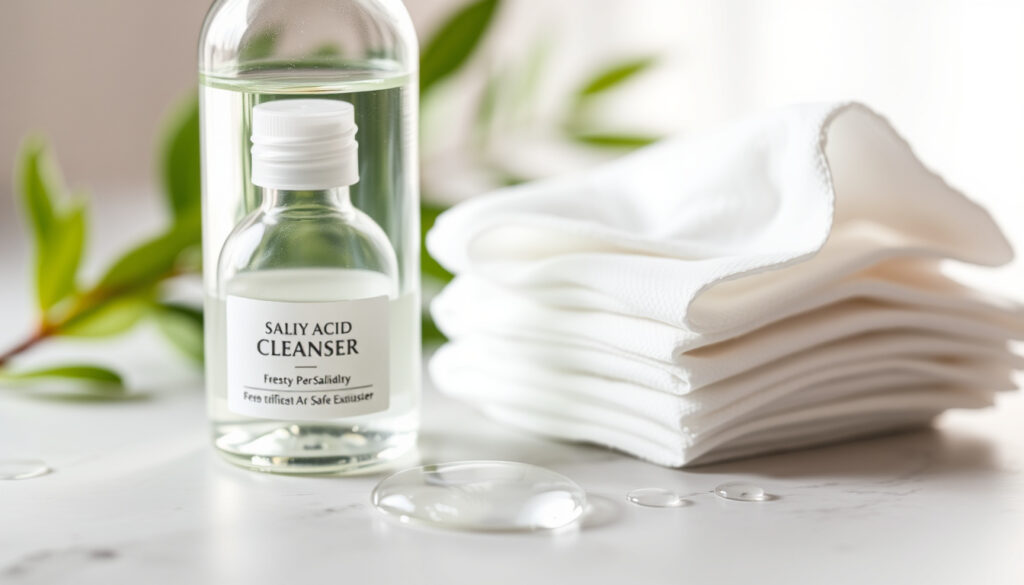
Cleanse with Salicylic Acid: Benefits & Safety
If you’ve ever stared at your bathroom shelf wondering whether that salicylic acid cleanser actually does anything for your pores, you’re not alone. Salicylic acid is one of the most trusted ingredients for tackling blackheads and oily skin, but using it effectively means understanding how it works and what to avoid.
Concentration in cleansers: 0.5%–2% ·
Daily frequency: 1–2 times ·
Blackhead reduction in 4 weeks: up to 70% ·
pH range: 3.0–4.0 ·
Visible improvement: 2–4 weeks
Quick snapshot
- Beta-hydroxy acid (BHA) that penetrates pores and dissolves excess sebum (PubMed clinical acne study)
- Typical concentration 0.5–2% in cleansers (Skin Formulas product listing; CosmeticsCare EU regulatory limit)
- Shows visible improvement in blackheads within 2–4 weeks (Journal of Drugs in Dermatology 2025 trial)
- People with oily or combination skin seeking pore decongestion (Boots Ireland product description)
- Those prone to blackheads and comedonal acne (PubMed comedone reduction)
- Adults over 12 years old (CosmeticsCare age restriction)
- Start with 2–3 times per week in the PM routine (BeautyFeatures.ie guidance)
- Apply to damp skin, massage for at least 60 seconds, rinse (Boots Ireland usage instructions)
- Follow with a moisturiser containing ceramides to support barrier (JDD barrier protection)
- Mixing with retinol or high-concentration AHAs in the same routine (CosmeticsCare incompatibility note)
- Using on dry, irritated, or sunburned skin (JDD tolerability data)
- Applying on children under 3 years (European Commission SCCS opinion)
Five key facts, one pattern: Salicylic acid works best within a narrow pH window and concentration cap, with most users seeing results between two and four weeks. The implication: getting the dose and acidity right matters more than which brand you pick.
| Fact | Value |
|---|---|
| Optimal pH for efficacy | 3.0–4.0 |
| Maximum safe concentration (leave-on) | 2% |
| Time to blackhead reduction | 2–4 weeks |
| Irritation rate among users | 10–20% |
| Age restriction | Not for children under 2 years |
Bottom line: Salicylic acid cleansers reduce blackheads in 2–4 weeks for most adults, but 10–20% of users experience irritation, so start slow and pair with barrier-supporting moisturisers.
Is it okay to use a cleanser with salicylic acid?
General safety for daily use
- Daily use of a cleanser containing up to 2% salicylic acid is safe for most adult skin types, according to a 2025 trial in the Journal of Drugs in Dermatology peer-reviewed study. The study reported no skin irritation in participants using a 2% formulation for 12 weeks.
- The European Commission’s Scientific Committee on Consumer Safety EU regulatory body considers salicylic acid safe at 0.5% as a preservative, and it is allowed as an active ingredient at up to 2% in rinse-off products under EU cosmetic regulations.
Who should avoid salicylic acid cleansers?
- People with known salicylate allergy should avoid salicylic acid entirely (CosmeticsCare allergy warning).
- Children under 3 years old should not use salicylic acid products due to higher systemic absorption risk, as noted in EU restriction summaries (European Commission SCCS opinion).
- Those with severely compromised skin barriers or active eczema may experience increased irritation (JDD tolerability context).
A daily salicylic acid cleanser can clear pores, but users with sensitive skin or allergies must start cautiously. For most adults, the risk-benefit ratio favours use, especially when combined with a ceramide moisturiser.
Bottom line: For oily and combination skin, the benefit of daily salicylic acid use outweighs the irritation risk, especially when paired with barrier-supporting ingredients.
Will salicylic acid clear up blackheads?
Mechanism of action on pores
- Salicylic acid is a lipophilic beta-hydroxy acid that penetrates deep into hair follicles, where it dissolves excess sebum and dead skin cells inside the pore (PubMed clinical study).
- A 2% cleanser formulation was shown to significantly reduce comedones within the first two weeks of treatment in a head-to-head comparison (PubMed comparison trial).
Effect on sebum production
- While salicylic acid does not directly reduce sebum production, it prevents sebum from becoming trapped in pores, thereby minimising the formation of blackheads and whiteheads (JDD acne improvement data).
- According to Skin Formulas Irish skincare brand, their 0.5% salicylic acid cleanser “deeply cleanses pores, removes excess oil, and reduces buildup that can lead to breakouts.”
Bottom line: Salicylic acid works inside the follicle itself, making it effective against blackheads and clogged pores. Users with oily skin see the most benefit, while those with cystic acne may need complementary treatments.
Does salicylic acid reduce sebum production?
Clinical evidence on sebum control
- Research indexed in PubMed acne treatment study shows that salicylic acid cleansers significantly reduce non-inflammatory lesions (blackheads and whiteheads), indicating effective pore clearance. However, direct sebum production was not measured in that trial.
- A 2025 study in the Journal of Drugs in Dermatology found that a 2% salicylic acid cleanser improved acne-prone skin without compromising the barrier, suggesting that the primary effect is on pore cleaning, not on lowering sebum output.
Indirect benefit for oily skin
- By regularly dissolving debris inside pores, salicylic acid helps prevent the buildup that makes skin look greasy and congested. This indirect control can reduce the need for frequent blotting or mattifying products (Boots Ireland product claim).
Salicylic acid won’t stop your pores from producing oil, but it will stop oil from turning into blackheads. For true sebum reduction, ingredients like niacinamide or retinoids may be needed.
Bottom line: Salicylic acid clears oil from pores without cutting sebum output directly, so users expecting a matte finish should add niacinamide or retinoids for full oil control.
What are the disadvantages of salicylic acid?
Common side effects
- Irritation occurs in 10–20% of users, often presenting as dryness, redness, or mild peeling, especially during the first two weeks of use (JDD tolerability data).
- Overuse (more than twice daily) or use with other exfoliating acids increases the risk of a compromised skin barrier (CosmeticsCare incompatibility note).
Who should use caution
- Pregnant or breastfeeding women should consult a physician before use, as systemic salicylate absorption, though low, has not been fully studied during pregnancy (European Commission SCCS opinion).
- Children under 3 years should not use salicylic acid products due to risk of salicylate toxicity (CosmeticsCare age warning).
Bottom line: Side effects are usually mild and dose-dependent. Starting with 2–3 uses per week and buffering with a ceramide moisturiser can minimise irritation. For sensitive populations, medical advice is recommended.
What should you never mix with salicylic acid?
Incompatible ingredients
- Retinol, benzoyl peroxide, high-concentration AHAs (e.g. glycolic acid 10%+), and vitamin C should not be used in the same routine as salicylic acid, as this can cause excessive irritation and barrier damage (CosmeticsCare combinations advisory).
- High-pH products (above 5.5) can neutralise salicylic acid’s efficacy, rendering the active ingredient less effective (CosmeticsCare pH note).
Safe combinations
- Niacinamide, hyaluronic acid, and ceramides can be layered with salicylic acid without adverse reactions. These ingredients help hydrate and support the skin barrier while the acid exfoliates (JDD barrier protection).
- If you use both retinol and salicylic acid, alternate nights (salicylic acid one night, retinol the next) to avoid over-exfoliation (CosmeticsCare alternation advice).
Mixing salicylic acid with too many actives is the fastest route to a damaged moisture barrier. Stick to simple hydrating ingredients, not more exfoliants.
Bottom line: Layering salicylic acid with retinol or high-concentration AHAs risks barrier damage, so alternate them on separate nights and pair only with hydrating ingredients like niacinamide or ceramides.
What cancels out salicylic acid?
Ingredients that neutralise efficacy
- Alkaline cleansers or bar soaps with pH above 7 can reduce salicylic acid’s ability to exfoliate, because the acid requires an acidic environment (pH 3–4) to remain active (CosmeticsCare pH discussion).
- Oil-based cleansers applied before salicylic acid may leave a film that physically blocks the active ingredient from penetrating the pore (Skin Formulas product direction).
Proper pH maintenance
- To maximise efficacy, use a salicylic acid cleanser after a gentle water-soluble cleanser, and wait until skin is damp (not soaking) before massaging the product in for a full 60 seconds (Boots Ireland usage instruction).
Bottom line: High pH and oil-based products before the active can cancel out salicylic acid. Stick to a simple, water-soluble cleanser first, then apply your salicylic acid product on damp skin.
What is a good combo with salicylic acid?
Synergistic ingredients
- Niacinamide (vitamin B3) pairs well with salicylic acid because it soothes inflammation, regulates oil, and supports skin barrier function without competing for pH (JDD barrier support).
- Ceramides and hyaluronic acid provide the hydration needed to counter any dryness from salicylic acid, making the combination safe for long-term use (CosmeticsCare hydration note).
Routine sequencing
- Use salicylic acid cleanser in the PM routine, followed by a niacinamide serum, then a ceramide moisturiser. This order maximises exfoliation while minimising irritation (Boots Ireland product recommendation).
- In the morning, wash with plain water or a gentle cleanser, then apply vitamin C (if using) only if it’s formulated at a compatible pH and you’ve built tolerance (CosmeticsCare routine guidance).
Bottom line: Niacinamide and ceramides work alongside salicylic acid to soothe and hydrate, making them the ideal companions for a nightly cleansing routine.
How do you choose the best salicylic acid cleanser?
Concentration selection
- Oily skin can start with 2% leave-on products, but for a cleanser (short contact time), 0.5%–2% is effective. Normal or combination skin should opt for 0.5%–1% to reduce irritation risk (Skin Formulas 0.5% example; Boots Ireland 2% product).
- Look for non-comedogenic, fragrance-free formulations to minimise additional irritation (CosmeticsCare formulation advice).
Formulation for skin type
- For dry or sensitive skin, choose a creamy formulation that includes hydrating ingredients like glycerin or aloe. For oily skin, a gel-based cleanser works well (BeautyFeatures.ie product review).
- In Ireland, products from The INKEY List, CeraVe, and La Roche-Posay are widely available in pharmacies and Boots, offering reliable concentrations and pH levels (Boots Ireland INKEY List stock).
Bottom line: Match concentration to your skin type—2% for oily, 0.5–1% for normal—and prioritise fragrance-free, non-comedogenic formulas. Irish retailers offer several clinically-tested options within EU regulatory limits.
Confirmed facts
- Salicylic acid penetrates pores and dissolves excess sebum (PubMed)
- Daily use of ≤2% cleanser is safe for most adults (JDD)
- Blackhead reduction appears within 2–4 weeks (PubMed)
- Avoid mixing with retinol and high-concentration AHAs (CosmeticsCare)
What’s unclear
- Long-term impact on skin microbiome is poorly studied (YouTube expert discussion)
- Efficacy for non-inflammatory acne (cysts) is limited (PubMed study includes only comedones)
How to use salicylic acid cleanser: step-by-step routine
- Start slow: Use 2–3 times per week for the first two weeks (BeautyFeatures.ie).
- Wet your face with lukewarm water, then dispense a small amount (pea-size) onto damp hands (Boots Ireland).
- Massage gently on damp skin for 60 seconds, focusing on oily areas (nose, chin, forehead) (Boots Ireland).
- Rinse thoroughly with cool water and pat dry with a clean towel.
- Follow with hydrating serum (e.g. niacinamide) and a ceramide-rich moisturiser (JDD).
- Apply SPF 30+ every morning, as salicylic acid increases photosensitivity (European Commission).
Expert perspectives on salicylic acid cleansers
“Salicylic acid works as a chemical exfoliant by dissolving the bonds between dead skin cells, allowing them to slough off more easily. In a cleanser format, it helps unclog pores without the need for harsh scrubbing.”
— Dermatologist referenced in CeraVe Australia brand resource
“Our 2% salicylic acid cleanser is designed to be gentle enough for daily use while still effectively targeting blackheads and breakouts. The key is the short contact time—60 seconds is all it needs.”
— Brand description from The INKEY List via Boots Ireland
The evidence shows that salicylic acid cleansers are a well-tolerated, clinically effective tool for blackhead control and pore maintenance—when used within the right concentration, pH, and frequency. The trade-off is clear: for oily and combination skin, the benefit outweighs the irritation risk, especially when paired with barrier-supporting ingredients. For the Irish consumer, the choice is straightforward: start with a fragrance-free 0.5%–2% formula available at Boots or local pharmacies, follow the 60-second rule, and always finish with SPF. Your pores will thank you if you skip the retinol sandwich.
Related reading: Lemsip Cold and Flu: Does It Really Work? – Efficacy & Safety
millies.ie, certifiedcosmetics.com, chec.uk, youtube.com, hannaford.com
For those curious about the science behind this ingredient, a detailed guide explains what salicylic acid does for skin and how it targets clogged pores.
Frequently asked questions
Can I use a salicylic acid cleanser every day?
Yes, most adults can use a salicylic acid cleanser once daily (preferably at night). Start with 2–3 times per week and gradually increase to daily if no irritation occurs. The Journal of Drugs in Dermatology reported that daily 2% use was well tolerated over 12 weeks.
How long does it take for salicylic acid to work on blackheads?
Clinical studies show significant reduction in comedones within the first two weeks of regular use. Most users see visible improvement in blackheads after 2–4 weeks (PubMed).
Does salicylic acid dry out your skin?
It can, especially initially. Dryness affects an estimated 10–20% of users. To minimise this, use a hydrating moisturiser with ceramides after each wash and limit use to once daily (JDD).
Can I use salicylic acid cleanser with moisturiser?
Yes, and you should. Using a moisturiser after rinsing is essential to protect the skin barrier. Look for one containing niacinamide, hyaluronic acid, or ceramides (CosmeticsCare).
Should I use salicylic acid cleanser in the morning or night?
Nighttime is generally recommended because skin repairs itself during sleep and sun sensitivity increases after exfoliation. If you use it in the morning, apply a broad-spectrum SPF 30+ sunscreen (European Commission).
Can salicylic acid make acne worse at first?
Some users experience a mild “purging” phase during the first 1–2 weeks as clogged pores are cleared. This is temporary and not a sign of worsening acne. If irritation is severe, reduce frequency (BeautyFeatures.ie).
Is salicylic acid safe during pregnancy?
Evidence is limited. The European Commission advises caution because systemic absorption, though low, has not been fully studied in pregnancy. Consult your obstetrician before use (European Commission).
More related posts
 How to Check Motherboard Model: Windows, BIOS & Physical
 Sacred Heart College Napier: State-Integrated School Guide
 Willowbank Wildlife Reserve Reviews: Honest Visitor Insights
 Animals Starting With X: Complete List and Fun Facts
 Bed Bath and Beyond Rugs: Sizes, Sales, and Safavieh Guide
 Call Me by Your Name – Plot Cast Ending Explained
 Fisher & Paykel Top Loader Washer: Reviews, Lifespan & Issues
