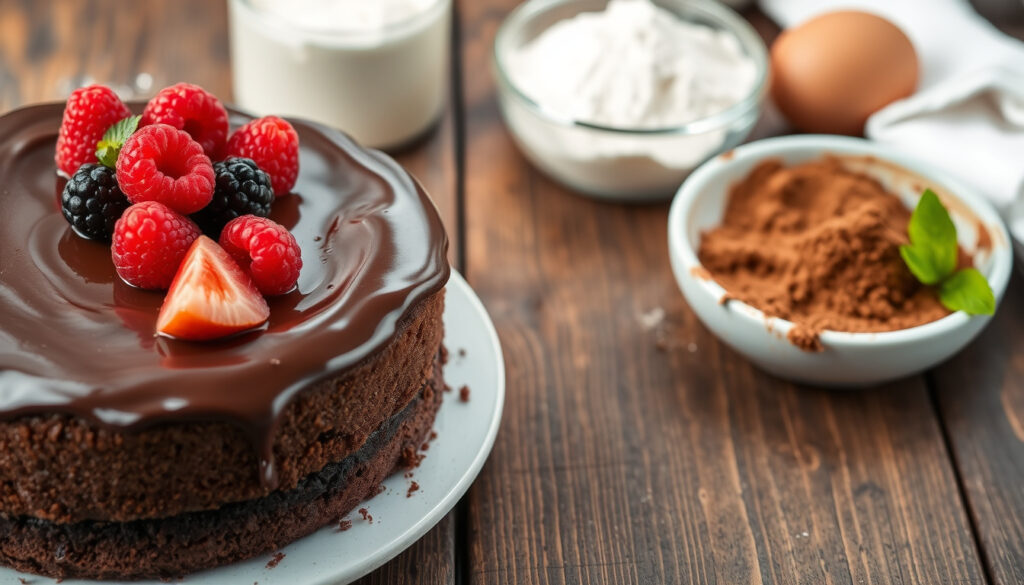
Chocolate Cake Recipe NZ: Secrets to Moist, Rich Cake
There’s a reason chocolate cake is the most-requested birthday bake in New Zealand kitchens. With a few pantry-friendly tricks, you can turn a simple mix into something deeply moist and chocolatey — no fancy equipment required.
Average rating of top NZ chocolate cake recipes: 4.8 out of 5 stars · Most common secret ingredient for moistness: boiling water or buttermilk · Number of days a chocolate cake stays fresh (RecipeTin Eats): 5 days
Quick snapshot
- Boiling water (or hot coffee) deepens chocolate flavour by blooming cocoa (Chelsea Sugar)
- Oil-based cakes stay moister than butter-based ones (RecipeTin Eats)
- Buttermilk or sour cream creates a tender crumb (Lazy Sunday Club)
- Exact origin of the “4 day cake rule” — some home bakers claim cake peaks at day 2, but no official source confirms it (Edmonds Cooking)
- Whether cocoa powder should be measured by weight or volume varies across recipes (Edmonds Cooking uses volume)
- The optimal time to add boiling water (before or after mixing dry ingredients) is not consistently specified across recipes (Edmonds Cooking)
- Whether simple syrup should be applied to warm or fully cooled cake layers is not standardized among NZ home bakers (Edmonds Cooking)
- Prep: 10 minutes; Bake: 45–55 minutes (Chelsea Sugar)
- Cool in tin 10 minutes before turning out (Edmonds Cooking)
- Serves 12 (Chelsea Sugar)
- Frost with chocolate buttercream or ganache (RecipeTin Eats)
- Store at room temperature in an airtight container for up to 5 days (RecipeTin Eats)
- Freeze un-iced cake for up to 3 months (RecipeTin Eats)
Five key facts from top New Zealand recipes reveal the common thread behind every winning chocolate cake.
| Ingredient / aspect | Common NZ recommendation |
|---|---|
| Optimal flour for chocolate cake (NZ) | Edmonds Standard Grade Flour or all-purpose |
| Cocoa brand recommended by NZ bakers | Bournville or Hershey’s |
| Butter brand typical in NZ recipes | Anchor or Mainland |
| Oil preferred for moist cakes | Canola or sunflower oil |
| Egg size used in standard NZ cake recipes | Large (size 7) |
What is the secret to moist chocolate cake?
Using boiling water or coffee to enhance moisture and flavor
- Adding boiling water (or hot coffee) helps bloom cocoa powder, intensifying chocolate taste and producing a moist crumb (Chelsea Sugar, New Zealand’s premier sugar brand since 1883).
- Chelsea’s Easy Chocolate Cake recipe calls for boiling water mixed with cocoa, creating a thin batter that bakes up tender.
The role of oil versus butter in tenderness
- Oil-based cakes stay moister than butter-based ones because oil remains liquid at room temperature (RecipeTin Eats, popular recipe blog).
- Butter adds flavour but can create a drier crumb if over-baked. Many NZ recipes balance both, like using butter in the batter and oil in the frosting.
For a home baker in New Zealand, swapping half the butter for canola oil can mean the difference between a cake that’s dry by day two and one that stays soft for five days.
The implication: New Zealand home bakers can achieve reliable moisture without expensive ingredients by focusing on these two techniques.
What are common chocolate cake baking mistakes?
Overmixing the batter leading to tough cake
- Overmixing activates gluten and creates a dense, dry cake. Stir only until flour is incorporated (Edmonds Cooking, New Zealand’s trusted baking authority since 1879).
Opening the oven door too early causing the cake to sink
- Opening the oven door during baking can cause the cake to collapse from temperature shock. Wait until at least 75% of the baking time has passed before checking (SuperValue, NZ supermarket chain).
Measuring flour incorrectly
- Spooning flour into a measuring cup and levelling off prevents excess flour, which dries out the batter (Chelsea Sugar).
Avoiding these three mistakes costs nothing but saves your cake from crumbly disappointment — worth more than any fancy ingredient.
The pattern: these pitfalls are simple to fix and directly improve texture, making them the highest-leverage improvements for any baker.
What makes the best chocolate cake so moist and deeply chocolatey?
Using high-quality cocoa powder
- Dutch-processed cocoa (like Bournville) gives a deeper colour and less acidity, while natural cocoa (like Hershey’s) reacts with baking soda for lift (SuperValue notes cocoa as a core ingredient).
Adding buttermilk or sour cream for acidity and tenderness
- Buttermilk reacts with baking soda to produce a tender crumb and enhances chocolate flavour (Lazy Sunday Club, New Zealand food blog uses yoghurt as a substitute).
- Sour cream adds moisture and richness without thinning the batter.
The importance of the boiling water technique
- Blooming cocoa powder in boiling water for 2 minutes intensifies chocolate taste before mixing with other wet ingredients (Chelsea Sugar).
What this means: layering these elements delivers the intensely chocolatey, moist result that top NZ recipes are known for.
How to make a 3 ingredient chocolate cake?
Ingredients required: self-rising flour, sugar, cocoa, plus water or oil variation
- A basic 3-ingredient cake uses self-rising flour, sugar, and cocoa powder mixed with water. More common NZ version: 1 can of condensed milk, 1 cup self-rising flour, 1/2 cup cocoa (Chelsea Sugar).
Simple mixing and baking instructions
- Combine all ingredients in a bowl, mix until smooth, pour into a greased 20cm tin, and bake at 160°C fan-forced for 45–55 minutes (SuperValue oven setting).
A 3-ingredient cake lacks eggs and butter, so it’s denser and less rich. Best as a quick fix for unexpected guests, not as a showstopper.
The catch: while convenient, the 3-ingredient version sacrifices richness and structure, making it a compromise rather than a go-to recipe.
What do professional bakers use to keep cakes moist?
Simple syrup brushed onto layers
- Professional bakers brush each cake layer with simple syrup (equal parts sugar and water) to lock in moisture (RecipeTin Eats recommends cooling and wrapping properly).
Using buttermilk or oil in the batter
- Oil remains liquid at room temperature, keeping the crumb soft (RecipeTin Eats). Buttermilk’s acidity tenderises gluten. Many NZ recipes incorporate both.
Proper storage techniques
- Wrap cooled cakes in plastic wrap before storing to prevent drying. Un-iced cake keeps up to 5 days in an airtight container (RecipeTin Eats).
Simple syrup is the secret weapon of NZ home bakers who want bakery-quality texture — and it adds almost no cost.
The implication: professional techniques like syrup and oil are easily accessible to home bakers, bridging the gap between everyday and showstopper cakes.
What is the 4 day cake rule?
Explanation of the rule: cake tastes better after resting 1–2 days
- The ‘4 day rule’ is a term used by some bakers indicating cake peaks in flavor 1–2 days after baking. Moisture from frosting or simple syrup needs time to evenly distribute through the crumb.
- While the exact origin is unclear, many home bakers report that chocolate cake tastes best on day 2 or 3.
Scientific reasons: flavors meld and moisture redistributes
- Resting allows the cocoa and sugar flavors to meld, and any added syrup or buttermilk moisture to permeate the crumb, resulting in a more uniform texture.
The pattern: patience pays off — wrapping and resting the cake overnight can elevate a good cake to a great one.
What is the 1234 rule for cake?
Classic ratio: 1 cup butter, 2 cups sugar, 3 cups flour, 4 eggs
- The 1-2-3-4 rule is a traditional butter cake ratio, not specific to chocolate cake. It provides a simple, balanced foundation for a basic vanilla or yellow cake.
How to adjust for chocolate cake variations
- For chocolate cake, replace 1/2 cup flour with 1/2 cup cocoa powder to adapt the ratio. This yields a classic chocolate butter cake that is still tender but with deeper chocolate flavour.
The catch: while the 1-2-3-4 ratio is a useful starting point, most NZ chocolate cake recipes deviate from it to incorporate oil, buttermilk, or boiling water for superior moisture.
Step-by-Step: Easy Chocolate Cake Recipe (NZ Pantry)
This recipe, adapted from Chelsea Sugar (New Zealand’s leading sugar brand), uses ingredients you likely already have.
- Preheat oven to 160°C fan-forced. Grease and line a 20cm round cake tin.
- Mix dry ingredients: Sift together 1¾ cups Edmonds Standard Grade Flour, ½ cup cocoa, 2 tsp Edmonds Baking Powder, and 1 cup Chelsea White Sugar.
- Melt butter and golden syrup: Combine 125g butter and 2 tbsp Chelsea Golden Syrup in a small saucepan over low heat until melted. Cool slightly.
- Combine wet ingredients: In a separate bowl, whisk 2 large eggs, ½ cup Meadow Fresh Original Milk, and 1 tsp vanilla essence.
- Add boiling water: Stir ½ cup boiling water into the cocoa mixture to bloom the cocoa (wait 2 minutes).
- Mix everything together: Pour wet ingredients into dry, add the melted butter mixture, and stir until just combined. Do not overmix.
- Bake: Pour batter into prepared tin. Bake for 50–60 minutes until the top springs back and a skewer comes out clean.
- Cool: Let cake rest in tin for 10 minutes, then turn out onto a wire rack to cool completely.
- Frost: Top with chocolate buttercream (sift 1½ cups icing sugar + ¼ cup cocoa; mix with 75g butter and enough water for spreadable consistency).
This recipe delivers the moist, deeply chocolatey result that makes it a top-rated New Zealand favourite.
What’s clear and what’s not
Confirmed facts
- Boiling water or coffee blooms cocoa powder for deeper chocolate flavour (Chelsea Sugar).
- Oil-based cakes are more moist than butter-based (RecipeTin Eats).
- Buttermilk or sour cream creates tender crumb (Lazy Sunday Club).
- Overmixing leads to dense, tough cake (Edmonds Cooking).
- Opening oven early causes cake to sink (SuperValue).
What’s unclear
- Exact origin of ‘4 day cake rule’ is unclear; some attribute to home bakers.
- Whether cocoa powder is best measured by weight or volume varies by source (Edmonds Cooking uses volume).
- Optimal time to add boiling water (before or after mixing dry ingredients) is not consistently specified.
- Whether simple syrup should be applied to warm or fully cooled cake layers is not standardized.
These certainties and uncertainties give NZ home bakers a clear framework: focus on the proven techniques while experimenting with the variables.
“This cake is easy and deliciously chocolate.”
— Chelsea Sugar, New Zealand’s premier sugar brand since 1883
“A classic chocolate cake made with cocoa rather than chocolate.”
— Edmonds Cooking, New Zealand’s trusted baking authority since 1879
For the New Zealand home baker, the choice is clear: use oil and boiling water for moisture, measure flour correctly, and let the cake rest a day before serving. Skipping 3-ingredient shortcuts in favor of a recipe that treats cocoa with respect delivers the moist, deeply chocolatey result that top-rated NZ recipes promise.
Related reading: Chelsea Sugar – Easy Chocolate Cake · Edmonds Cooking – Chocolate Cake
butternutbakeryblog.com, reddit.com, edmondsfoodbank.org, bakewithzoha.com, chelsea.co.nz, tiktok.com, youtube.com
Frequently asked questions
Can I use oil instead of butter in chocolate cake?
Yes. Oil (canola or sunflower) replaces butter at a 1:1 ratio. The cake stays moister because oil is liquid at room temperature (RecipeTin Eats).
How long should I cool a chocolate cake before frosting?
Cool in the tin for 10 minutes, then turn out onto a wire rack and cool completely (about 1 hour) before frosting (Edmonds Cooking).
Why did my chocolate cake crack on top?
A cracked top usually means the oven temperature is too high or the batter is overmixed. Lower the heat by 10°C and stir gently next time.
How to store a chocolate cake to keep it moist?
Wrap cooled cake tightly in plastic wrap and store in an airtight container at room temperature. Un-iced cake keeps up to 5 days (RecipeTin Eats).
Can I freeze chocolate cake?
Yes. Freeze un-iced cake wrapped in plastic wrap and foil for up to 3 months. Thaw at room temperature before frosting.
What is the best cocoa powder for cake?
Dutch-processed cocoa (like Bournville) gives a darker colour and milder taste; natural cocoa (like Hershey’s) works with baking soda. Both work — choose based on your recipe.
How to make a dairy-free chocolate cake?
Replace butter with oil and milk with water or plant-based milk (soy or oat). Use dairy-free chocolate for frosting. The boiling water technique still applies (Chelsea Sugar).
These answers cover the most common questions from New Zealand home bakers, helping them troubleshoot and adapt recipes with confidence.
More related posts
 SpinBet Promo Code Free Spins 2026: Claim Guide & Offers
 ANZ Home Loan Rates 2025: Current Rates & Comparison
 Man City vs Leverkusen Lineups: Score, TV Channel & Doku Absence
 James Bond Movies in Order: Chronological Guide (1962–2021)
 Number One Shoes Napier: Locations, Prices, Deals & Info
 New Zealand Income Tax Rates 2025: Brackets & Salary Calc
 Wednesday Season 2 Cast: Returns, New Faces & Full Lineup
 Second Hand Shop Near Me: Guide to Thrifting in Dublin & Online
