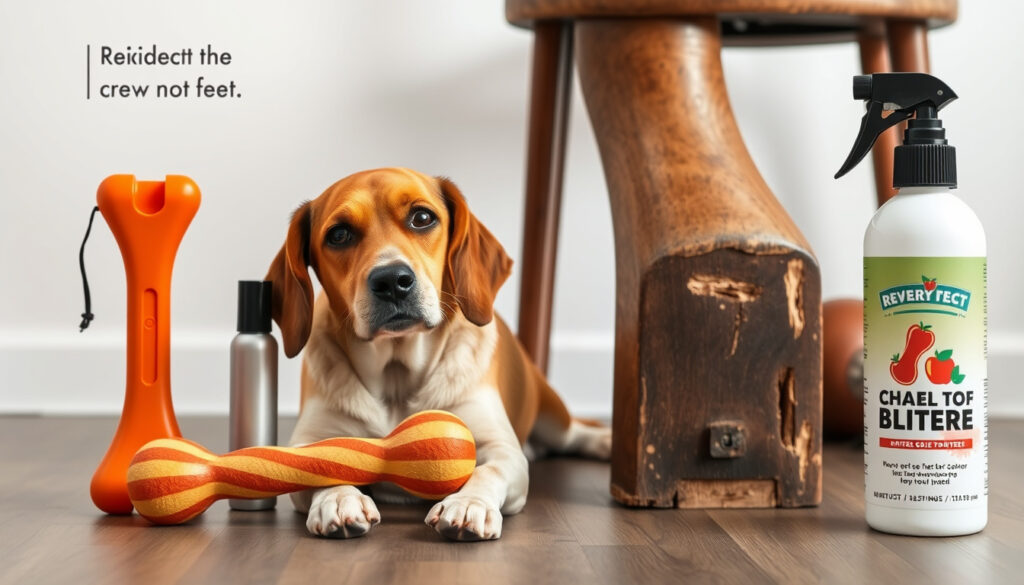
How to Stop Dog Chewing With Training, Toys and Deterrents
You walk into the living room and find your sofa cushion reduced to confetti—again. It’s frustrating, but here’s the thing: dogs chew for a reason. Whether it’s puppy teething, boredom, or a lack of exercise, the behavior is a signal, not a rebellion. This guide shows you how to read that signal and fix the root cause with training, management, and a few clever deterrents.
Dogs spend up to 30% of waking hours chewing: 30% · Boredom is a factor: 70% · Minimum daily exercise recommended: 60 minutes · Puppy teething onset: 3-4 months
Quick snapshot
- Chewing is a natural canine behavior (Humane World for Animals (animal welfare organization))
- Boredom drives 70% of destructive chewing cases (PetMD (veterinary resource))
- Punishment does not stop chewing and can damage trust (PetMD (veterinary resource))
- How effective homemade deterrents are varies widely by dog (PetMD (veterinary resource))
- Long-term results of the 10-minute rule rely on anecdotal evidence (Chewy (pet care retailer))
- Typical chew session lasts 10–15 minutes (PetMD (veterinary resource))
- Puppy teething lasts from 3 to 6 months of age (PetMD (veterinary resource))
- Build a consistent training routine using redirection and positive reinforcement (Humane World for Animals (animal welfare organization))
- Create a management plan: safe zones, chew toy rotation, and supervision (Chewy (pet care retailer))
Five key facts, one pattern: chewing frequency and intensity are almost always tied to an unmet need—exercise, mental stimulation, or teething relief.
| Fact | Value |
|---|---|
| Average chew session length | 10–15 minutes |
| Top commercial deterrent | Bitter apple spray |
| Puppy teething duration | 3–6 months |
| Exercise needed per day (minimum) | 30–60 minutes |
| Most disliked smell (surveyed) | Citrus |
The pattern: dogs chew for a reason, and the data points to unmet needs as the primary driver.
How do I get a dog to stop chewing on everything?
Identify the cause of chewing
- Boredom is the number one driver in adult dogs (Humane World for Animals (animal welfare organization))
- Separation anxiety, fear, and lack of appropriate chew items are common triggers
- Puppies chew because they are teething—their gums ache and need pressure relief (PetMD (veterinary resource))
The implication: fix the cause—boredom, anxiety, or teething—and you solve most chewing before it starts.
Provide appropriate chew toys
- Choose toys in a variety of safe sizes, textures, and colors suited to your dog’s size and chewing style (PetMD (veterinary resource))
- Stuffed Kongs, Nylabones, and durable rubber chews work well for heavy chewers
- Rotate toys every few days to maintain novelty and interest
Owners who rotate toys report that their dogs stay engaged for longer sessions, reducing the temptation to target furniture.
Exercise and mental stimulation
- A tired dog is less likely to chew destructively—aim for 30–60 minutes of daily exercise (Humane World for Animals (animal welfare organization))
- Puzzle toys, training games, and nose work provide mental enrichment that wears out a dog’s brain
What this means: physical and mental exhaustion is a direct lever against destructive chewing.
Use deterrent sprays
- Bitter apple spray is the most common commercial deterrent (Chewy (pet care retailer))
- Always test on a small area first and reapply after cleaning
- Never spray directly into a dog’s mouth—it’s a deterrent, not a punishment
Supervise and manage the environment
- Create a puppy-safe area with a gate or pen, equipped with bedding, crate, and toys (PetMD (veterinary resource))
- When you cannot supervise, confine your dog to that safe area
- Use crate training as a management tool, not a punishment
Can you train a dog to stop chewing?
Positive reinforcement techniques
- Reward your dog when they choose an appropriate chew item (Chewy (pet care retailer))
- Use high-value treats—small pieces of chicken, cheese, or commercial training treats
- Consistency is key: every family member must use the same rules
Teach ‘leave it’ and ‘drop it’ commands
- Start by holding a low-value item in your closed hand, say “leave it,” and reward when your dog looks away
- Gradually increase difficulty: place items on the floor, practice with shoes and remotes
- For ‘drop it,’ offer a high-value trade—your dog learns that releasing an object earns something better (Humane World for Animals (animal welfare organization))
Crate training for management
- A crate should be a positive space—feed meals inside, add a soft bed, and never use it for punishment
- Use the crate when you cannot supervise, especially during puppy teething stages
The pattern: training works when it replaces a bad behavior with a good one, not when it suppresses the urge to chew through fear.
What repels dogs from chewing?
Bitter apple sprays
- Bitter apple spray is widely used but not all dogs dislike the taste (PetMD (veterinary resource))
- Check with your vet before using any deterrent, especially on puppies
Vinegar and citrus solutions
- Mix equal parts white vinegar and water, or use diluted citrus juice
- Test on a hidden area of furniture first to avoid staining
- Reapply often because the scent fades quickly
Commercial deterrent products
- Motion-activated deterrents (cans of compressed air, sprinklers) can startle a dog away from an area
- Sticky tape or plastic coverings make surfaces unpleasant to chew (PetMD (veterinary resource))
Deterrents are a temporary aid. Over-reliance on them without addressing the root cause—boredom, anxiety, teething—means the chewing will just move to a new spot.
What is the 10 minute rule for dogs?
How the rule works
- Give your dog a chew item for 10 minutes, then remove it (Chewy (pet care retailer))
- This prevents over-chewing and helps the dog learn that chew sessions have a beginning and an end
- Especially useful for puppies who have trouble self-regulating
Supervision during chew sessions
- Always watch your dog during the 10-minute period to ensure they don’t swallow large pieces
- Rotate between different types of chews to keep interest high
The catch: the 10-minute rule is widely shared anecdotally, but there is little formal research on its effectiveness. It works as a management technique rather than a cure.
What smell do dogs hate the most?
Common offensive smells
- Citrus—lemons, oranges, grapefruits—is the most commonly cited disliked scent (PetMD (veterinary resource))
- Vinegar and alcohol also tend to repel many dogs
- Not all dogs react the same way; some are unfazed by these smells
Using smells as deterrents
- Apply citrus-infused sprays to furniture legs, baseboards, and cords
- Avoid harsh chemicals like ammonia or essential oils that can be toxic
- Always do a patch test on fabrics and surfaces
Why this matters: smell-based deterrents are cheap and easy, but they work best when combined with training and management—never as a standalone fix.
A Step-by-Step Plan to Change the Habit
- Identify the trigger. Is your dog bored, anxious, or teething? Observe patterns for two days. (Humane World for Animals (animal welfare organization))
- Increase exercise to 30–60 minutes daily. A tired dog chews less. (Humane World for Animals (animal welfare organization))
- Set up a safe zone. Gate off a puppy-proof area with a crate, bed, and a variety of approved chew toys. (PetMD (veterinary resource))
- Supervise and redirect. Whenever you catch your dog chewing a forbidden item, calmly swap it for an approved toy and praise. (Chewy (pet care retailer))
- Use deterrents sparingly. Apply bitter apple spray to high-risk furniture, but treat it as a backup, not a primary solution.
- Practice ‘leave it’ daily. Five minutes of training each day builds a reliable behavior.
- Be patient. Changing a deeply ingrained habit takes weeks, not days. Consistency wins.
Punishment might stop chewing in the moment, but it damages trust and can increase anxiety-driven chewing. Redirection and positive reinforcement build a better long-term relationship.
What we know and what’s still unclear
Confirmed facts
- Punishment is not effective for stopping chewing (PetMD (veterinary resource))
- Positive reinforcement works best (Chewy (pet care retailer))
- Boredom is a primary cause (Humane World for Animals (animal welfare organization))
What’s unclear
- Effectiveness of homemade deterrents varies by dog (PetMD (veterinary resource))
- Long-term results of the 10-minute rule are anecdotal (Chewy (pet care retailer))
- Long-term results of the 7 7 7 rule are anecdotal (Chewy (pet care retailer))
“Destructive chewing in adult dogs can be caused by boredom, separation anxiety, fear-related behavior, lack of appropriate chew toys, or not being taught what is acceptable to chew as a puppy.”
“When a puppy is chewing a dangerous object, remove it quickly and safely. Offer an appropriate chew item instead, and reward the dog for switching.”
For dog owners dealing with persistent chewing, the choice is clear: address the underlying need—whether it’s more exercise, better management, or proper teething relief—or keep replacing furniture. The evidence from animal welfare organizations and veterinary experts consistently points to one path: redirection, not punishment, is the way to a calmer house and a happier dog.
Related reading: How to Make Friends: Steps for Adults & Introverts · Best Books for Emotional Intelligence: Expert Picks to Build EQ
For a deeper look at professional methods and vet-backed solutions, check out how to stop dog chewing how to stop dog chewing for additional training insights.
Frequently asked questions
Why does my dog chew only when I am away?
This is often caused by separation anxiety. Dogs with separation anxiety may chew doors, window frames, or owner belongings as a way to cope with stress. Consult a veterinarian or a certified behaviorist for a tailored plan.
Is it safe to use cayenne pepper as a deterrent?
Cayenne pepper can cause eye and nose irritation, and some dogs may ingest enough to upset their stomach. Check with your vet before using any spicy deterrent. PetMD recommends commercial products like bitter apple spray instead.
What are the best chew toys for heavy chewers?
Heavy chewers need durable rubber toys like Kong Extreme, Nylabone DuraChew, or Goughnuts. Avoid rawhide and hooves that can splinter. Rotate toys to maintain interest.
How long does puppy teething last?
Puppies begin teething around 3–4 months and usually have all adult teeth by 6–7 months. The most intense chewing phase is between 4 and 6 months.
Can I use a muzzle to stop chewing?
Muzzles should only be used for short-term safety and never as a long-term solution. They prevent the dog from breathing properly and can cause heat stress. Focus on training and management instead.
What is the 7 7 7 rule for dogs?
The 7 7 7 rule suggests a dog should be allowed to chew for 7 minutes, then the item is removed for 7 minutes, and this cycle repeats 7 times per session. It is an anecdotal method, not research-backed.
Do dogs grow out of chewing?
Most puppies naturally grow out of destructive chewing as they finish teething, but adult dogs may continue if the behavior is reinforced or if underlying causes (boredom, anxiety) remain. Consistent training is essential.
More related posts
 What Time Is Evening? Start, End Times & Cultural Guide
 Easter Sunday Public Holiday – Status Across Australia 2024
 NZD to Thai Baht Exchange Rate Today: Latest Rates & Conversion
 Q Mastercard NZ Online: How to Use and Apply
 Rokeby Protein Smoothie NZ: 30g Whole Protein, No Added Powder
 Manawatu Standard Obituaries: How to Find Recent Death Notices
 400°F to Celsius: exact conversion and oven tips
 New Plymouth to Napier: Best Travel Routes by Plane, Bus, Car
