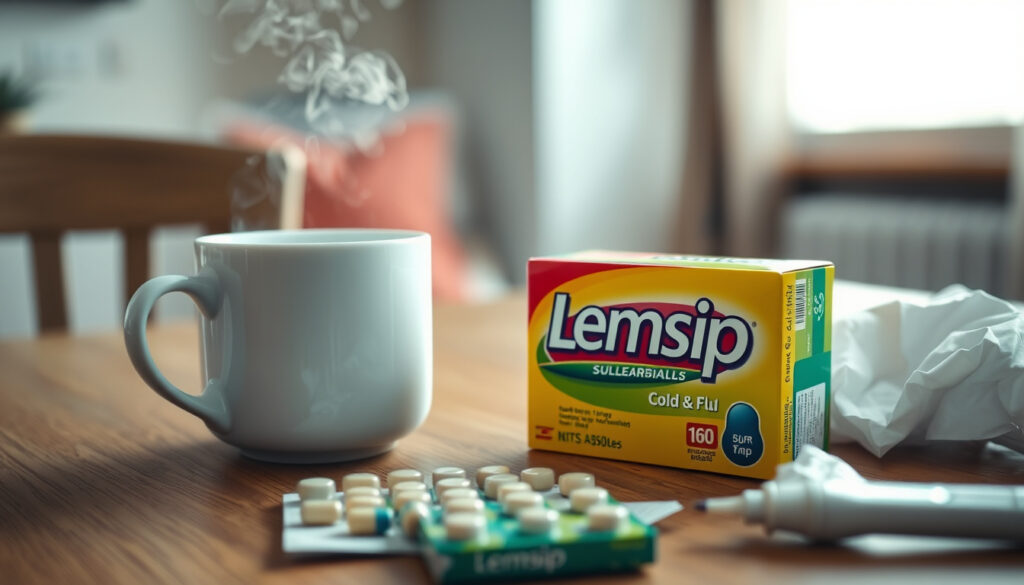
Lemsip Cold and Flu: Does It Really Work? – Efficacy & Safety
You’re on the sofa, tissues everywhere, wondering if that steaming cup of hot lemon drink will actually help. Lemsip is one of the most recognised cold and flu remedies in the UK and Ireland – each sachet packs 1000 mg of paracetamol to ease pain and fever, plus 10 mg of the decongestant phenylephrine. But does the science back the marketing? We look at the evidence behind the ingredients, what experts say, and when you might be better off with plain paracetamol.
Typical cold duration: 7–10 days ·
Worst day of cold: Day 3–4 ·
Paracetamol max daily dose: 4000 mg ·
Phenylephrine dose per sachet: 10 mg ·
Annual colds per adult (UK): 2–4
Quick snapshot
- Lemsip contains paracetamol and phenylephrine (HPRA product record).
- Paracetamol relieves pain and fever from colds and flu (HPRA).
- Maximum paracetamol dose is 4000 mg per day (NHS).
- Cold symptoms peak around day 3–4 (UPMC HealthBeat).
- Whether oral phenylephrine provides meaningful decongestant benefit – The Telegraph cites conflicting evidence.
- Whether combination products like Lemsip are superior to single-ingredient paracetamol for overall symptom relief (Mayo Clinic).
- Symptoms persisting beyond 10 days or worsening may indicate a secondary infection – consult a GP.
- For at-risk groups (asthma, heart disease), early medical advice is recommended.
Five specs that matter: different Lemsip formats share core ingredients but vary paracetamol dose and additional actives.
| Spec | Value |
|---|---|
| Product Type | Over-the-counter cold and flu remedy |
| Active Ingredients | Paracetamol 1000 mg, Phenylephrine 10 mg per sachet/capsule |
| Forms Available | Sachets (hot lemon, lemon & menthol), capsules, tablets |
| Dosage (Adults) | 1 sachet/capsule every 4–6 hours, max 4 doses per day |
| Price Range (Ireland) | €5 – €10 per pack (10 sachets) |
A cold sufferer popping Lemsip gets a proven painkiller and fever reducer, but the decongestant effect may be modest. If you only need headache relief, plain paracetamol costs less; if stuffiness is the main grip, a topical nasal spray might work faster.
Is Lemsip good for cold and flu?
What does Lemsip contain?
Standard Lemsip Cold & Flu hot lemon sachets contain 500 mg paracetamol (the Max version doubles that to 1000 mg) and 10 mg of the decongestant phenylephrine hydrochloride, according to the Health Products Regulatory Authority (HPRA) product record. Some variants, like Lemsip Multi Relief Capsules, add guaifenesin 100 mg as an expectorant (patient leaflet via Healthwave).
- Paracetamol – analgesic and antipyretic (pain and fever).
- Phenylephrine – nasal decongestant (reduces swelling in nasal passages).
- Guaifenesin (in Multi Relief) – expectorant to loosen phlegm.
How do its ingredients help cold and flu symptoms?
Paracetamol is the workhorse. It acts on the brain’s temperature and pain centres to lower fever and soothe headache, sore throat, and body aches – all backed by decades of use and NHS guidance. Phenylephrine constricts blood vessels in the nose, theoretically easing congestion. The hot drink format may also provide a soothing effect for a sore throat.
What do experts say about its effectiveness?
A Telegraph investigation quotes pharmacists who note that while paracetamol reliably addresses pain and fever, the oral phenylephrine component rests on thin evidence. Several trials showed no significant difference from placebo for nasal congestion. The Mayo Clinic likewise states that “decongestants taken by mouth may be less effective than those used as nasal sprays.”
Are there better alternatives?
For a purely symptomatic cold, plain paracetamol or ibuprofen handle fever and aches just as well for a fraction of the price. If nasal congestion is severe, a topical decongestant spray (e.g., oxymetazoline) delivers direct relief. Combination products like Lemsip offer convenience – one dose covers multiple symptoms – but you pay for ingredients with questionable added value.
The implication: Lemsip is a decent short-term option when you want a single, hot drink to tackle fever, pain, and stuffiness all at once. But if you only need one of those effects, a single-ingredient product may be more cost-effective.
What’s better for a cold, Lemsip or paracetamol?
How does Lemsip compare to plain paracetamol?
Three differences, one pattern: Lemsip adds a decongestant but at a higher per-dose cost.
| Factor | Plain Paracetamol | Lemsip Cold & Flu |
|---|---|---|
| Active ingredient(s) | Paracetamol only (500–1000 mg) | Paracetamol + Phenylephrine |
| Symptom coverage | Pain and fever | Pain, fever, + nasal congestion |
| Cost per dose (approx.) | €0.05–0.10 | €0.50–1.00 |
| Form | Tablets / capsules | Sachet (hot drink) or capsules |
When would you choose one over the other?
If the only symptoms are fever and headache – common in early colds – plain paracetamol does the job. Lemsip becomes relevant when you also have noticeable nasal congestion and want a single product. The Mayo Clinic notes that “combination cold medicines” can be convenient but “you may end up treating symptoms you don’t have.”
What additional benefit does phenylephrine provide?
Theoretically, phenylephrine shrinks blood vessels in the nose to relieve stuffiness. The Telegraph reports that many experts believe oral phenylephrine is poorly absorbed and may reach the nose in insufficient concentrations – a view echoed by a 2015 FDA advisory panel that questioned its oral efficacy. The catch: you might pay extra for a decongestant effect that, at best, is modest and inconsistent.
If you have high blood pressure, the phenylephrine in Lemsip can raise BP further. Check with a pharmacist before using.
Does Lemsip really work?
What evidence supports paracetamol?
Paracetamol is among the most studied analgesic‑antipyretic drugs. Randomised trials confirm it reduces fever and eases headache, sore throat, and body aches associated with colds. The NHS and the HPRA endorse its use for these symptoms.
What is the controversy around phenylephrine?
Oral phenylephrine’s efficacy as a decongestant has been under scrutiny. A 2015 FDA advisory committee concluded that evidence was insufficient to support its oral effectiveness at standard doses. The Telegraph cites UK pharmacists who say “you’re better off with a nasal spray” if congestion is severe. Despite this, it remains available because it is generally safe and some patients report subjective benefit.
What do real-world trials or surveys indicate?
Surveys of GPs and pharmacists suggest Lemsip is widely recommended for symptomatic relief, but not because it cures the cold faster. The Mayo Clinic emphasises that rest, fluids, and time remain the core treatments. A 2020 Cochrane review found no evidence that any over‑the‑counter combination shortens illness duration.
How long does it take to feel relief?
Paracetamol onset of action is 30–60 minutes. So relief from headache and fever should come within an hour. Decongestant effect, if it works, may take 1–2 hours. Cold symptoms naturally peak on day 3–4 and improve thereafter – so any benefit from Lemsip sits within that self‑limiting timeline.
The trade‑off: you get symptomatic relief, but the cold will run its course regardless. Lemsip does not shorten the illness – it only makes those 7–10 days more tolerable.
When should you not take Lemsip?
Who should avoid Lemsip?
- Anyone with severe liver disease or taking other paracetamol products (overdose risk).
- People with uncontrolled high blood pressure, hyperthyroidism, or taking MAOIs (phenylephrine interaction).
- Children under 12 (patient leaflet).
- Pregnant or breastfeeding women should consult a doctor first (Mayo Clinic).
What medical conditions make Lemsip unsafe?
The HPRA leaflet lists contraindications: severe coronary heart disease, high blood pressure, thyroid overactivity, and glaucoma. The paracetamol component also carries risk for those with liver issues – especially combined with alcohol.
What are the warnings about paracetamol overdose?
Exceeding 4000 mg paracetamol in 24 hours can cause severe liver damage. Many people accidentally double‑dose because Lemsip is taken alongside other cold products that also contain paracetamol. Always check labels. The NHS stresses never to take two paracetamol‑containing medicines at the same time.
Lemsip contains paracetamol and phenylephrine, but you may not realise many nighttime cold remedies, cough syrups, and even some painkillers also contain paracetamol. Overlap can push you past the daily limit without warning.
What not to mix with Lemsip?
Which medicines interact with Lemsip?
- Other paracetamol‑containing products (risk of liver toxicity).
- MAOIs (monoamine oxidase inhibitors, used for depression) – can cause dangerous blood pressure spikes due to phenylephrine.
- Beta‑blockers and other antihypertensives – phenylephrine may reduce their effectiveness.
Can you take Lemsip with other pain relievers?
You can take ibuprofen alongside Lemsip if needed (different mechanism), but never combine with another paracetamol product. The NHS advises spacing doses and checking all labels.
What about alcohol or caffeine?
Alcohol increases paracetamol liver toxicity risk, especially for heavy drinkers. Caffeine is generally safe, but some Lemsip variants contain caffeine – be mindful if you consume coffee or energy drinks.
Are there herbal interactions?
St John’s Wort may reduce paracetamol effectiveness by speeding its breakdown. Kava kava and other liver‑affecting herbs could compound toxicity. Consult a pharmacist if you take herbal supplements.
The pattern: Lemsip is safe if used alone and as directed – the danger comes from layering other medicines or alcohol without realising.
Confirmed facts
- Lemsip contains paracetamol and phenylephrine (HPRA).
- Paracetamol reliably relieves cold‑related pain and fever (NHS).
- Maximum daily paracetamol dose is 4000 mg.
- Oral phenylephrine’s decongestant efficacy is questioned (The Telegraph).
What’s unclear
- Whether oral phenylephrine provides real decongestant benefit.
- Whether Lemsip is superior to cheap paracetamol for total symptom relief.
- Whether the hot drink format adds any pharmacological benefit beyond comfort.
What the experts say
“Paracetamol works on pain and fever – that’s solid. Nasal decongestants taken by mouth have much weaker evidence.”
— The Telegraph (quoted pharmacist, 2025)
“Rest, fluids, and time are the mainstays of treating a cold. Over‑the‑counter medicines can help symptoms but won’t make it go away faster.”
— Mayo Clinic (trusted medical institution)
“Symptoms usually peak on day three or four – that’s when you feel worst. After that it’s mostly recovery.”
— UPMC HealthBeat (healthcare system)
For the average UK adult catching two to four colds each winter, Lemsip offers a convenient warm drink that tackles fever and pain – but the decongestant component is optional at best. If you already have paracetamol at home and your main symptom is a headache, stick with that. If you want the comfort of a hot lemon drink and don’t mind paying extra for a possible decongestant boost, Lemsip is fine. The real warning comes from accidental doubling up on paracetamol: check every label. For people with high blood pressure or liver concerns, the choice is clear: avoid products containing phenylephrine and read the paracetamol content.
Frequently asked questions
Can you take Lemsip with ibuprofen?
Yes, you can take ibuprofen alongside Lemsip, but never take another paracetamol product at the same time. Ibuprofen works differently and can be alternated for fever and pain. Check with a pharmacist if you have stomach issues.
Is Lemsip safe during pregnancy?
The Mayo Clinic advises consulting your doctor before taking any cold remedy during pregnancy. Paracetamol is generally considered safe in the second and third trimesters, but phenylephrine may raise blood pressure – so medical guidance is important.
How often can I take Lemsip?
Adults can take 1 sachet or capsule every 4 to 6 hours, with a maximum of 4 doses in 24 hours (regardless of paracetamol strength). Never exceed 4000 mg of paracetamol per day. The NHS has a clear dosage guide.
Does Lemsip make you drowsy?
Standard Lemsip does not contain antihistamines, so it is non‑drowsy. However, some Lemsip Night variants include diphenhydramine – check the label if you need to drive.
Can I take Lemsip with cough medicine?
Many cough medicines also contain paracetamol – check the label. If they do, you risk exceeding the daily limit. If the cough medicine is paracetamol‑free (e.g., simple linctus), it is safe to combine.
What is the difference between Lemsip Max and regular Lemsip?
Lemsip Max contains 1000 mg paracetamol per dose; regular Lemsip contains 500 mg. The dose frequency and max daily limit (4000 mg) remain the same – the Max version simply gives a stronger single dose for those who need it.
Can children take Lemsip?
According to the patient leaflet, children aged 12 to 15 may take 1 sachet every 4 to 6 hours (max 4 doses per day). Children under 12 should not take Lemsip. Paracetamol suspensions designed for children are a better alternative.
Related reading
More related posts
 Brisbane to Auckland Flights: Cheap Deals & Times
 James Bond Movies in Order: Chronological Guide (1962–2021)
 Time in England Now: Current UK Time & Clock Changes 2026
 Snowboarding Milano Cortina 2026: Schedule, Events & McMorris
 ANZ Branches Open Today: Locator, Hours & Near Me
 Cast of His and Hers (2026) – Full List and Characters
 Ladybug and Cat Noir: Complete Guide to Miraculou Ladybug (2024)
 Signs of a Heart Attack: Symptoms & Early Warnings
