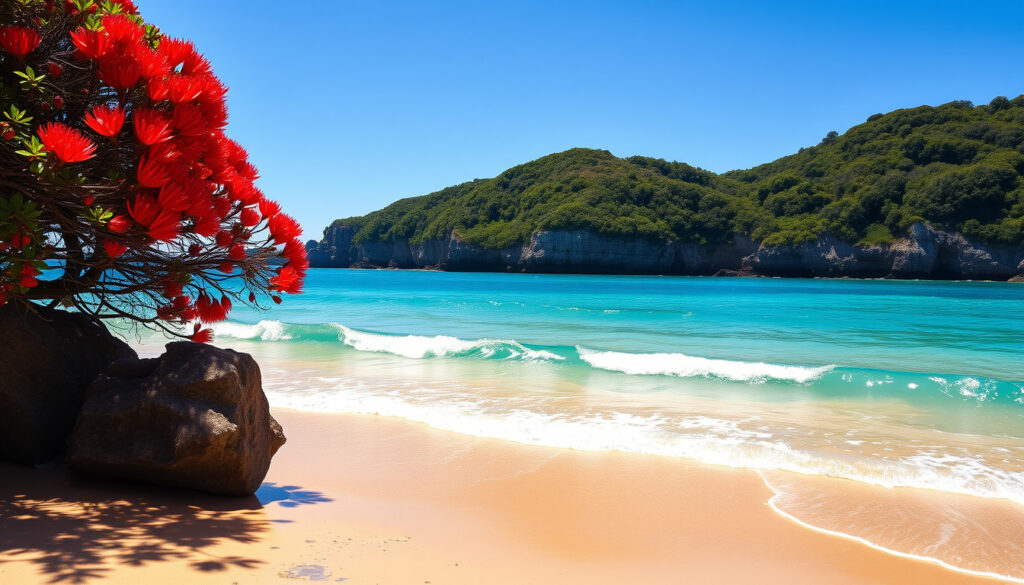
When Is Summer NZ – Official Dates, Months, Seasons Guide
Summer in New Zealand runs from December through February, aligning with the Southern Hemisphere’s seasonal cycle. While the exact dates vary slightly depending on whether you follow meteorological or astronomical definitions, the practical travel and lifestyle season remains consistent. Understanding these dates helps visitors and residents plan everything from beach trips to hiking adventures.
The country uses meteorological seasons for official weather statistics, with summer officially beginning on December 1 and ending on February 28 or 29. This system, adopted by NIWA and MetService, provides consistency for comparing weather data across years.
What Months Are Summer in New Zealand?
December, January, February
1 December – 28/29 February
20–25°C nationwide
Beaches, hiking, festivals
- New Zealand uses meteorological seasons for official weather records and statistics
- Astronomical summer shifts yearly, typically beginning around December 21
- Warmer conditions prevail in the North Island compared to southern regions
- December and January mark the peak tourism season
- UV radiation is extremely high; sun protection is essential year-round
- Daylight saving extends evenings, with sunsets around 9:30 pm
- Regional weather varies significantly between coastal and inland areas
| Aspect | Details |
|---|---|
| Meteorological Summer | 1 December – 28/29 February |
| Astronomical Summer | Approximately 21 December – 20 March |
| Hottest Month | Typically February |
| Longest Day | Summer solstice around December 21 |
| Official Sources | NIWA, MetService |
| Peak Sunshine Regions | Marlborough, Nelson, Hawke’s Bay, Bay of Plenty |
When Does Summer Start and End in New Zealand?
Meteorological Summer Dates
Meteorological summer begins on December 1 and concludes on February 28 or 29, depending on whether it’s a leap year. This system divides the year into four equal seasons of three months each, making it easier to compare weather statistics across different years. NIWA has used this method since the late 1700s because it aligns closely with actual weather patterns.
The fixed dates mean that December 1 is always the start of summer for official record-keeping purposes. This affects everything from tourism marketing to agricultural planning and school holiday schedules throughout the country.
Astronomical Summer Dates
Astronomical summer starts at the summer solstice, when the sun reaches its highest position in the sky and the day is longest. In the Southern Hemisphere, this typically occurs around December 21 or 22. The season then extends to the autumn equinox, usually around March 20 or 21.
These dates shift slightly each year because the Earth’s orbit around the sun is not perfectly circular and takes approximately 365.25 days. Time and Date provides annual calculations for these astronomical events.
Meteorological summer starts about three weeks before astronomical summer. For example, December 1, 2025 marks the start of meteorological summer, while astronomical summer begins around December 21, 2025. Both definitions are widely used depending on context.
Why Is Summer December to February in NZ?
Southern Hemisphere Seasonal Logic
New Zealand experiences summer during December through February because it is located in the Southern Hemisphere. The Earth’s axis tilts approximately 23.5 degrees, causing different regions to receive more direct sunlight at different times of year. When the Southern Hemisphere tilts toward the sun, those regions experience summer.
This means New Zealand’s seasons are the opposite of Europe and North America. When countries like the United Kingdom and Canada enjoy winter, New Zealand basks in summer sunshine. Wikipedia’s climate overview provides detailed explanations of this geographical phenomenon.
Does New Zealand Have Summer in December?
Yes, December is the first month of summer in New Zealand. By late December, the country experiences its longest days of the year. On the summer solstice, some locations in the far south experience only a few hours of darkness, while the far north has extended daylight hours.
Daylight saving time begins in late September, adding an hour to clocks. This means evenings remain bright well into the night throughout summer, with sunsets often occurring around 9:00 pm or later in major cities.
New Zealand Seasons Calendar Overview
Regional Temperature Variations
Summer temperatures vary significantly across New Zealand’s diverse geography. Coastal areas typically enjoy milder conditions, while inland regions can experience greater extremes. The following table shows typical summer temperature ranges for major cities.
| City | Summer Min–Max (°C) | Region |
|---|---|---|
| Auckland | 17–24 | Upper North Island |
| Wellington | 14–20 | Lower North Island |
| Christchurch | 13–23 | Canterbury |
| Queenstown | 9–23 | Otago |
The far north experiences subtropical conditions, while southern regions like Southland can still feel cool, especially near mountains. New Zealand’s official tourism site notes that summer brings over 2,000 sunshine hours annually, with the brightest regions being Marlborough, Nelson, Hawke’s Bay, and Bay of Plenty.
Planning a Summer Trip to New Zealand
Summer represents the peak tourism season, with December through February offering the most reliable weather for outdoor activities. Beach destinations, hiking trails, and adventure sports all operate at full capacity during these months.
For those planning to celebrate the new year, New Zealand New Year’s Eve Weather – 2025 City Forecasts and Risks provides city-specific information. Labour Day 2025 NZ – Date, Rules and Weekend Guide also helps visitors understand public holiday arrangements during the summer season.
Book accommodations and popular attractions well in advance for January travel, as this is the busiest month. December offers a good balance of accessibility and reduced crowds before the school holiday peak.
Summer Weather Patterns and Outlook
2024-2025 Season Expectations
According to NIWA and Earth Sciences New Zealand forecasts, above-average temperatures were anticipated for much of the country during the 2024-2025 summer season. Marine heatwaves were expected to boost temperatures, particularly in areas experiencing northerly flows.
Rainfall patterns were predicted to vary throughout the season. The upper North Island was expected to experience a relatively dry start, potentially lasting four to six weeks, before transitioning to patterns resembling La Niña conditions. These conditions typically bring low pressure systems from the northwest, increasing storminess, rainfall, and flooding risks in some regions.
Storm activity was expected to be more common early in the season, with low-pressure systems bringing variable conditions. Visitors should monitor MetService forecasts regularly and prepare for rapid weather changes, especially in coastal and alpine areas.
Key Dates on the Summer Calendar
- : Meteorological summer officially begins
- : Summer solstice—longest day of the year
- : Peak heat and tourism season
- : End of meteorological summer (29 February in leap years)
- : Astronomical summer ends with the autumn equinox
What We Know and What Remains Uncertain
| Established Information | Uncertain or Variable |
|---|---|
| Meteorological summer runs 1 Dec–28/29 Feb | Astronomical dates shift 1–2 days annually |
| NIWA and MetService use meteorological definition | Regional weather patterns vary year to year |
| New Zealand is in Southern Hemisphere | Exact timing of seasonal transitions |
| December–February are summer months | Impact of climate change on seasonal timing |
Understanding New Zealand’s Seasonal Context
New Zealand’s position in the Southern Hemisphere fundamentally shapes its seasonal calendar. The country spans approximately 1,600 kilometers from north to south, resulting in significant climate variation. The northern tip sits at subtropical latitudes while the southern regions approach temperate zones.
This geographical reality means summer aligns with the calendar period when the Southern Hemisphere receives the most direct sunlight. The surrounding Pacific Ocean moderates temperatures, preventing the extreme heat found in continental landmasses at similar latitudes.
For statistics and planning purposes, the meteorological definition provides the most useful framework. However, astronomical calculations remain important for cultural events, agricultural practices, and understanding the science behind seasonal changes.
Sources and Expert Commentary
“Meteorological summer is December, January, February.”
— NIWA, National Institute of Water and Atmospheric Research
NIWA has consistently advocated for the meteorological definition of seasons, noting it provides consistency for comparing weather data across decades. The organization observes that while summers are warming due to climate change, there is no clear trend indicating the thermal summer—the warmest 90-day period—has shifted significantly earlier in recent years.
MetService provides daily forecasts and seasonal outlooks using the meteorological framework, while Time and Date calculates precise astronomical dates based on solar events.
Summary
Summer in New Zealand spans December through February by both meteorological and common calendar definitions. Meteorological summer begins on December 1 and ends on February 28 or 29, providing fixed dates for official purposes. Astronomical summer varies slightly each year, typically starting around December 21 with the summer solstice and ending near March 20. Understanding these definitions helps visitors and residents plan activities, with December and January offering the warmest weather and peak tourism conditions throughout the country.
Frequently Asked Questions
What are typical summer weather patterns in New Zealand?
Summer brings warm temperatures of 20–25°C in coastal areas, with over 2,000 annual sunshine hours. The far north experiences subtropical conditions, while southern regions remain cooler. Rainfall varies regionally, with some areas experiencing dry starts followed by wetter periods.
What is the difference between meteorological and astronomical summer?
Meteorological summer has fixed dates (December 1–February 28/29) used for weather statistics. Astronomical summer is defined by solar events—the solstice and equinox—causing dates to shift slightly each year by 1–2 days.
When is the best time to visit New Zealand for summer weather?
December and January offer the warmest conditions and longest days. January is peak season, so expect more crowds and higher prices. Late November to early December provides a good balance of good weather and fewer tourists.
Why does New Zealand have summer in December?
New Zealand is in the Southern Hemisphere, which tilts toward the sun during December–February. This tilt causes the Southern Hemisphere to receive more direct sunlight during these months, producing summer conditions opposite to those in the Northern Hemisphere.
Does New Zealand use daylight saving time in summer?
Yes, daylight saving time begins in late September and continues until early April. Clocks move forward one hour, extending evening daylight to around 9:30 pm during summer months.
What should I pack for a summer trip to New Zealand?
Pack light layers, sun protection including high-SPF sunscreen, a hat, and sunglasses. UV radiation is extremely high in summer. Include both warm layers for cooler evenings and rain gear, as weather can change quickly, especially in mountainous areas.
Which parts of New Zealand are warmest in summer?
The far north, particularly Northland and Bay of Plenty, experiences the warmest temperatures, sometimes reaching 30°C or higher. Hawke’s Bay and Nelson-Marlborough also enjoy consistently warm summer weather with high sunshine totals.
More related posts
 United Airlines Manage Booking – Guide to Changes, Cancellations & More
 Inland Revenue Student Loan Arrests – Latest Stats and Enforcement
 Monterey Jack Cheese NZ: Where to Buy & Substitutes
 Mobile Plans NZ Compare: Cheapest, Best Coverage & Unlimited
 What Time Is Evening? Start, End Times & Cultural Guide
 Nike Pro Shorts NZ: Fit, Quality & Where to Buy (2025 Guide)
 How to Combine PDF Files for Free: 5 Methods for Any Device
 Corsair Bay Beach Closure: What Happened and Next Steps
