Air New Zealand Strike 2026: Cancellations, Rights, and Refunds
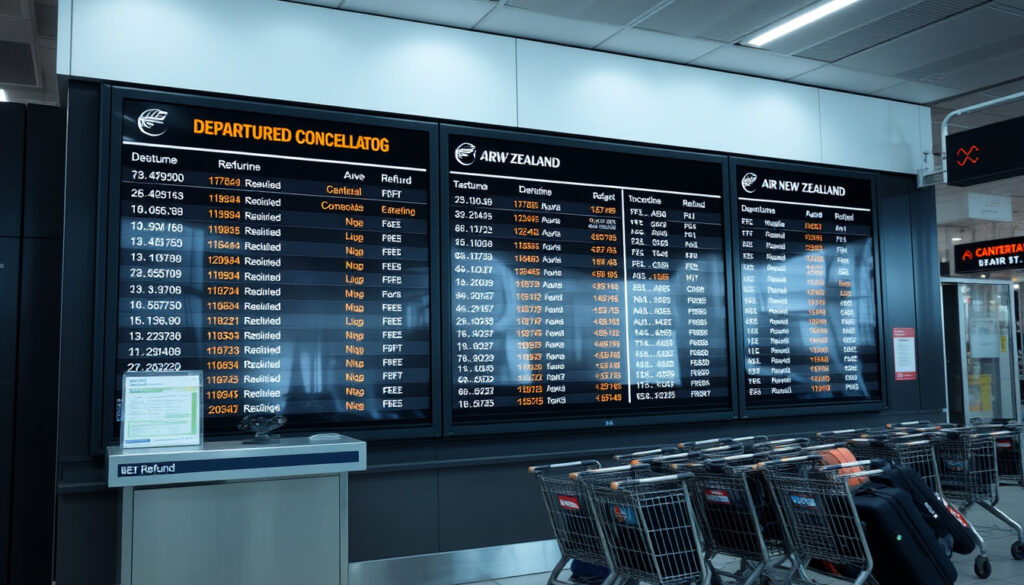
Few things derail travel plans quite like a last-minute airline strike. If you booked an Air New Zealand international flight in February 2026, you were among thousands who found themselves scrambling after 44 long-haul services were cancelled as cabin crew walked off the job over a living wage dispute.
International flights cancelled: 44 ·
Customers affected: 9,500 ·
Strike date: February 2026 ·
Outcome: Living wage agreement in principle
Quick snapshot
- 44 international flights cancelled (AeroTime)
- 9,500 passengers affected (Insurance Business Magazine)
- Living wage agreement reached (Reuters)
- Full refund or rebooking for cancelled flights (Air New Zealand)
- No additional compensation for strike as extraordinary circumstance (Consumer NZ)
- Travel insurance may cover strike-related expenses (Insurance Business Magazine)
- Cancel online via My Bookings (Air New Zealand)
- Refund to original payment method (Air New Zealand)
- Processing time 7-14 business days (Air New Zealand)
These figures set the scale of the disruption.
| Fact | Value |
|---|---|
| Strike start date | February 11, 2026 |
| Number of flights cancelled | 44 international services |
| Customers affected | 9,500 |
| Compensation available | Refund or rebooking (no statutory compensation) |
| Contact | Air New Zealand customer service or app |
What happens if my flight is affected by a strike?
Your rights when Air New Zealand cancels due to strike
When a strike forces the airline to pull a flight, the carrier’s legal obligation is straightforward: offer an alternative or give the money back. Air New Zealand’s credit and refund policy (airline’s official guidance) states that passengers whose flight is cancelled can request a full refund regardless of country of residence or purchase. However, the airline notes that fare rules may still apply — a nuance that can trap travellers who assume a blanket “you’re free to go” policy.
For departures from EU airports, the rules are stricter. Consumer NZ (New Zealand’s independent consumer watchdog) confirms that passengers flying out of an EU airport can choose between rerouting to their final destination or a refund.
A strike is classified as an extraordinary circumstance under airline policy, which means you won’t get the same statutory compensation you’d receive for a mechanical failure or airline-caused delay. The trade-off: the refund and rebooking guarantees remain in place — just not the cash payout.
What compensation can you claim?
The compensation picture depends on where you are flying from, not where Air New Zealand is based. For passengers departing from New Zealand or most non-EU countries, there is no statutory cash compensation for strike-related cancellations. Consumer Protection New Zealand (government-funded advice body) makes it clear that airlines must offer refunds or rebooking, but cash compensation is not required for extraordinary circumstances like industrial action.
Travel insurance becomes the key player here. Insurance Business Magazine reported that strike coverage varies by policy — some insurers treat it as a named peril, while others exclude it. Passengers should check their policy documents specifically for “strike” or “industrial action” clauses.
Rebooking and alternative travel options
AirHelp (passenger rights advocacy platform) reported that Air New Zealand contacted impacted customers and offered rebooking two to three days around the strike dates, travel credits, or refunds. The airline’s official refund page processes refunds to the original payment method — not a voucher — within 7-14 business days.
Auckland Airport, the main hub for Air New Zealand’s international network, managed the cancellations without major terminal congestion, suggesting the proactive cancellations reduced the chaos but not the inconvenience for 9,500 travellers.
The implication: rebooking quickly is your best shot at minimising disruption. If your flight was cancelled, take the refund or alternative offered within the airline’s communications window — waiting too long may limit options.
Are Air New Zealand flights being cancelled today?
How to check if your flight is cancelled
Air New Zealand’s travel alerts page (airline’s official disruption hub) is the single most reliable source for real-time status. The airline also pushes SMS and email notifications for cancelled flights automatically. For active checking, use the Air New Zealand app or the “Manage Booking” section on the website with your booking reference.
Domestic flights were largely unaffected according to newsroom updates during the strike. If you have a domestic booking, it likely operates normally. International services — especially to long-haul destinations — face the highest cancellation risk. As of October 2026, the strike has been resolved, but Consumer NZ reported that Air New Zealand separately cut 1,100 flights from its March 2026 schedule due to broader operational pressures.
Auckland airport disruptions
On February 11, 2026, Auckland Airport handled the bulk of the 44 cancelled international services. AeroTime reported that the cancellations involved wide-body aircraft — Boeing 777s and 787 Dreamliners — which primarily serve routes to the United States, Asia, and the Pacific Islands.
International vs domestic flight status
The strike targeted international routes because those are crewed by the striking cabin crew. Domestic flights operated by different crew groups continued normally. Reuters clarified that the cancellations were pre-emptive — the airline decided to cancel the flights before the strike began rather than risk stranding passengers mid-journey. That decision gave passengers time to rebook, but it also locked in disruption for nearly 10,000 people.
The pattern: proactive cancellations are a double-edged sword — they provide notice but confirm the loss of the trip. For passengers, the lead time meant refund options were available immediately, not after weeks of uncertainty.
Why is Air New Zealand going on strike?
Background of the strike
The strike did not come out of nowhere. Cabin crew represented by the ETU union had been in negotiations with Air New Zealand for months over starting wage rates. Reuters reported that the strike was triggered by stalled contract talks — specifically, the union’s demand that all cabin crew start at the living wage rate, regardless of experience or route seniority.
Cabin crew demands for living wage
The ETU union framed the demand as a fairness issue: new-hire cabin crew were reportedly earning below the living wage benchmark, even though they performed the same safety and service duties as higher-paid colleagues. The strike was intended to pressure Air New Zealand into closing that gap.
Negotiation timeline
The timeline moved fast once the strike was announced:
- Early February 2026: Cabin crew leaders initiate strike action after living wage negotiations stall
- February 10, 2026: Facilitated bargaining fails; strike formally announced
- February 11, 2026: 44 international flights cancelled; 9,500 passengers affected
- February 12, 2026: Agreement in principle reached — all crew to start on living wage rate
Reuters confirmed that the agreement in principle ended the strike quickly, with the commitment that all cabin crew would begin employment at the living wage rate going forward.
The strike lasted barely 48 hours but cancelled 44 flights. The outcome — a living wage guarantee — sets a precedent for crew pay across the Oceania aviation sector, but it also demonstrates how fast industrial action can trigger travel disruption.
The implication: a quick resolution does not undo the disruption for those 9,500 passengers, and the precedent may encourage similar actions elsewhere.
How will I know if my flight is cancelled?
Air New Zealand travel alerts
Air New Zealand’s travel alerts page lists all disruptions by route and date. During the strike, the airline updated this page daily. For current travel, it is the first place to check before heading to the airport.
Checking flight status by flight number
Enter your flight number on the Air New Zealand website or app for real-time status. The app also sends push notifications for gate changes and cancellations.
Email and app notifications
Air New Zealand sends automated SMS and email alerts for cancellations. If you have not received any notification but suspect disruption, log into your booking — the system shows the current status. Air New Zealand’s customer service plan also allows cancellation of bookings made at least one week in advance within 24 hours of ticketing, though this is separate from the strike policy.
What this means: staying passive is risky. If you have a booking during a period of industrial action, check the travel alerts page the day before departure — even if you have not received an email.
Can I cancel my Air New Zealand flights and get a refund?
Air New Zealand strike refund policy
Yes — if your flight is cancelled by the airline, you are entitled to a full refund. Air New Zealand’s official refund policy states that passengers can request a refund regardless of where they live or bought the ticket. This applies even for strike-related cancellations.
However, if your flight operates as scheduled but you choose not to travel because of the strike, normal cancellation fees apply. Insurance Business Magazine reported that customers who decided not to travel could request a refund or apply the fare value as a credit for future travel — but the distinction between “your choice to cancel” and “airline’s decision to cancel” is critical.
How to request a refund
Refunds are processed through the My Bookings section of the Air New Zealand website. The process takes 7-14 business days and the amount goes back to the original payment method. If you booked through a travel agent, contact the agent directly.
Vouchers vs cash refund
Air New Zealand offers cash refunds for cancelled flights — not forced vouchers. AirHelp noted that the airline also offered travel credits as an alternative, but the default for cancelled flights should be a cash refund to your original payment method.
The trade-off: if you accept a credit, you lock yourself into future Air New Zealand travel. If you take the refund, you have cash to book with any carrier — but you lose the seat protection for the original itinerary.
Air New Zealand says fare rules may still apply even when a refund option exists. That means promotional or sale fares may only give you a partial refund or credit, not the full amount paid. Always check the fare conditions in your booking confirmation.
Timeline: Key events of the 2026 Air New Zealand cabin crew strike
- Early February 2026: Cabin crew leaders initiate strike action over living wage negotiations
- February 10, 2026: Facilitated bargaining fails; strike formally announced
- February 11, 2026: 44 international flights cancelled; 9,500 passengers affected (AeroTime)
- February 12, 2026: Agreement in principle reached — all crew to start on living wage rate (Reuters)
The timeline signal is clear: the strike was short but impactful. The agreement in principle came the day after the cancellations, suggesting the disruption tipped the balance in negotiations. For passengers, the lesson is that industrial action can end as quickly as it started — but the cancelled flights remain cancelled.
What’s confirmed, what’s still unclear
Confirmed facts
- 44 international flights cancelled on February 11, 2026 (AirHelp)
- 9,500 customers affected (Insurance Business Magazine)
- Agreement in principle on living wage rate for cabin crew (Reuters)
- Passengers can get refund or rebooking (Air New Zealand)
What’s unclear
- Exact number of domestic flight cancellations (if any)
- Full resumption schedule of international flights post-strike
- Future strike action if agreement fails to ratify
- Percentage of passengers who opted for refund vs rebooking
Key quotes from the dispute
“Air New Zealand has cancelled 46 wide-body long-haul services ahead of a planned two-day cabin crew strike.”
— Reuters
“Customers who decide not to travel can request a refund or apply the fare value as a credit for future travel.”
— Insurance Business Magazine
The strike ended with a living wage agreement, but the disruption has left a mark on passenger confidence and raised questions about how airlines communicate industrial action.
For New Zealand travellers, the choice is clear: always check travel alerts before departure, insure against strike risk if possible, and know that a refund or rebooking is guaranteed when the airline cancels — but cash compensation will not follow. For the airline, the precedent is equally stark: a 48-hour strike that cost 44 flights and 9,500 disrupted journeys was enough to secure the living wage outcome the union demanded.
For a detailed breakdown of passenger rights and disruption timelines, refer to our coverage of the Air New Zealand cabin crew strike.
Frequently asked questions
Can I claim travel insurance for a flight cancelled due to strike?
It depends on your policy. Insurance Business Magazine notes that strike coverage varies—some policies include it as a named peril, others explicitly exclude it. Check your policy for “strike” or “industrial action” clauses.
Is the Air New Zealand strike still ongoing?
No. The February 2026 strike was resolved within 48 hours when an agreement in principle was reached on living wage rates for cabin crew (Reuters). However, Air New Zealand separately cut 1,100 flights from its March 2026 schedule due to operational pressures (Consumer NZ).
What international flights are affected by the strike?
The February 2026 strike affected 44 long-haul international services operated by wide-body aircraft (AeroTime). These primarily served routes to the United States, Asia, and the Pacific Islands.
Can I rebook without a change fee if my flight is cancelled?
Yes. AirHelp reported that Air New Zealand offered rebooking two to three days around the strike dates without additional fees for affected passengers.
Are domestic flights in New Zealand affected by the strike?
Domestic flights were largely unaffected during the February 2026 strike, as the action involved cabin crew assigned to international routes (Reuters).
How long does the cancellation refund process take?
Refunds are typically processed within 7-14 business days to the original form of payment (Air New Zealand).
Will Air New Zealand provide hotel accommodation if stranded?
Strike-related accommodation is not guaranteed. Contact customer service for case-by-case assistance. Travel insurance with strike coverage may help with accommodation costs.
More related posts
 What Is Black Friday? History, Origin, and Key Facts
 What Time Is Evening? Start, End Times & Cultural Guide
 Sex and the City: Facts Behind the Feuds and 9/11 Changes
 Flights Christchurch to Brisbane: Compare Prices, Times & Airlines (2025)
 New South Wales Blues: History, Coach, and State of Origin
 James Bond Movies in Order: Chronological Guide (1962–2021)
 Call Me by Your Name – Plot Cast Ending Explained
 Mobile Plans NZ Compare: Cheapest, Best Coverage & Unlimited
