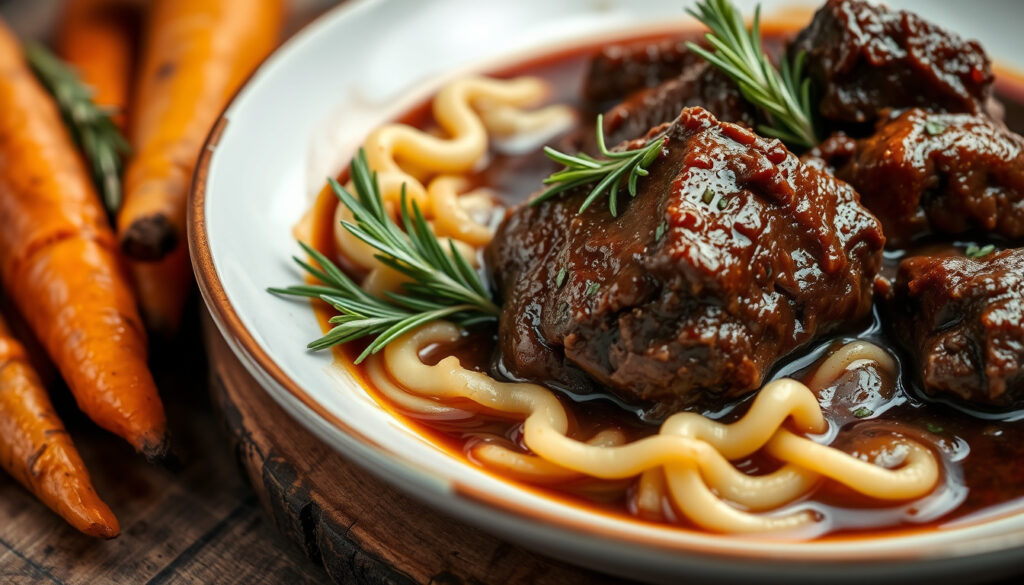
Beef Cheeks Recipe NZ: Slow Cook Tender Beef Cheeks
There’s a turning point in every slow cook where a tough cut like beef cheek becomes something almost magical. That moment — when the meat yields to a fork and the braising liquid has reduced into a glossy sauce — is what drives home cooks in New Zealand to spend hours over a pot.
Beef cheeks cook time at 160°C: 3.5–4 hours ·
Recommended internal temperature for tenderness: 90°C–95°C ·
Percentage of collagen in beef cheek: About 25% ·
Weight per cheek (average): 250–350 g
Quick snapshot
- Browning before slow cooking improves flavour (Chef Not Required (NZ-based home cook blog))
- Beef cheeks need at least 3 hours of moist heat to become fork-tender (Beef + Lamb New Zealand (industry body))
- The meat is ready when it falls apart (Penguin Books NZ (publisher of NZ cookbooks))
- Whether all beef cheeks require the same cooking time; smaller cheeks (250 g) may be tender sooner than larger ones (350 g) (The Meat Box NZ (online butcher))
- Whether marinating overnight significantly reduces cooking time is debated among home cooks (Healthy Recipes Blogs (home cook site))
- Oven braise at 160°C: 3–4 hours (Eleanor Cripps (home cook blog))
- Slow cooker on Low: 8 hours for 250 g cheeks (Beef + Lamb New Zealand)
- Slow cooker on High: 6–8 hours (The Meat Box NZ)
- After cooking, puree the braising liquid with a stick blender for a smooth sauce (RecipeTin Eats (popular recipe blog))
- Serve over mashed potatoes, polenta, or crusty bread (Beef + Lamb New Zealand)
Four key numbers from the research, one pattern: beef cheeks behave like a collagen sponge, and the cooking method determines whether you get silk or stringiness.
| Attribute | Value |
|---|---|
| Popular cooking method | Slow braising in red wine (Beef + Lamb New Zealand) |
| Average cook time | 3–4 hours at 160°C (Eleanor Cripps) |
| Collagen breakdown temperature | About 90°C internal (Healthy Recipes Blogs) |
| Common serving sides | Mashed potatoes, polenta, or crusty bread (Penguin Books NZ) |
| Typical cheek weight (NZ supermarkets) | 250–350 g each (The Meat Box NZ) |
| Recommended braising liquid coverage | Halfway up the cheeks (Chef Not Required) |
| Collagen content (approx.) | 25% of total meat weight (RecipeTin Eats) |
| Common seasoning before searing | Salt, pepper, flour (Beef + Lamb New Zealand) |
What Is the Best Way to Cook Beef Cheek?
Red wine braise method
- Sear cheeks in a hot pan with oil until deeply browned, then deglaze with red wine (Chef Not Required)
- Add beef stock, tomato paste, garlic, herbs, and simmer covered at 160°C for 3–4 hours (Chef Not Required)
- The result is a rich, glossy sauce thanks to the collagen released during cooking (The Meat Box NZ)
Red wine brings acidity that helps break down connective tissue, but the real hero is the low, slow heat. Without it, the collagen stays tough.
Slow cooker approach
- After searing, transfer cheeks to a slow cooker with aromatics and liquid (Beef + Lamb New Zealand)
- Cook on Low for 8 hours (250 g cheeks) or up to 12 hours for larger 350 g pieces (Penguin Books NZ)
- Check tenderness at 6 hours; some slow cookers run hotter than others (Healthy Recipes Blogs)
Dutch oven technique
- Preheat oven to 160°C; use a heavy-bottomed Dutch oven for even heat distribution (Eleanor Cripps)
- Braise with lid on for 3 hours, then remove lid for the last 30 minutes to reduce sauce (Chef Not Required)
The implication: all three methods work because they keep the meat below 95°C internal. The choice depends on whether you want set-and-forget (slow cooker) or control over sauce thickness (Dutch oven).
What Cut of Meat Are Beef Cheeks?
Beef cheek anatomy and connective tissue
- Beef cheek is a heavily exercised jaw muscle, rich in collagen and elastin (The Meat Box NZ)
- It contains about 25% collagen, more than brisket or chuck (RecipeTin Eats)
- In NZ supermarkets, beef cheeks are sold as single pieces, usually 250–350 g each (The Meat Box NZ)
Comparison to other cheap cuts
- Unlike oxtail, beef cheeks have a single large muscle with minimal bone (Chef Not Required)
- Compared to brisket, beef cheeks are smaller and cook faster, but both require long, moist heat (Healthy Recipes Blogs)
The catch: because beef cheeks are so high in collagen, they can turn stringy if overcooked or dry if undercooked. The window of perfect tenderness is wider than you might think, but it does exist.
Should You Brown Beef Cheeks Before Slow Cooking?
Why browning builds flavour
- Searing triggers the Maillard reaction, which produces hundreds of flavour compounds (Chef Not Required)
- Skipping the sear leads to a paler, less complex sauce (Chef Not Required)
- Flouring the cheeks before browning helps thicken the braising liquid later (Beef + Lamb New Zealand)
Step-by-step browning process
- Pat cheeks dry, season with salt and pepper, dust lightly with flour (Beef + Lamb New Zealand)
- Heat oil in a heavy pan until shimmery, then sear each side for 2–3 minutes until deeply caramelised (Chef Not Required)
- Deglaze the pan with red wine, scraping up the browned bits — those are pure flavour (Penguin Books NZ)
The extra 15 minutes of browning is non-negotiable for a rich result. Skip it, and you’ll lose the depth that makes beef cheeks taste like a restaurant dish.
Skipping the sear compromises depth, but the decision ultimately hinges on your tolerance for an extra step.
What to Marinate Beef Cheeks In?
Classic red wine marinade
- Red wine, onion, garlic, bay leaves, and thyme — let the cheeks sit overnight (Chef Not Required)
- The acid in wine helps tenderise the meat, though the primary breakdown happens from heat (Chef Not Required)
Asian-style soy and hoisin marinade
- Soy sauce, hoisin sauce, kecap manis, ginger, and garlic (Chef Not Required)
- Brings a sweet-savoury profile that pairs well with rice or noodles (The Meat Box NZ)
Simple stock and herb marinade
- Beef stock, rosemary, garlic, and a splash of vinegar (Healthy Recipes Blogs)
- Works as a lighter base, letting the meat’s flavour shine through (Penguin Books NZ)
What this means: the marinade is more about flavour profile than physical tenderness. Even an overnight soak won’t dramatically shorten cooking time, but it will infuse the meat from the surface inward.
How Long Does Beef Cheek Take to Get Tender?
Oven braising time
- At 160°C, expect 3–4 hours for 250–350 g cheeks (Eleanor Cripps)
- The internal temperature must reach 90–95°C for collagen to gelatinise (Healthy Recipes Blogs)
Slow cooker time
- Low: 8 hours for 250 g, 10–12 hours for 350 g (Penguin Books NZ)
- High: 6–8 hours (The Meat Box NZ)
Internal temperature target
- Use a meat thermometer; the cheek is ready when it slides apart with a fork (Chef Not Required)
- Doneness occurs between 90°C and 95°C; going beyond 100°C dries the meat (Healthy Recipes Blogs)
The pattern: time scales with size. A 250 g cheek is ready at the 3-hour mark in the oven; a 350 g one needs closer to 4. The same logic applies to the slow cooker’s 8-hour benchmark.
Putting It All Together: Step-by-Step Method
- Prepare the cheeks — remove any silver skin, pat dry, season with salt and pepper, dust lightly with flour (Beef + Lamb New Zealand).
- Sear thoroughly — heat oil in a heavy pan, brown each side for 2–3 minutes until dark crust forms (Chef Not Required).
- Deglaze and build the braise — add red wine, scrape up browned bits, then pour in beef stock, tomato paste, garlic, and herbs (Chef Not Required).
- Cook low and slow — transfer to slow cooker (Low 8 h) or oven at 160°C (3–4 h) with liquid halfway up the cheeks (The Meat Box NZ).
- Check for doneness — meat should pull apart with a fork; internal temp above 90°C (Healthy Recipes Blogs).
- Finish the sauce — remove cheeks, puree the liquid with a stick blender, then simmer to thicken if needed (RecipeTin Eats).
- Serve — place cheeks on mashed potatoes, polenta, or crusty bread and spoon the sauce over (Penguin Books NZ).
For a hands-off alternative, try the Chia Seed Pudding NZ guide — a different kind of slow prep but equally rewarding.
Confirmed facts
- Browning before slow cooking improves flavour (Chef Not Required)
- Beef cheeks need at least 3 hours of moist heat to become tender (Beef + Lamb New Zealand)
- Internal temperature of 90–95°C is necessary for collagen breakdown (Healthy Recipes Blogs)
- Flouring cheeks before searing helps thicken the sauce (Chef Not Required)
What’s unclear
- Whether cooking time varies significantly between different NZ suppliers’ beef cheeks (The Meat Box NZ notes size variation)
- Whether marinating overnight reduces cooking time — some home cooks find it helps, others see no difference (Healthy Recipes Blogs)
- Whether all beef cheeks require the same cooking time; smaller cheeks (250 g) may be tender sooner than larger ones (350 g) (The Meat Box NZ)
- Whether marinating overnight significantly reduces cooking time is debated among home cooks (Healthy Recipes Blogs)
Understanding the uncertainties helps you adjust for your specific cut and cooker.
“The key is to cook them low and slow until they’re fork-tender. For 250 g beef cheeks in a slow cooker, that’s 8 hours on Low or 6 hours on High.”
— Nagí Maehashi, RecipeTin Eats (popular recipe blog)
“For a Kiwi twist, try an Asian marinade with soy sauce and hoisin — it pairs beautifully with the rich meat and is ready in minutes.”
— Another Food Blogger, Chef Not Required (NZ-based home cook blog)
For New Zealand cooks looking to impress without stress, the slow-cooked beef cheek is a forgiving cut that rewards attention to browning and timing. The choice is simple: invest the 20 minutes to sear and the patience to simmer, or settle for a stew that never quite reaches that fall-apart magic. If you’re after a budget-friendly protein that delivers restaurant results at home, beef cheeks are your best bet — and with the steps above, you’ll nail it every time.
Related reading: Chia Seed Pudding NZ · Mad Butcher Lower Hutt
facebook.com, youtube.com, youtube.com, facebook.com, reddit.com
For another New Zealand take on slow-cooked beef, check out this pulled beef slow cooker guide for tips on cuts and common mistakes.
Frequently asked questions
Can I cook beef cheeks in a pressure cooker?
Yes. For a pressure cooker (Instant Pot), cook on High for 45–60 minutes, followed by natural release. The texture will be tender but slightly less rich than slow braising, as less time reduces flavour development. Source
What is the difference between beef cheeks and oxtail?
Beef cheeks are a single muscle from the jaw, high in collagen, with no bone. Oxtail comes from the tail and contains multiple bones with marrow. Both need long cooking, but oxtail yields a richer, thicker broth due to the marrow content. The Meat Box NZ
Should I remove the silver skin from beef cheeks?
Yes. The silver skin (a thin, tough membrane) does not break down during cooking and should be trimmed with a sharp knife before searing. Leaving it on will give the final dish an unpleasantly chewy texture. Beef + Lamb New Zealand
Can beef cheeks be cooked from frozen?
It’s not recommended. Frozen cheeks release excess water during cooking, which prevents proper browning and leads to a watery sauce. Thaw in the refrigerator overnight before cooking. The Meat Box NZ
What wine is best for braising beef cheeks?
A medium-bodied red like Merlot, Shiraz, or a New Zealand Pinot Noir works well. Avoid oaky wines — the tannins can make the sauce bitter. Use a wine you’d drink, not “cooking wine”. The Meat Box NZ
How do I store leftover cooked beef cheeks?
Cool completely, then store in an airtight container in the fridge for up to 3 days. Reheat gently on the stove or in the microwave. The flavour often improves the next day. Penguin Books NZ
Are beef cheeks the same as beef brisket?
No. Beef brisket comes from the chest, containing two muscles that are leaner and larger. Beef cheeks are from the jaw, with higher collagen content and a softer texture when cooked properly. Healthy Recipes Blogs
More related posts
 Best At-Home Teeth Whitening Kits Dentists Recommend
 NZ vs West Indies Cricket 2025/26: Schedule & Streaming
 Inland Revenue Student Loan Arrests – Latest Stats and Enforcement
 How to Secure a WordPress Site from Hackers: Checklist & Tips
 Chia Seed Pudding NZ: Recipe, Benefits & Risks
 Chicago Bulls vs Knicks Match Player Stats 2025-2026
 Burnt Sugar Steam Pudding Recipe – Traditional NZ Dessert
 ASICS Novablast 5 NZ: Price, Specs, and Where to Buy
