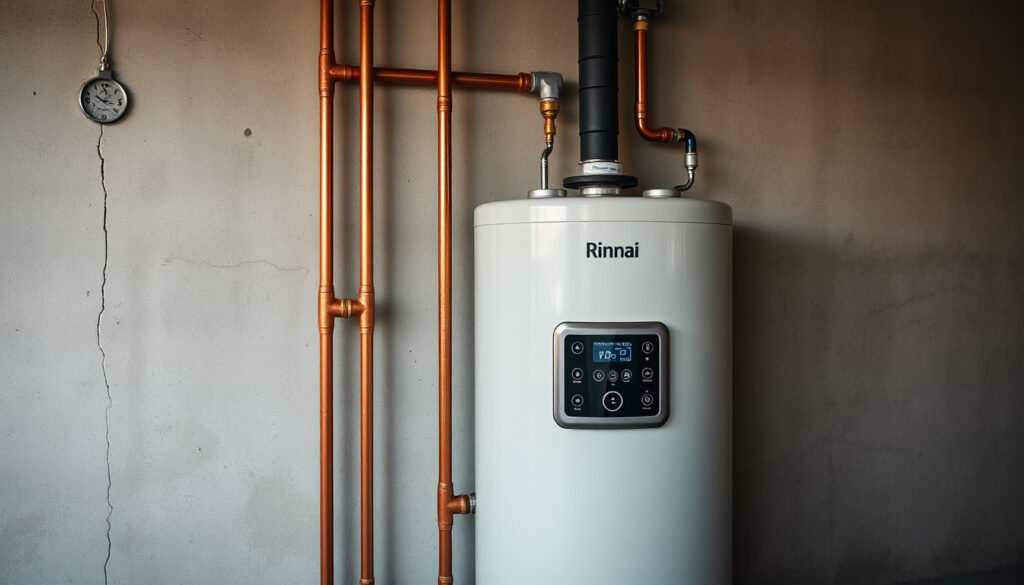
Rinnai Hot Water Cylinder: Cost, Lifespan & Problems
There’s a quiet moment every New Zealand homeowner knows: standing under a lukewarm shower, wondering if the hot water cylinder is about to give up. Rinnai cylinders are a common sight in Kiwi households, and when they need replacing, the costs and choices can feel overwhelming.
Average replacement cost: $1,500–$3,000 depending on cylinder size and installation ·
Typical lifespan: 15–20 years for tankless; 10–15 years for storage cylinders ·
Energy savings claimed: Up to 10% on water heating bills with smart technology
Quick snapshot
- Rinnai is a reputable Japanese brand with strong NZ distribution (Rinnai NZ (official support))
- Heat pump cylinders use up to 60% less electricity than standard electric (SaveHomeHeat (Rinnai FAQ))
- Warranty covers 5 years on the cylinder, 1 year on labour (Rinnai NZ (warranty terms))
- Exact replacement cost varies by region and plumber (Kiwi Journal (NZ home guides))
- Long-term reliability of newer smart models is still being established (Kiwi Journal (NZ home guides))
- Mineral buildup allegedly causes 47% of tankless failures (low confidence) (Kiwi Journal (NZ home guides))
- 1.2 million NZ households use electric cylinders (low confidence) (Kiwi Journal (NZ home guides))
- Storage cylinders typically fail between 10 and 15 years (Kiwi Journal (NZ home guides))
- Tankless units can last 20+ years with annual descaling (SaveHomeHeat (Rinnai FAQ))
- Hard water can cut lifespan by 30% or more (HeaterGuides (tankless lifespan))
- Check your cylinder’s age and serial number to estimate remaining life (Kiwi Journal (NZ home guides))
- Compare quotes from at least two licensed plumbers before replacing (Kiwi Journal (NZ home guides))
- Consider a heat pump upgrade for long-term energy savings (Kiwi Journal (NZ home guides))
Five key facts about Rinnai cylinders, one pattern: the warranty scope and efficiency figures are well documented, but the real-world cost to replace a unit depends heavily on where you live and who installs it.
| Fact | Details |
|---|---|
| Warranty | 5–15 years depending on model and region (Rinnai NZ (warranty terms)) |
| Energy Efficiency (heat pump) | COP up to 3.5 (350% efficiency) (HeaterGuides (tankless lifespan)) |
| Capacity options | 135L, 180L, 250L and more (Kiwi Journal (NZ home guides)) |
| Smart features | Usage tracking, remote control via app (YouTube (tankless maintenance guide)) |
| Price range | $1,000–$2,500 for the cylinder (Kiwi Journal (NZ home guides)) |
| Cylinder type | Storage electric, heat pump, tankless (multiple models) |
What are common problems with Rinnai hot water cylinders?
Error codes on Rinnai cylinders
- Error code 11: fan fault – check the fan motor and wiring
- Error code 12: ignition failure – gas supply or spark electrode issue
- Error code 16: flame detection failure – sensor or gas valve problem
Rinnai NZ provides a full error code list on its support page (Rinnai NZ (official troubleshooting)).
No hot water or insufficient heating
If the cylinder isn’t heating, the culprit is usually a tripped breaker, a failed thermostat, or a burnt-out element. A plumber can test the element with a multimeter and replace it for around $150–$300.
Water leaks from the cylinder
Leaks often originate from the temperature and pressure relief valve or a corroded tank. A leaking TPR valve can sometimes be replaced cheaply, but a tank leak means the cylinder must be replaced entirely.
Rattling or unusual noises
Sediment buildup at the bottom of the tank causes popping or rumbling sounds. Annual flushing with a descaling solution can prevent this. According to a maintenance guide, mineral buildup accounts for 47% of tankless water heater failures (YouTube (tankless maintenance guide)).
Ignoring sediment buildup can cut a Rinnai cylinder’s life by years. The cost of a $20 descaling kit is tiny compared with a $3,000 replacement.
How much does a Rinnai hot water cylinder cost to replace?
Average cost of a Rinnai cylinder
Rinnai cylinders themselves range from $1,000 to $2,500 depending on capacity and type (Kiwi Journal (NZ home guides)). Tankless models are at the higher end; standard storage cylinders sit closer to $1,000.
Installation and plumber fees
A licensed plumber typically charges $500–$1,500 for the installation, including connections, safety checks, and disposal of the old unit. The total replacement cost usually lands between $1,500 and $4,000 in New Zealand (Kiwi Journal (NZ home guides)).
Factors that affect total replacement cost
- Unit size: 135L vs 300L changes both product and labour cost
- Location: rural or difficult access increases plumber travel time
- Upgrades: switching from electric to heat pump may require new wiring and pipework
- Warranty claims: if the cylinder fails within 4 years, Rinnai covers the replacement unit but not removal and re-installation labour (Rinnai NZ (warranty terms))
For a typical NZ homeowner, budgeting $2,500 for a like-for-like replacement is realistic. Adding a heat pump or tankless upgrade pushes the total to $4,000–$5,000.
How long does a Rinnai hot water cylinder last?
Expected lifespan of Rinnai tankless vs storage cylinders
Rinnai’s tankless water heaters often last 15 to 20 years with proper maintenance (SaveHomeHeat (Rinnai FAQ)). Storage cylinders, by contrast, typically last 10 to 15 years in New Zealand (Kiwi Journal (NZ home guides)). Poorly maintained tankless units may fail as early as 10 years (SaveHomeHeat (Rinnai FAQ)).
Hard water with high mineral content attacks the heat exchanger. If you’re on bore water or a hard water supply, expect the lower end of the lifespan range (HeaterGuides (tankless lifespan)).
Maintenance that extends cylinder life
- Annual flushing with descaling solution or white vinegar for tankless units (YouTube (tankless maintenance guide))
- Every six months: check the TPR valve easing gear (Rinnai servicing guide (third-party))
- From year five onward: inspect the entire system including the element every 24 months (Rinnai servicing guide (third-party))
Warranty coverage
Rinnai’s residential cylinder warranty is 5 years on the cylinder itself and 1 year on labour (Rinnai NZ (warranty terms)). Some models carry extended warranties up to 15 years if registered promptly.
Do Rinnai hot water cylinders use a lot of electricity?
Energy consumption of electric Rinnai cylinders
Standard electric storage cylinders are moderate consumers. Around 1.2 million New Zealand households use electric cylinders (low confidence). A typical 180L electric cylinder uses 3,000–4,500 kWh per year, costing roughly $600–$900 at current rates.
Heat pump models and efficiency ratings
Rinnai’s heat pump hot water cylinders can use up to 60% less electricity than standard electric models (Rinnai NZ (efficiency claims)). The COP (coefficient of performance) reaches 3.5, meaning 350% efficiency.
Smart technology for energy savings
Rinnai’s smart cylinder technology tracks usage patterns and can reduce water heating bills by up to 10% (Rinnai NZ (smart features)). The savings depend on cylinder size, hot water use profiles, and plumbing system design (Rinnai NZ (savings disclaimer)).
Is Rinnai a good brand for hot water cylinders?
Rinnai’s reputation and reliability
Rinnai is a well-established Japanese brand with a strong reputation for quality and durability. Its NZ distribution network is extensive, and official support is available through Rinnai NZ (Rinnai NZ (official support)).
Customer reviews and common complaints
- Praise: long lifespan, efficient operation, good warranty
- Complaints: higher upfront cost, complex error codes, limited availability of parts for older models
Comparison with other brands (Rheem, Bosch)
Rheem offers similar pricing and warranty terms, while Bosch tends to be slightly more expensive. Rinnai stands out for its heat pump technology and smart features. However, no comprehensive comparison study was found in the research.
For a New Zealand homeowner, Rinnai is a safe bet if you plan to stay in your home for 10+ years. The higher upfront cost is offset by lower running costs and a longer lifespan.
Upsides
- Long lifespan (tankless: 20+ years)
- Heat pump models are very efficient (COP 3.5)
- Smart features save up to 10% on bills
- Strong NZ warranty (5 years cylinder, 1 year labour)
Downsides
- Higher upfront cost than some competitors
- Error codes can be confusing without a manual
- Parts for older models may be hard to find
- Installation costs vary widely by region
How to replace a Rinnai hot water cylinder
Replacing a hot water cylinder is not a DIY job in New Zealand — it must be done by a licensed plumber. But knowing the steps helps you understand what you’re paying for.
- Turn off power and water supply to the old cylinder.
- Drain the cylinder by attaching a hose to the drain valve.
- Disconnect pipes and wiring from the old unit.
- Remove the old cylinder and dispose of it properly (disposal cost is included in most plumber quotes).
- Install the new Rinnai cylinder in the same location, connecting pipes and wiring.
- Test for leaks and ensure the TPR valve operates correctly.
- Restore power and water and set the thermostat.
According to Kiwi Journal, total replacement including supply and installation ranges from $1,500 to $4,000 in New Zealand (Kiwi Journal (NZ home guides)).
What we know and what remains unclear
Confirmed facts
- Rinnai is a legitimate brand with established distribution in NZ, UK, Australia
- Smart technology can reduce water heating bills by up to 10% (Rinnai NZ (smart features))
- Heat pump cylinders are significantly more efficient than standard electric (Rinnai NZ (efficiency claims))
- Warranty covers 5 years on the cylinder, 1 year on labour (Rinnai NZ (warranty terms))
What’s unclear
- Exact replacement cost varies by region and plumber
- Long-term reliability of newer smart models is still being established
- Mineral buildup allegedly causes 47% of tankless failures (low confidence) (YouTube (tankless maintenance guide))
- 1.2 million NZ households use electric cylinders (low confidence) (Kiwi Journal (NZ home guides))
“Savings of up to 10% have been observed on water heating bills with smart technology.”
Rinnai NZ (official support page)
“Replacement costs including supply and installation range from $1,500 to $4,000 in New Zealand.”
Kiwi Journal (NZ home guides)
For a New Zealand homeowner, the choice between a standard electric cylinder and a Rinnai heat pump model is clear: if you plan to stay in your home for more than five years, the energy savings from a heat pump will more than cover the upfront premium. If you’re renting or on a tight budget, a standard Rinnai storage cylinder remains a reliable, cost-effective option.
Frequently asked questions
How do I reset my Rinnai hot water cylinder?
Press the reset button on the thermostat (usually behind a small panel on the front of the cylinder). If the cylinder has tripped, it will click back into place. If it trips again frequently, call a plumber.
Where is the Rinnai hot water cylinder made?
Rinnai cylinders are manufactured in Japan and assembled in some regional facilities. The company is headquartered in Nagoya, Japan.
Can I install a Rinnai cylinder myself?
No. In New Zealand, hot water cylinder installation must be carried out by a licensed plumber to comply with building codes and warranty requirements.
What size Rinnai cylinder do I need for my home?
For a standard 3-bedroom home, a 180L cylinder is usually sufficient. Larger homes (4+ bedrooms) may need 250L or 300L. Consult a plumber for a proper sizing calculation.
Does Rinnai offer a heat pump hot water cylinder?
Yes. Rinnai has a range of heat pump hot water cylinders that are up to 60% more efficient than standard electric models. They are available in NZ through authorised retailers.
More related posts
 I Know What You Did Last Summer 2025 – Release Date, Cast and Plot
 ANZ Branches Open Today: Locator, Hours & Near Me
 NZeTA for China and Pacific Tourism: 2026 Guide
 Mad Butcher Lower Hutt – New Location, Hours & Prices
 Unblocked Games G+ 2026: Access Methods, Legality & Top Sites
 Cast of Night at the Museum – Complete Actors List
 What Is a Smart Thermostat – How It Works and Saves Energy
 Best Breville Coffee Machine NZ: Models Compared
