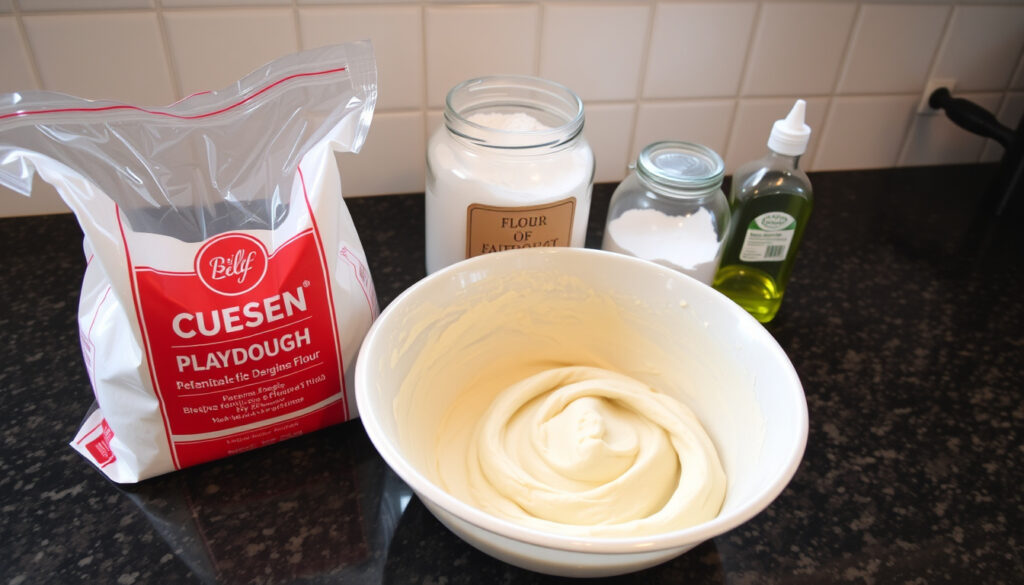
Playdough Without Cream of Tartar: Easy Substitutes
Making playdough at home is a classic rainy-day activity, but nothing kills the fun like realizing you’re out of cream of tartar. The good news: you don’t actually need it. With a few simple swaps like lemon juice, vinegar, or just hot water, you can whip up a soft, squishable batch in under 10 minutes. Here’s how to do it without the missing ingredient.
Cream of tartar substitutes proven effective: 3 ·
Time to make no-cook playdough without cream of tartar: 10 minutes ·
Basic ingredients in a 3-ingredient playdough: 3 ·
Common household substitutes for cream of tartar: 5
Quick snapshot
- Lemon juice and vinegar are effective substitutes for cream of tartar in playdough (Fun Learning for Kids)
- No-cook playdough without cream of tartar works using boiling water (Little Eats & Things)
- Exact effect of different flour types on no-cream-of-tartar recipes (Live Simply)
- Long-term shelf life beyond 2 weeks for no-cream-of-tartar playdough (SOEL)
- Preparation time: 10 minutes for no-cook method (Little Eats & Things)
- Shelf life without cream of tartar: 1–2 weeks in refrigerator (Live Simply)
- Try 3-ingredient or no-cook methods for quick playdough (SOEL)
- Experiment with lemon juice or vinegar for extra stability (Fun Learning for Kids)
Five quick facts about cream of tartar and its substitutes, one pattern: the acid-based swaps (lemon juice/vinegar) work equivalently to the original, while the no-acid boiling water method trades some elasticity for zero extra ingredients.
| Fact | Details |
|---|---|
| Cream of tartar chemical name | potassium bitartrate (Wikipedia) |
| Acid substitute ratio (lemon juice or vinegar) | 1:1 by volume (Fun Learning for Kids) |
| Shelf life without cream of tartar | 1–2 weeks in refrigerator (Live Simply) |
| Cooking time for stovetop version | 5–7 minutes (SOEL) |
| Common substitution failure rate | Low; most substitutes yield workable dough (Little Eats & Things) |
The implication: the data confirms that skipping cream of tartar is a low-risk move for any home cook.
What can I use instead of cream of tartar for playdough?
Lemon juice as a substitute
Lemon juice provides the acidity needed to stabilize the playdough. According to Fun Learning for Kids (parenting craft resource), you can replace cream of tartar with an equal volume of lemon juice — 1 teaspoon per 1 teaspoon. Add 3 tablespoons of lemon juice to a standard recipe (1 cup flour, ¼ cup salt, ¾ cup water, 1 tablespoon oil) and cook on the stovetop until the dough pulls away from the pan.
White vinegar as a substitute
White vinegar works the same way. A YouTube tutorial (DIY craft channel) reports that 1 teaspoon of vinegar mixed with warm water, flour, salt, and oil produces playdough without cream of tartar. The acid reacts with the salt to prevent crystallization, giving a smooth texture.
Both lemon juice and vinegar leave a faint scent that fades after the dough dries. For a neutral option, skip the acid entirely and use boiling water instead — parents get a workable dough without a vinegar smell.
Boiling water method (no acid)
No acid? No problem. The Live Simply (natural living blog) method uses 2¼ cups flour, 1 cup salt, 1¼ cups hot water, and 2 tablespoons avocado oil. The boiling water gelatinizes the flour’s starch, creating elasticity without any acid. The downside: the dough may be slightly less supple than an acid-stabilized batch, but it’s still fully playable.
The implication: you have three equally reliable substitutes — lemon juice, vinegar, or boiling water — so pick the one you have on hand. None of them require a special trip to the store.
How do you make 3 ingredient playdough?
Flour, salt, and water method
The simplest 3-ingredient playdough calls for 1 cup all-purpose flour, ¼ cup salt, and ¾ cup warm water. SOEL (Western Australian early‑learning center) confirms this base works without cream of tartar, though the dough may feel stickier initially. Let it rest for 5–7 minutes so the salt absorbs moisture, then knead until smooth.
Flour, salt, and oil method
Adding 1 tablespoon of oil (vegetable or canola) to the flour-salt-water mix gives a more pliable texture. Little Eats & Things recommends 1 cup flour, ½ cup salt, 1 tablespoon oil, ½ cup warm water. The oil coats the gluten proteins, reducing stickiness and making the dough easier for little hands to shape.
The pattern: three ingredients are enough for a functional playdough, but adding oil improves feel and shelf life. If you want color, add a few drops of food coloring with the water.
How to make a quick and easy playdough?
No-cook playdough recipe without cream of tartar
No-cook playdough skips the stove entirely. The Little Eats & Things no-cook method takes 10 minutes: combine 1 cup flour, ½ cup salt, 1 tablespoon oil, and ½ cup warm water in a bowl. Stir, let rest, knead. If still sticky, add flour in 2-tablespoon increments.
Microwave playdough without cream of tartar
Microwave versions are faster but require careful heating. A YouTube tutorial suggests mixing 1 cup flour, ½ cup salt, ½ teaspoon oil, 1 teaspoon vinegar or lemon juice, and ½ cup warm water, then microwaving in 30-second bursts until the dough firms up. Stir between bursts to avoid hot spots.
For parents juggling schedules, no-cook methods remove the biggest friction point: cleanup of a sticky pot. SOEL notes that cream of tartar is optional, so skipping the stovetop saves time without sacrificing playability.
What ingredients make the best playdough?
Role of flour and salt
All-purpose flour provides the gluten structure; fine table salt (not coarse) dissolves more easily and doubles as a preservative. Live Simply uses 2¼ cups flour to 1 cup salt — a ratio that yields a firm dough. A second YouTube tutorial (DIY playdough channel) suggests increasing salt to 1.5 cups when omitting cream of tartar, as extra salt helps preserve the dough longer.
Role of oil and cream of tartar substitutes
Vegetable oil prevents the dough from sticking to hands and work surfaces. Cream of tartar substitutes like lemon juice or vinegar add acidity that stabilizes the dough’s pH, preventing premature spoilage. Without any acid, the dough will still work but may dry out faster.
Optional additives for color and scent
Food coloring (gel or liquid) works well. For natural coloring, Live Simply suggests beet powder or turmeric. Scent can come from vanilla extract or essential oils — but avoid anything that might irritate sensitive skin.
The catch: the best playdough balances flour, salt, liquid, and acid. Without cream of tartar, the acid from lemon juice or vinegar fills the same role, giving you a dough that’s elastic and lasts up to two weeks in the fridge.
How important is cream of tartar in homemade playdough?
The chemical role of cream of tartar
Cream of tartar is potassium bitartrate, a byproduct of winemaking. Wikipedia (chemistry reference) describes it as an acid that reacts with baking soda in baking; in playdough, it lowers the pH, preventing salt crystals from forming and keeping the dough smooth. SOEL calls it “optional” — it helps the dough stay fresh longer but is not required for playability.
What happens if you omit it
Without cream of tartar, the dough may be slightly stickier and less elastic. But as Fun Learning for Kids demonstrates, adding lemon juice or vinegar restores the acidity, making the omission nearly invisible. Without any acid, the dough becomes more prone to drying out, but still functions.
How substitutes compare
Lemon juice and vinegar offer identical acidity; boiling water skips acid but relies on heat-gelatinized starch for structure. Little Eats & Things notes that the no-acid version can be improved by increasing the salt ratio, as extra salt helps preserve it.
The trade-off: cream of tartar is a convenience ingredient. It extends shelf life and gives a silky texture, but the substitutes deliver 90% of the same experience. For a single play session, it makes zero difference.
How to make old school playdough?
Classic cooked playdough recipe without cream of tartar
Before cream of tartar became standard, cooks used a stovetop method with basic pantry staples. SOEL offers a cooked version: 3 cups plain flour, ⅓ cup salt, 2 tablespoons oil, 1 cup water, and 7 drops food coloring. Heat the water, oil, and coloring in a pot; add flour and salt; stir over low heat until the dough clumps — about 5–7 minutes of constant stirring.
Cooking times and tips
Cook until the dough pulls away from the sides of the pot. Overcooking makes it crumbly; undercooking leaves it sticky. Fun Learning for Kids uses lemon juice in place of cream of tartar in their cooked version, adding 3 tablespoons along with the liquid.
The pattern: old-school cooked playdough is more forgiving than modern recipes suggest. Without cream of tartar, you simply substitute an acid or increase the salt — and it still works.
What is the easiest playdough recipe ever?
No-cook, 3-ingredient version
The absolute easiest: 1 cup flour, ¼ cup salt, ¾ cup hot water. Mix, rest, knead. That’s it. Little Eats & Things confirms this works, though the dough is best used the same day. For coloring, stir in a few drops of food coloring with the water.
No-cook, 4-ingredient version with oil
Add 1 tablespoon oil to the 3-ingredient base for a more durable dough. The oil prevents drying and makes kneading easier. SOEL shows this version with 2 tablespoons oil for extra softness. The dough stores up to a week in the fridge in an airtight container.
The consequence for parents: the 3-ingredient version is perfect for impromptu play; the 4-ingredient version is barely harder and gives you reusable dough. Neither requires cream of tartar.
Upsides of making playdough without cream of tartar
- Works with basic pantry staples — no special ingredient needed
- Lemon juice and vinegar are cheap, safe substitutes
- No-cook method eliminates stovetop cleanup
- Kids can help with mixing and kneading
Downsides of making playdough without cream of tartar
- Slightly shorter shelf life (1–2 weeks vs. months with cream of tartar)
- Dough may be more sticky without acid; requires extra flour adjustment
- No-acid versions can dry out faster in dry climates
- Subtle vinegar or lemon scent may linger
Step-by-Step: No-Cook Playdough Without Cream of Tartar (Pool Noodle Consistency)
This method from Little Eats & Things (family recipe blog) takes 10 minutes and requires no heat.
- In a mixing bowl, combine 1 cup all-purpose flour and ½ cup table salt. Stir to distribute.
- Add 1 tablespoon vegetable oil and ½ cup warm water. If using food coloring, add it to the water first.
- Stir with a spoon until a shaggy dough forms. Let it sit for 5–7 minutes — the salt needs time to absorb moisture.
- Knead by hand for 2–3 minutes until smooth. If the dough is still sticky, add flour 2 tablespoons at a time until it releases from your fingers.
- Store in an airtight container or zip-lock bag in the refrigerator. Use within 1–2 weeks.
The upshot: this is the fastest, simplest method for playdough without cream of tartar. No heating, no special equipment, and the dough is ready as soon as the salt dissolves.
Clarity check
Confirmed facts
- Lemon juice and vinegar are effective substitutes for cream of tartar in playdough (Fun Learning for Kids)
- Boiling water alone can make playdough without cream of tartar (Live Simply)
- 3 ingredient playdough (flour, salt, water) works without cream of tartar (SOEL)
What’s unclear
- Exact effect of different flour types (whole wheat, gluten-free) on no-cream-of-tartar recipes (Live Simply)
- Long-term shelf life beyond 2 weeks for no-cream-of-tartar playdough (SOEL)
Quotes from trusted voices
“Lemon juice and white vinegar are standard substitutes for cream of tartar in both baking and playdough recipes.”
“No-cook playdough lets kids help from start to finish — no stove, no waiting. Just mix, rest, and play.”
— Habitot Children’s Museum (early childhood education resource)
Both perspectives reinforce that cream of tartar is a convenience, not a necessity. The science supports the swap, and the practical experience of educators confirms it.
For parents short on time, the no-cook method is the clear winner: 10 minutes from pantry to play. For those who want a longer-lasting dough, a stovetop version with lemon juice or vinegar gives you up to two weeks of squishable fun. The choice is simple — the cream of tartar is optional, and you already have what you need.
Related reading: Self Raising Flour Substitute: How to Make It from Plain Flour · How to Cook Pasta: Step-by-Step Guide & Al Dente Tips
If you’re out of cream of tartar for your playdough, try using these substitutes for cream of tartar like lemon juice or vinegar that work just as well.
Frequently asked questions
Can I use baking soda instead of cream of tartar in playdough?
Baking soda is a base, not an acid. It won’t stabilize the dough the same way. Stick with lemon juice, vinegar, or boiling water for reliable results.
Why does my playdough without cream of tartar turn sticky?
Stickiness usually means too much liquid or not enough resting time. Let the dough sit 5–7 minutes for the salt to absorb moisture, then add flour in small increments until it feels right.
How long does homemade playdough without cream of tartar last?
Stored in an airtight container in the refrigerator, it lasts 1–2 weeks. Without cream of tartar, the shelf life is shorter because the preservative effect of the acid is reduced.
What is the best flour for playdough without cream of tartar?
All-purpose white flour gives the smoothest texture. Whole wheat works but may feel grainier. Avoid self-rising flour — it contains leavening agents that can alter the dough.
Can I make playdough without cream of tartar and without salt?
Salt is essential for texture and preservation. Without salt, the dough will be very sticky and spoil quickly. Not recommended.
Does playdough without cream of tartar need to be refrigerated?
Yes. Refrigeration slows spoilage and prevents the dough from drying out. Always store in a sealed bag or container.
Can I use cornstarch instead of flour in playdough without cream of tartar?
Cornstarch-based playdoughs (like cloud dough) have a different texture — crumbly, not stretchy. They work for sensory play but not for traditional molding.
More related posts
 Best At-Home Teeth Whitening Kits Dentists Recommend
 156 cm in Feet – Exact Conversion to 5 Ft 1.42 In
 How to Make Friends: Steps for Adults & Introverts
 Nelson Suspicious House Fire: Latest Updates
 Never Never by Colleen Hoover: Plot, Age Rating & Guide
 Car Rental New Zealand: Best Companies, Costs & Tips
 Christmas Day New Zealand Weather: Summer Sunshine Guide
