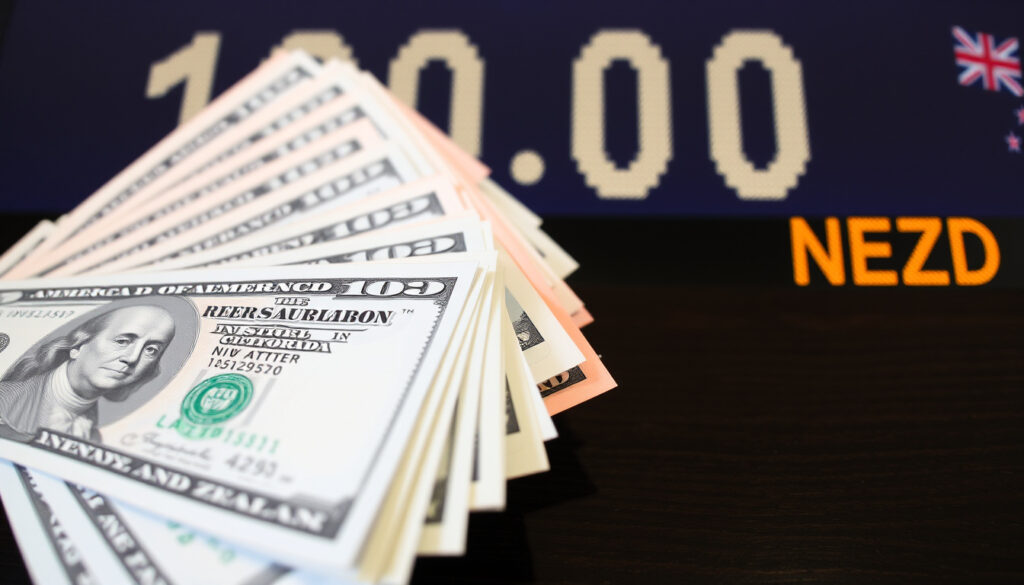
1700 USD to NZD – Live Exchange Rate & Conversion Guide
If you are sending $1700 from the United States to New Zealand, the number you get back in NZD can swing by more than $100 depending on where you convert it. Right now, mid-market rates put 1 USD at around 1.70 NZD, but banks and transfer services often clip a margin that eats into your total.
1 USD = 1.7036 NZD (Xe mid-market, 20 May 2026) ·
1700 USD ≈ 2,896 NZD (same rate, no fees) ·
Western Union retails at 1.6386 NZD per USD ·
6-month high: 1.7888 NZD (Wise, Nov 2025)
Quick snapshot
- 1 USD = 1.7036 NZD (Xe live converter)
- 1700 USD = 2,896.12 NZD at that rate (Xe live converter)
- Rates update minute-by-minute (Xe live converter)
- US interest rates rising faster than New Zealand’s
- Weak dairy and commodity export prices
- Global investors flocking to USD safe-haven
- Use mid-market tools like Xe or Wise
- Compare specialist services vs bank rates (Xe)
- Watch for hidden markups and transfer fees (Xe)
- NZD depreciation may continue if Fed hikes keep coming
- RBNZ monetary policy decisions are key
- Lock in rate now if you need certainty
One quick look at the providers shows a clear gap between the mid-market benchmark and what regular customers actually get.
| Provider | Rate quoted (USD→NZD) | $1700 USD converts to | Source |
|---|---|---|---|
| Mid-market (Xe) | 1.7036 | 2,896.12 NZD | Xe (20 May 2026) |
| OFX | 1.7118 | 2,910.12 NZD | OFX (18 May 2026) |
| Wise (mid-market history) | 1.7107 | 2,908.22 NZD | Wise history page |
| Revolut | 1.6687 | 2,836.71 NZD | Revolut converter |
| Western Union | 1.6386 | 2,785.62 NZD | Western Union |
The pattern: specialist services like OFX and Wise stay close to the mid-market, while Western Union and Revolut mark up the rate by 2–4%, cutting the NZD payout by over $100.
How much is $1 USD to NZ?
What is the current USD to NZD exchange rate?
At the time of writing, the mid-market rate quoted by Xe (currency converter, 20 May 2026) is 1 US dollar = 1.7036 New Zealand dollars. The rate fluctuates constantly — Travelex (exchange-rate explainer) notes that changes in the global economy, supply and demand, and interest rates push exchange rates up and down throughout the day.
How much is 1700 USD in NZD?
Using the Xe mid-market rate, $1700 US dollars converts to 2,896.12 NZD before any fees or spread. If you use a service that stays close to the mid-market, such as Wise (rate history) which showed 1.71072 NZD per USD on its history page, the conversion comes to about 2,908 NZD. However, high-markup providers like Western Union, which lists an estimated rate of 1.6386 (Western Union converter), give only 2,785 NZD — a loss of more than $110 NZD compared to the mid-market.
For someone sending $1700 from the US to New Zealand, the choice of provider can mean the difference between receiving roughly NZ$2,900 or just NZ$2,780. Over multiple transfers, that gap adds up fast.
Why is NZ falling against USD?
Why has the New Zealand dollar weakened recently?
The New Zealand dollar has depreciated against the US dollar over the past 12 months. The six-month average tracked by Wise (USD/NZD history) stands at 1.7206, and the six-month high reached 1.7888 in November 2025. The main drivers, as explained by currency analysts and central bank policy, include:
- Interest rate differentials: The US Federal Reserve has raised rates more aggressively than the Reserve Bank of New Zealand, making USD-denominated assets more attractive.
- Commodity prices: New Zealand’s export revenues (dairy, meat, wool) have softened, reducing demand for NZD.
- Safe-haven flows: During global uncertainty, investors prefer the US dollar, pushing NZD lower.
Travelex (foreign-exchange education) confirms that exchange rates shift with global economic changes — a pattern that has worked against the NZD in 2024–2026.
The implication: any USD→NZD conversion made today buys fewer NZ dollars than it would have six months ago. For a $1700 transfer, the difference between the six-month high and current rate is roughly 150 NZD.
How much is $8000 USD worth in NZD?
How to convert larger amounts of USD to NZD
At the current mid-market rate, $8000 US dollars converts to approximately 13,628 NZD (using 1.7036). Using the same markup patterns, a high-street service could cut that to around 13,108 NZD. For larger transfers, the dollar amount lost to poor rates becomes even more significant. The reverse conversion is straightforward: 1 New Zealand dollar = 0.5870 US dollars (based on the Xe mid-market rate).
For tax purposes, the Inland Revenue (New Zealand tax authority) guidance requires that foreign currency amounts be converted to NZD using approved rates (such as central bank or IRD published rates) for income tax calculations.
How to convert USD to NZD step by step
- Check the live mid-market rate using Xe (currency converter) or Wise (rate history) — this is the benchmark without any markup.
- Compare at least three providers — specialist services (OFX, Wise), your bank, and retail converters (Western Union, Revolut). Note both the rate and any transfer fees.
- Calculate the total cost using the provider’s quoted rate and fees. Multiply your USD amount by the rate, subtract fees, to get the NZD you’ll actually receive.
- Check for hidden margins — some services advertise “0% commission” but build the markup into the rate. Compare their rate to the mid-market to spot the spread.
- Initiate the transfer only when you are satisfied with the offered rate and total fees. Lock in the rate if the provider offers a forward contract.
- Keep a record of the conversion receipt for your records — the Inland Revenue (NZ) may require documentation for tax purposes.
A transfer of $1700 USD through a specialist provider instead of a bank or retail outlet can save you over NZ$100. For expats or tourists sending multiple transfers, those savings add up to a genuine difference in spending power.
What we know and what remains uncertain
Confirmed facts
- The current mid-market rate is 1 USD = 1.7036 NZD (Xe (live converter)).
- $1700 USD at mid-market equals 2,896.12 NZD.
- The NZD has fallen against the USD over the past year — the six-month high was 1.7888 (Wise (rate history)).
- Specialist services (OFX, Wise) offer rates close to the mid-market; bank and retail providers add a margin.
What’s unclear
- Whether the NZD will continue to weaken or recover — future direction depends on central bank decisions (Travelex (exchange-rate education) notes that rates are inherently changeable).
- Whether now is the “best” time to convert — that depends on your personal timeline and risk tolerance.
- The exact rates being offered by every provider at the moment you read this — they change minute by minute.
Expert perspectives
Exchange rates fluctuate constantly because of changes in the global economy, supply and demand, and interest rates.
— Travelex (exchange-rate education)
Foreign currency amounts must be converted to NZD under the Income Tax Act 2007 for calculating New Zealand income tax liability.
The NZD to USD exchange rate has hovered between 0.55 and 0.70, and the USA will not be cheap for Kiwis.
Whether you are a US expat sending money to New Zealand or a tourist planning a trip, the gap between the mid-market rate and what you actually receive is the real story. For a $1700 transfer, the difference between a specialist service and a bank or retail provider can be over NZ$100. The takeaway: always compare the rate you are offered to the live mid-market rate, factor in all fees, and choose a provider that passes on a fair rate.
Related reading: **25 AUD to NZD: Live Rates**
For a quick comparison, you can also check the live 100 USD to NZD rate to see how smaller amounts are converting at current market prices.
Frequently asked questions
How do I find the best exchange rate for USD to NZD?
Check the mid-market rate on Xe or Wise, then compare quotes from at least three providers (specialist services like OFX, your bank, and retail converters). The best rate is the one closest to the mid-market with the lowest fees.
Is it better to convert money in the US or in New Zealand?
Generally, converting before you travel using a specialist service gives you a better rate than exchanging cash at airports or hotels in New Zealand. But if you have a US bank account that offers fee-free ATM withdrawals in NZ, you may get the mid-market rate minus a small ATM fee.
What fees do currency converters charge?
Fees vary: some services charge a percentage of the amount (e.g., 1%), others build the markup into the exchange rate. Always check both the rate and any transfer, service, or convenience fees before committing.
Can I use a credit card without conversion fees?
Some credit cards (e.g., from Capital One or certain travel rewards cards) do not charge foreign transaction fees. However, the card’s exchange rate may include a small markup. Check your card’s terms before using it for purchases in New Zealand.
What is the mid-market rate?
The mid-market rate (also called the interbank rate) is the exchange rate used by banks when trading large amounts of currency between themselves. It has no retail markup and is considered the fairest benchmark for currency conversion.
How often does the exchange rate update?
Exchange rates update constantly, minute-by-minute, based on global trading. Live converters like Xe and Wise refresh their rates every few seconds.
What is the difference between buying and selling rates?
The “buy” rate is what a provider pays to buy foreign currency from you, and the “sell” rate is what it charges to sell foreign currency to you. The gap between them (the spread) is how the provider makes money. The mid-market rate sits in the middle.
More related posts
 How to Book Full License Test in NZ: 2025 Guide (VTNZ, AA)
 Fun Things to Do in Dunedin: Top Activities & Guides
 How to Cook Pasta: Step-by-Step Guide & Al Dente Tips
 Wairarapa Times-Age Death Notices: How to Check Death in NZ
 Convert JPG to PDF Free: Top 5 Online Converters Tested (2025)
 Latest Harry and Meghan News: Australia Tour Controversy
 Westpac Online Banking Issues: Check Status & Troubleshoot
 Travel Insurance Compare NZ – Best Providers and Coverage 2025
