Nikau Dix Archaeological Find – Ancient Waka Discovery Explained
The Nikau Dix Archaeological Find Explained
What is the Nikau Dix Archaeological Find?
The Nikau Dix archaeological find refers to the discovery of an ancient ocean-voyaging waka (Polynesian canoe) on the Chatham Islands, a remote territory located approximately 800 kilometers east of mainland New Zealand. The find represents one of the most significant archaeological discoveries in Polynesian history, with researchers describing it as potentially the most important in New Zealand’s archaeological record. The discovery occurred in August 2024 when 23-year-old Nikau Dix and his father Vincent Dix encountered unusual wooden fragments protruding from sand on a remote beach along the northern coast of Chatham Island.
The site is situated on Department of Conservation land adjacent to the Rix farm, near a creek that proved instrumental in revealing additional elements of the vessel. Heavy rains initially exposed the fragments, drawing the attention of the local fishermen who stumbled upon what they described as a “strange-looking stick” embedded in the sand. After collecting the pieces and assembling them at home, the Dix family recognized boat-like shapes that suggested something far more substantial than driftwood or modern debris.
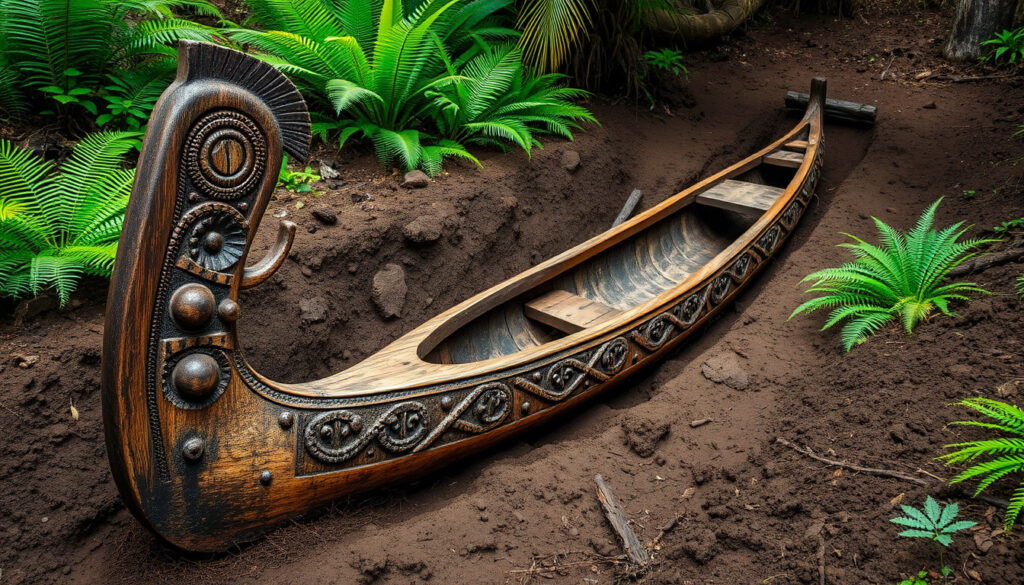
A subsequent storm would later uncover a carved headpiece, or figurehead, in the creek bed—confirming that the discovery represented a genuine Polynesian waka rather than an archaeological specimen of lesser significance. Nikau Dix described the wood as “unusual timber… very well made and looked brand new,” a testament to the exceptional preservation conditions at the site that have maintained the integrity of these centuries-old artifacts despite their age.
Key Insights
- The discovery represents the first confirmed ocean-voyaging waka found in situ on the Chatham Islands, offering unprecedented insight into Polynesian maritime technology.
- Roughly 10 percent of the vessel has been recovered, with estimates suggesting 600 to 700 fragments recovered during the January 2025 partial excavation alone.
- Interim radiocarbon dating places the arrival of the waka on the Chatham Islands between 1440 and 1470 AD, during the height of Pacific voyaging.
- Low-oxygen, moist dune conditions have contributed to extraordinary preservation, maintaining organic materials that rarely survive in archaeological contexts.
- The find has sparked ownership claims from Moriori groups, who link the vessel to the legendary Rangihoua waka through oral histories and historical writings.
- Archaeologist Justin Maxwell has called the discovery “one of the most important finds in the Pacific,” emphasizing its potential to reshape understanding of Polynesian migration patterns.
- Full excavation remains delayed due to bureaucratic processes, despite urgent warnings from experts about the risks posed by future storms and environmental exposure.
Snapshot Facts
| Fact | Details |
|---|---|
| Site Name | Chatham Island Waka Find (informally known as Nikau Dix site) |
| Location | Northern coast of Chatham Island (Rēkohu), Department of Conservation land near Rix farm and creek |
| Discovery Year | August 2024 |
| Lead Archaeologist | Justin Maxwell (partial excavation, January 2025) |
| Conservator | Sara Gainsford (artifact stabilization) |
| Main Artifacts | Carved wood fragments, obsidian inlays, shell decorations, cordage, ropes, sails, matting, figurehead |
| Age Estimate | 1440-1470 AD (arrival on Chatham Islands), vessel may be older |
| Recovery Status | Approximately 10 percent recovered; full excavation pending |
What Artifacts Were Discovered at Nikau Dix?
The January 2025 partial excavation led by archaeologist Justin Maxwell yielded an extraordinary collection of well-preserved wooden artifacts that exceeded initial expectations. Over the course of one week, researchers recovered between 450 and 700 pieces, though estimates vary depending on how fragments are counted and categorized. The team worked alongside local volunteers and under the guidance of conservator Sara Gainsford, who immediately began the delicate process of stabilizing the waterlogged materials.
Among the most remarkable finds were carved wooden pieces featuring intricate obsidian inlays, shell decorations, and distinctive checkered patterns. These decorative elements indicate sophisticated craftsmanship and suggest the vessel served purposes beyond mere transportation—possibly carrying cultural, ceremonial, or social significance within the community that constructed and used it. The presence of such ornate details on a functional watercraft points to the integration of art and utility in Polynesian maritime traditions.
The discovery of voyaging equipment proved equally significant. Researchers recovered cordage, ropes, twine, sails, and matting—items that Maxwell described as a “wish-list” of maritime gear. These organic materials rarely survive in archaeological contexts, making their preservation here particularly valuable for understanding Polynesian seafaring technology and navigation methods. The combination of structural components and equipment provides a comprehensive picture of how these vessels functioned during extended ocean voyages.
The Vessel Construction
Analysis of the recovered fragments revealed that the waka was constructed from hundreds of individually shaped timbers rather than carved from a single log. This multi-piece approach demonstrates advanced woodworking techniques and engineering knowledge. Timber identification confirmed the use of native New Zealand species including pukatea, tōtara, and rimu—trees that would have been selected for their specific properties such as durability, flexibility, or resistance to water damage.
The construction method aligns with traditional Polynesian waka-building practices documented elsewhere in the Pacific, though the scale and completeness of this specimen provide unprecedented opportunities for detailed study. Each joint, fastener, and structural element offers clues about the engineering principles employed by Polynesian craftsmen who developed these vessels thousands of years before modern naval architecture emerged.
The exceptional preservation of organic materials at the Nikau Dix site stems from the low-oxygen, moist conditions found in coastal dune environments. These conditions, combined with the rapid burial following the vessel’s eventual wrecking, created a natural environment that halted the typical decay processes that would have destroyed similar materials elsewhere. This environmental advantage has allowed researchers to recover items that would normally decompose within decades.
What is the Significance of the Nikau Dix Find?
Archaeologists have positioned the Nikau Dix discovery as a potential paradigm-shifting find for Pacific and New Zealand history. Justin Maxwell, who led the January 2025 partial excavation, characterized it as “one of the most important finds in the Pacific,” while Maui Solomon of the Hokotehi Moriori Trust has gone further, describing it as “the most important find in New Zealand’s archaeological history.” The extraordinary preservation of the site captures what researchers call a “moment in time”—a snapshot of Polynesian maritime culture frozen in extraordinary detail.
Interim radiocarbon dating conducted in November 2025 on short-lived materials places the arrival of the waka on the Chatham Islands between 1440 and 1470 AD. This period falls within what scholars describe as the “heyday of Pacific voyaging,” when Polynesian navigators were actively exploring and settling vast stretches of the ocean. Notably, the vessel itself may predate the arrival date, as the wood used in construction could represent timber harvested years or even decades before the voyage.
Cultural Links and Moriori Heritage
The discovery holds particular significance for the Moriori people, the indigenous Polynesian inhabitants of the Chatham Islands. Moriori groups including the Moriori Imi Settlement Trust and Hokotehi Moriori Trust have claimed ownership of the find, linking it through oral traditions to the legendary Rangihoua waka. According to historical accounts and genealogical records preserved within Moriori communities, the Rangihoua carried ancestors to Rēkohu and represents a foundational element of Moriori cultural identity.
Maui Solomon, speaking on behalf of Moriori interests, has emphasized the urgency of completing the full excavation before further damage occurs. For the Moriori community of approximately 650 residents, the discovery represents more than academic interest—it connects living people to their ancestors and provides tangible evidence of the maritime achievements that defined their culture’s history. The first television footage of the discovery aired on Te Ao With Moana, bringing national and international attention to both the find and the indigenous community whose heritage it represents.
The Chatham Islands occupy a unique position in Pacific history, serving as a waypoint between mainland New Zealand and the broader Polynesian world. The waka’s presence during the 15th century aligns with evidence from other sites indicating active exploration and migration routes that extended across thousands of kilometers of open ocean. Polynesian settlers had originated from Southeast Asia approximately 3,000 years earlier, developing the maritime skills and navigational knowledge that enabled such remarkable journeys.
What is the Timeline of the Nikau Dix Excavation?
Understanding the sequence of events surrounding the Nikau Dix discovery provides important context for appreciating both the significance of the find and the challenges that have complicated its full recovery. From the initial beachcombing excursion that revealed fragments to the ongoing efforts to preserve and analyze recovered materials, each phase of the discovery has contributed to a growing appreciation of what researchers are calling an irreplaceable archaeological treasure.
- August 2024 – Vincent Dix and his son Nikau discover unusual wooden fragments while beachcombing for timber on a remote northern beach of Chatham Island. After collecting and assembling pieces at home, they recognize boat-like shapes and notify authorities of their find.
- Late 2024 – A subsequent storm exposes a carved headpiece (figurehead) in the nearby creek, confirming the discovery as a genuine Polynesian waka rather than modern debris or natural driftwood.
- January 2025 – Archaeologist Justin Maxwell leads a one-week partial excavation of the site. The team recovers between 450 and 700 fragments, representing approximately 10 percent of the estimated total vessel. Conservator Sara Gainsford begins stabilization of recovered artifacts.
- May 2025 – The Ministry for Culture and Heritage releases a report urging complete recovery of the waka before further deterioration or environmental damage can occur. The site is re-covered following the partial excavation.
- November 2025 – Interim radiocarbon dating results place the arrival of the waka on the Chatham Islands between 1440 and 1470 AD, confirming its significance within the broader context of Polynesian voyaging history.
- Late 2025 – Artifacts remain stored in water-filled containers near the site while conservator Sara Gainsford and local volunteers continue monitoring conditions. Full excavation faces delays due to bureaucratic processes, despite expert warnings about storm risks.
What Remains Confirmed Versus Uncertain?
As with any significant archaeological discovery, certain aspects of the Nikau Dix find have been firmly established through direct evidence and scientific analysis, while others remain subjects of ongoing research or interpretation. Distinguishing between confirmed facts and areas of uncertainty helps clarify the current state of knowledge and identifies priorities for future investigation.
| Established Information | Information That Remains Unclear |
|---|---|
| Location on Department of Conservation land, northern Chatham Island | Precise age of the vessel itself (timber may predate 1440-1470 AD) |
| Discovery occurred in August 2024 by the Dix family | Whether the waka was intentionally abandoned, wrecked, or deliberately deposited |
| Partial excavation recovered 450-700 fragments | Complete dimensions and full construction design of the vessel |
| Presence of obsidian inlays, shell decorations, and checkered carvings | Exact cultural attribution and relationship to documented waka traditions |
| Recovery of voyaging equipment including sails, ropes, and matting | Final disposition and ownership arrangements pending ongoing discussions |
| Arrival date of 1440-1470 AD based on interim radiocarbon dating | Timeline for completion of full excavation and public access arrangements |
Researchers have expressed urgent concern about the delay in completing the full excavation. The May 2025 Ministry for Culture and Heritage report explicitly recommended complete recovery of remaining artifacts before environmental factors—including future storms—cause irreversible damage. The artifacts currently stored in water-filled containers represent only a portion of the vessel, with additional materials believed to remain buried at the site.
What Does the Discovery Mean for Pacific History?
The Nikau Dix discovery offers tangible evidence that promises to enrich scholarly understanding of Polynesian maritime culture during the final centuries of the voyaging era. While historians and archaeologists have long understood that Polynesian navigators possessed sophisticated skills enabling settlement of islands across millions of square kilometers of ocean, direct physical evidence of the vessels themselves has remained scarce. The exceptional preservation conditions at the Chatham Islands site provide an unprecedented opportunity to study equipment, construction techniques, and cultural practices that previously existed only in oral traditions and written accounts.
The carved decorative elements found on the waka fragments—including obsidian inlays and shell decorations—demonstrate the integration of artistic expression within functional maritime technology. These findings support oral historical accounts that describe Polynesian vessels as more than transportation; they served as cultural symbols, social markers, and potentially sacred objects connected to ancestral lineages and spiritual beliefs.
For the Moriori people specifically, the discovery validates traditional knowledge that has been passed down through generations. The link proposed between the found waka and the legendary Rangihoua represents not merely historical curiosity but living heritage that connects contemporary Moriori communities to their ancestors’ achievements. The engagement of Moriori groups throughout the excavation process, from initial notification through ongoing conservation efforts, reflects growing recognition of indigenous rights and knowledge systems within archaeological practice.
What Are Experts Saying?
“This is one of the most important finds in the Pacific. What we have found gives us a moment in time—extraordinary preservation.”
— Justin Maxwell, Lead Archaeologist, January 2025 excavation
“This is the most important find in New Zealand’s archaeological history. We need an urgent full excavation before we lose more to storms and the elements.”
— Maui Solomon, Hokotehi Moriori Trust
The discovery has attracted attention from international media and academic institutions, with coverage appearing in outlets including Smithsonian Magazine and international archaeological news services. The scale of public interest reflects both the intrinsic significance of the find and its resonance with broader questions about human migration, cultural achievement, and the relationship between indigenous communities and their ancestral heritage.
Summary
The Nikau Dix archaeological find represents a discovery of extraordinary significance for New Zealand, the Pacific region, and global understanding of Polynesian maritime culture. Located on the northern coast of Chatham Island (Rēkohu), the ancient waka was first identified in August 2024 when 23-year-old Nikau Dix and his father Vincent collected fragments they initially mistook for ordinary driftwood. Subsequent investigations revealed hundreds of well-preserved artifacts including carved wooden pieces with obsidian inlays, voyaging equipment such as sails and rope, and a carved figurehead confirming the vessel’s authenticity.
Partial excavation in January 2025 recovered approximately 10 percent of the estimated total vessel, with interim radiocarbon dating placing its arrival on the Chatham Islands between 1440 and 1470 AD. The exceptional preservation resulting from low-oxygen, moist dune conditions has allowed organic materials to survive that would typically decay within decades. Moriori groups have claimed ownership of the find, linking it through oral traditions to the legendary Rangihoua waka, and community members remain deeply involved in monitoring and preservation efforts.
Archaeologists and Moriori leaders have urged immediate completion of the full excavation before environmental risks cause additional damage. The Ministry for Culture and Heritage’s May 2025 report explicitly recommended complete recovery, yet bureaucratic delays continue to postpone essential work. For those interested in understanding seasonal patterns in New Zealand that may affect preservation conditions, the urgency of this work becomes even clearer when considering the exposure risks during extreme weather events.
How did Nikau Dix discover the ancient waka?
In August 2024, Nikau Dix and his father Vincent were beachcombing for timber on a remote beach on Chatham Island’s northern coast when they noticed a “strange-looking stick” protruding from the sand. Nikau collected several pieces, assembled them at home, and recognized boat-like shapes that suggested the fragments came from a vessel. A subsequent storm later uncovered a carved figurehead in a nearby creek, confirming the discovery was a genuine Polynesian waka.
Where exactly was the Nikau Dix waka found?
The discovery occurred on Department of Conservation land adjacent to the Rix farm, along the northern coast of Chatham Island (Rēkohu). The site is situated near a creek that played a role in exposing additional artifacts during storm events. The island lies approximately 800 kilometers east of mainland New Zealand.
What is the estimated age of the Nikau Dix waka?
Interim radiocarbon dating conducted in November 2025 places the arrival of the waka on the Chatham Islands between 1440 and 1470 AD. This dating was based on short-lived materials recovered during the partial excavation. Archaeologists note that the vessel itself may be older, as the timber used in construction could have been harvested years or decades before the voyage.
Who led the excavation of the Nikau Dix site?
Archaeologist Justin Maxwell led the partial excavation that took place in January 2025, which lasted one week and recovered between 450 and 700 fragments. Conservator Sara Gainsford has overseen the stabilization of recovered artifacts, which remain stored in water-filled containers near the site. Local volunteers continue monitoring conditions while awaiting approval for full excavation.
What happened to the artifacts after excavation?
Following the January 2025 partial excavation, artifacts were placed in water-filled containers near the site for stabilization. Conservator Sara Gainsford and local volunteers monitor conditions to prevent deterioration. The site was re-covered after the dig, with a May 2025 Ministry for Culture and Heritage report urging complete recovery of remaining materials before environmental factors cause additional damage.
Why is the Moriori community involved in this discovery?
The Chatham Islands are the ancestral homeland of the Moriori people, who are indigenous Polynesian settlers of the islands. Moriori groups including the Moriori Imi Settlement Trust and Hokotehi Moriori Trust have claimed ownership of the find, linking it to the legendary Rangihoua waka through oral histories and genealogical records. The community of approximately 650 residents has been deeply involved in monitoring and preservation efforts since the discovery.
What obstacles are preventing full excavation?
Full excavation has been delayed due to bureaucratic processes, despite urgent recommendations from the May 2025 Ministry for Culture and Heritage report. Archaeologists and Moriori leaders have warned that each season brings risks from storms and environmental exposure that could cause irreversible damage to remaining materials. Approval processes and resource allocation discussions continue as experts stress the time-sensitive nature of the work.
More related posts
 Rocket Lab Stock Price: Is RKLB a Buy, Sell, or Hold
 Fun Things to Do in Dunedin: Top Activities & Guides
 Best Hand Cream NZ – Top Picks for Dry Cracked Skin
 Te Arai Golf Course Review: Public Access, Fees & Rankings
 Cleanse with Salicylic Acid: Benefits & Safety
 Best Places to Watch Sunset in Ireland & Top Global Spots
 North South East West: How to Find Cardinal Directions
