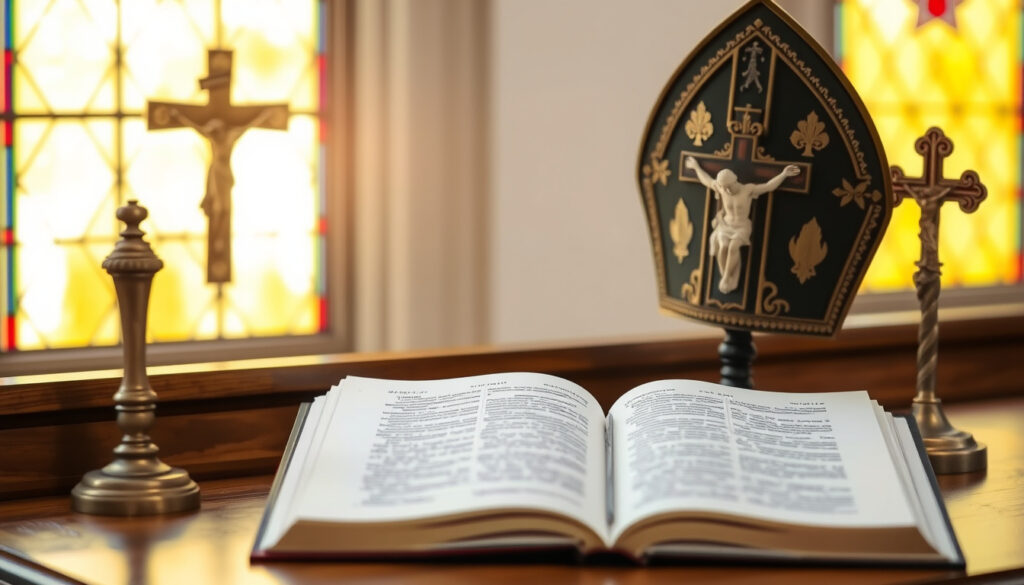
Pope John Paul II: Life, Legacy, Controversies, and Sainthood
Few figures in modern history commanded the stage like Karol Wojtyła, the man who became Pope John Paul II. A Polish pope in a time of Cold War divisions, his life story is woven into the very fabric of the 20th century.
Papacy duration: 1978–2005 · Countries visited: 124 · Encyclicals written: 14 · Beatifications performed: 1,340 · Canonizations performed: 482 · Assassination attempt: 1981
Quick snapshot
- First non-Italian pope in 455 years (Britannica (authoritative encyclopedia))
- Visited 124 countries (USCCB (U.S. bishops’ conference))
- Canonized 482 saints (Britannica (authoritative encyclopedia))
- Key figure in the fall of communism (USCCB (U.S. bishops’ conference))
- Criticism over handling of sexual abuse cases
- Conservative stances on birth control and women’s ordination
- Assassination attempt by Mehmet Ali Ağca
- Apology to Jews for the Holocaust
- Apology for the Crusades and Inquisition
- Apology for forced conversions in the Americas
- Beatified in 2011 by Benedict XVI (Vatican State (official governing body))
- Canonized in 2014 by Pope Francis (Vatican News (official news outlet))
- Two miracles approved (Vatican State (official governing body))
- Feast day: October 22 (Vatican State (official governing body))
Seven facts capture the arc of his life, from a small Polish town to the heart of the Vatican.
| Birth name | Karol Józef Wojtyła |
| Born | 18 May 1920, Wadowice, Poland (Vatican (official Church record)) |
| Papacy began | 16 October 1978 (Vatican (official Church record)) |
| Papacy ended | 2 April 2005 (Vatican News (official news outlet)) |
| Countries visited | 124 (USCCB (U.S. bishops’ conference)) |
| Canonized | 27 April 2014 by Pope Francis (Vatican News (official news outlet)) |
| Feast day | 22 October |
The implication: this timetable shows a figure whose life moved with precise historical gravity — yet the debates around his record remain unsettled.
Why Was Pope John Paul II So Famous?
Early Life and Polish Heritage
A young Wojtyła lost his mother, brother, and father before turning 21, then lived through the Nazi occupation of Poland. These experiences forged a profound resistance to totalitarianism that defined his papacy (BBC Religion (public service broadcaster)).
Born in Wadowice, he excelled in literature and theatre before the war closed in. His early education at the local school had a profound effect, much like the integrated approach at Sacred Heart College Napier: State-Integrated School Guide — a formation that blended intellectual rigor with a deep sense of community. Ordained in 1946, he rose quickly through the Church ranks in communist Poland.
- Appointed Archbishop of Kraków in 1964.
- Elected Pope in 1978.
He was the first non-Italian pope in 455 years and, according to Britannica (authoritative encyclopedia), the first native speaker of a Slavic language to hold the office. This shock to the system electrified Poland and the wider Catholic world.
Global Travels and Pastoral Reach
- He made 104 pastoral trips to 129 countries, logging more than 700,000 miles (USCCB (U.S. bishops’ conference)).
- He was the first pope to visit the White House, the Great Synagogue of Rome, and a mosque.
- His 1979 pilgrimage to Poland is widely credited with sparking the Solidarity movement (Britannica (authoritative encyclopedia)).
These journeys made him the most visually recognized man on earth. For those tracing cultural footprints, the highlights of his global travels rival a list of Best Museums in Berlin: Top Picks for 2025 in terms of sheer range — from the favelas of Brazil to the streets of Manila.
Role in the Fall of Communism
The United States Conference of Catholic Bishops described him as “a spiritual protagonist in the fall of European communism” (USCCB (U.S. bishops’ conference)). His 1979 homily in Warsaw, “Let your Spirit descend and renew the face of the earth,” became a rallying cry against state atheism.
The BBC called him “a fierce defender of Christian humanism against communism, capitalism, and totalitarian atheism” (BBC Religion (public service broadcaster)). His moral backing gave the Solidarity movement the legitimacy it needed to challenge the regime.
Why Was Pope John Paul II Controversial?
Failure to Address Clergy Sexual Abuse
- Advocacy groups and survivors criticized the Vatican under John Paul II for being slow to defrock abusive priests.
- The long-term fallout of these decisions reshaped the Church’s reputation and continues to fuel lawsuits and investigations.
One of the most persistent criticisms of his papacy was the handling of clergy sexual abuse, a pattern of secrecy and delay that came to light in later years.
Conservative Teachings on Sexuality and Women
- He reaffirmed the Church’s opposition to contraception, abortion, and women’s ordination.
- His encyclicals Veritatis Splendor and Evangelium Vitae doubled down on natural law and the “culture of life.”
These stances delighted traditionalists but alienated progressives within the Church. The BBC noted his “fierce defense of Christian humanism” against modernity (BBC Religion (public service broadcaster)).
Assassination Attempt and Aftermath
“Open wide the doors for Christ. To his saving power open the boundaries of states, economic and political systems, the vast fields of culture, civilization and development.”
— Pope John Paul II, First Homily, 1978
In 1981, Mehmet Ali Ağca shot him in St. Peter’s Square. He survived, later visited Ağca in prison and forgave him — a gesture that defined his public narrative of mercy.
The catch: the same pope who publicly forgave his would-be assassin was seen as failing to confront the abuse within his own institution.
What Did Pope John Paul II Say Before He Died?
Final Words Recorded
- His personal secretary reported his last word was “Amen” after receiving the last rites.
- Other aides recall him whispering in Polish, “Let me go to the house of the Father.”
The ambiguity places these details in the “unclear” column of historical record.
The Last Message to the Faithful
- He gave his final blessing from his apartment window to the crowd in St. Peter’s Square (Vatican News (official news outlet)).
He died on 2 April 2005, the eve of Divine Mercy Sunday.
His last gestures — a whisper and a blessing — were in perfect accord with a papacy built on visible, pastoral presence.
Why Did Pope John Paul II Apologize?
No pope had ever apologized on this scale. John Paul II issued a series of mea culpas for historical wrongs committed by the Church, transforming the Vatican’s public relationship with its own past.
Apologies to the Jewish Community
- In 2000, he issued a formal apology for the Church’s role in the Holocaust and Christian anti-Semitism.
- He placed a note in Jerusalem’s Western Wall, asking God’s forgiveness.
His 1986 visit to the Great Synagogue of Rome — the first by a pope — established the foundation for this apology.
“You are our dearly beloved brothers, and in a certain way, it could be said that you are our elder brothers.”
— Pope John Paul II, Address to the Jewish Community in Rome, 1986
Apologies for Historical Wrongs of the Church
- Forced conversions of indigenous peoples in the Americas.
- The Crusades and the Inquisition.
- The condemnation of Galileo.
Critics noted these were often carefully worded, expressing regret without assigning direct institutional guilt.
Why this matters: the apologies broke ground for papal accountability, but the careful wording left some victims of Church history unsatisfied.
Is Pope John Paul II a Saint?
Beatification Process
The normal rule is a five-year waiting period after death before opening a cause. Benedict XVI waived it for John Paul II, citing his “manifest sanctity.” He was beatified on 30 April 2011 (Vatican State (official governing body)).
Canonization and Miracles
- The Vatican approved two miracles attributed to his intercession: the healing of a French nun from Parkinson’s disease, and the healing of a Costa Rican woman from a brain aneurysm.
Pope Francis canonized him on 27 April 2014.
Feast Day and Legacy
- Feast day: 22 October.
- He is unofficially styled “John Paul the Great” by many Catholics.
The speed of his canonization underscores the deep devotion he inspired, even as the full historical assessment of his tenure remains contested.
Timeline of a Papacy
- : Born in Wadowice, Poland
- : Ordained priest
- : Appointed Archbishop of Kraków
- : Elected Pope John Paul II (Vatican (official Church record))
- : Assassination attempt by Mehmet Ali Ağca
- : Issued apology for the Church’s role in the Holocaust
- : Died on 2 April
- : Beatified by Benedict XVI (Vatican State (official governing body))
- : Canonized by Pope Francis
The pattern: no modern pope exercised such geopolitical weight from the Chair of Peter.
Confirmed Facts and What Remains Unclear
Confirmed facts
- Birth date and place (confirmed by multiple official sources)
- Date of election as pope (confirmed by multiple official sources)
- Date of death (widely reported)
- Canonization date (widely reported)
- Number of countries visited (124)
- Number of encyclicals (14)
What’s unclear
- Exact wording of last words (some sources say ‘Amen’, others ‘Let me go to the house of the Father’)
- Total number of apologies (varies by source)
Key Quotes from John Paul II
“Let me go to the house of the Father.”
— Pope John Paul II, spoken on his deathbed, 2 April 2005
“[He was] a spiritual protagonist in the fall of European communism and the passage to the third millennium of Christianity.”
— United States Conference of Catholic Bishops
For the Catholic Church, the reckoning with John Paul II’s legacy leaves a stark choice: embrace the geopolitical boldness while confronting the institutional failures, or risk losing the credibility his moral authority once commanded.
en.wikipedia.org, vaticanunveiled.com, ansa.it, simple.wikipedia.org, ewtn.com
For a more in-depth look at his early years and rise to the papacy, see this detailed biography of Pope John Paul II.
Frequently asked questions
How old was Pope John Paul II when he died?
He was 84 years old. He died on 2 April 2005.
What was Pope John Paul II’s real name?
Karol Józef Wojtyła.
How many languages did Pope John Paul II speak?
He was fluent in 8 languages, including Polish, Italian, English, French, German, Spanish, Portuguese, and Latin.
Did Pope John Paul II visit the United States?
Yes, he visited the United States seven times during his papacy.
What is Pope John Paul II’s feast day?
22 October.
Why is Pope John Paul II called ‘the Great’?
The title is unofficial but widely used by devotees who consider his impact on the 20th century to be on par with Gregory I, Nicholas I, and Leo I.
Was Pope John Paul II the first Polish pope?
Yes, he was the first and only Polish pope to date.
How many children did Pope John Paul II have?
None. As a Catholic priest and bishop before becoming pope, he lived a celibate life.
More related posts
 New Plymouth to Napier: Best Travel Routes by Plane, Bus, Car
 Black Ferns v Australia: Stats, How to Watch & History
 Cast of His and Hers (2026) – Full List and Characters
 Harold and the Purple Crayon 2024: Flop, Age Rating, Meaning
 Lucy & Yak NZ: Where to Buy, Pricing, Controversy & Reviews
 Darts World Championship 2025: Littler Youngest Winner
 Chia Seed Pudding NZ: Recipe, Benefits & Risks
 Labour Day 2025 NZ – Date, Rules and Weekend Guide
