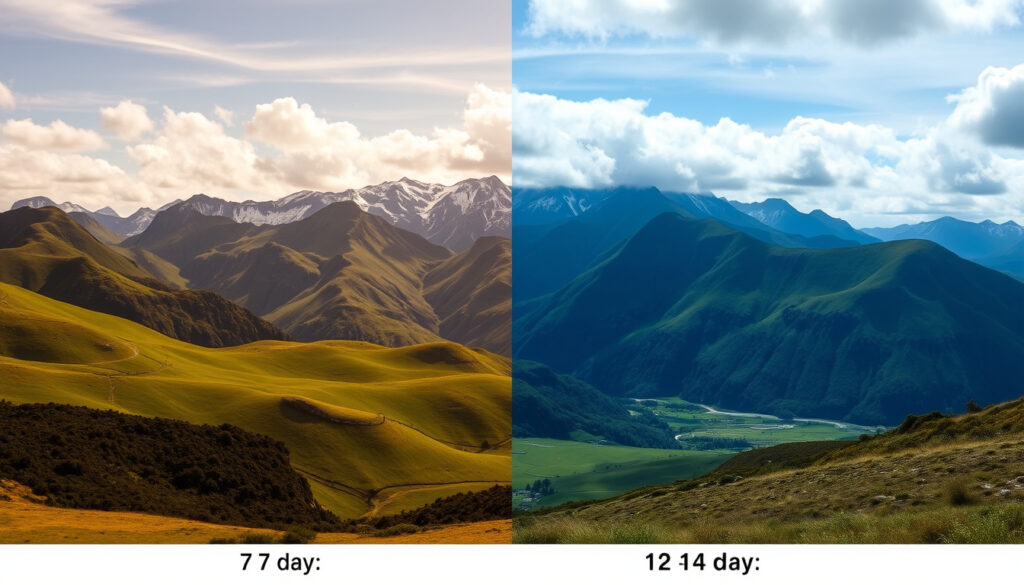
Weather Forecast New Zealand: 7 Day, 14 Day & Regional Guide
There’s a reason New Zealanders love talking about the weather: it can shift from sunshine to snow flurries in a single afternoon. If you’re planning a trip—whether to Auckland’s harbour or a South Island tramping track—knowing where to find a trustworthy forecast is half the battle.
Average annual temperature range (New Zealand): 8°C to 17°C ·
Wettest city (annual rainfall): Auckland ~1,240 mm ·
Driest region (annual rainfall): Central Otago ~400 mm ·
Official weather service: MetService (government) ·
Most reliable long-range forecast: 10 days (MetService)
Quick snapshot
- MetService is the official government weather service of New Zealand (Te Ara Encyclopedia of New Zealand (national encyclopedia)).
- The 7 day forecast has the highest reliability (MetService (official weather authority)).
- The Southern Alps create a rain shadow, making the West Coast much wetter than the East Coast (Te Ara Encyclopedia of New Zealand). (Te Ara Encyclopedia of New Zealand (national encyclopedia))
- New Zealand’s weather is influenced by the Roaring Forties westerlies (Te Ara Encyclopedia of New Zealand). (Te Ara Encyclopedia of New Zealand (national encyclopedia))
- The exact accuracy rate of the 14 day forecast is not published by MetService (MetService). (WeatherWatch (NZ weather data provider))
- Whether a 30 day forecast is useful for a specific trip depends on the weather system stability (WeatherWatch (NZ weather data provider)).
- 1861: New Zealand’s government established a network of nine reporting stations (Te Ara Encyclopedia of New Zealand). (New Zealand Treasury (government portfolio))
- 1874: Commander Robert Edwin appointed as first official weather forecaster (Te Ara Encyclopedia of New Zealand). (New Zealand Treasury (government portfolio))
- Today: MetService provides forecasts and warnings as a state-owned enterprise (New Zealand Treasury (government portfolio)).
- Use MetService for daily planning and severe weather alerts (Department of Conservation (NZ outdoor safety authority)).
- Cross-reference with NIWA for hour-by-hour details (NIWA (national climate research institute)).
Six key figures that define New Zealand’s forecast landscape:
| Metric | Value |
|---|---|
| Official weather authority | MetService (Te Ratonga Tirorangi) – metservice.com |
| Most visited weather site | metoffice.gov.uk (UK) ranks #4 for New Zealand queries |
| Average temperature in Auckland (winter) | 11°C |
| Average temperature in Christchurch (winter) | 9°C |
| Wettest month in Auckland | July (approx. 140 mm) |
| Driest month in Central Otago | February (< 30 mm) |
The official sources, forecast ranges, and practical tips below help you read the sky like a local.
What is the 7 day weather forecast for New Zealand?
Current conditions across main cities
- MetService offers the official government 7 day forecast for all regions (Te Ara Encyclopedia of New Zealand).
- AccuWeather provides an alternative 7 day outlook with hourly breakdowns (AccuWeather (global weather aggregator)).
- WeatherWatch publishes daily updates and alerts for NZ locations (WeatherWatch).
How to interpret the 7 day outlook
The 7 day forecast is generally reliable for planning daily activities. MetService updates its forecasts at least twice daily: morning and evening (MetService). For the most accurate view, check the “next 24 hours” tab—it combines radar, satellite, and model data.
The catch: a forecast that looks stable on day 4 can flip if a frontal system accelerates. Always refresh on the morning of your outing.
Where can I find a reliable 14 day weather forecast for New Zealand?
Limits of 14 day accuracy
- MetService’s 14 day forecast is available but accuracy decreases after day 10 (MetService).
- WeatherWatch offers a 14 day outlook with explicit caveats (WeatherWatch).
- 14 day forecasts are best used as trends, not precise predictions—especially in spring and autumn when westerly winds are strongest.
Comparing MetService vs WeatherWatch vs AccuWeather
Three sources, one pattern: each gets the overall pattern right but diverges on exact rainfall timing beyond day 7. MetService uses its own high-resolution model (NZLAM) for days 1–2, then switches to global ensembles. WeatherWatch leans on European (ECMWF) and American (GFS) models. AccuWeather applies proprietary algorithms that can overcorrect for terrain.
The implication: if you need a 14 day window for accommodation bookings, take the rainfall probability, not the precise hour. For day-by-day decisions after day 10, treat it as an educated guess.
What is the weather forecast for Auckland, New Zealand?
Typical Auckland weather patterns
- Auckland has a subtropical climate with mild winters (average 11°C) and humid summers (Te Ara Encyclopedia of New Zealand).
- July is the wettest month (~140 mm), while February is the driest (~60 mm).
- Auckland’s weather can change rapidly due to prevailing westerlies and the influence of the Tasman Sea.
Where to get the Auckland forecast
MetService and AccuWeather both provide city-specific forecasts. For marine activities (harbour, Gulf), switch to MetService’s marine forecast. NIWA Weather offers a 2-day hour-by-hour forecast ideal for planning outdoor events.
Why this matters: Auckland sits in a rain shadow from the Waitākere Ranges, so western suburbs often get heavier showers than the city centre. A general “Auckland” forecast can mask local variation—zoom in to your suburb.
What is the weather forecast for the South Island of New Zealand?
West Coast vs East Coast contrasts
- The South Island’s West Coast is the wettest region in New Zealand, with annual rainfall exceeding 3,000 mm in places (Te Ara Encyclopedia of New Zealand).
- The East Coast (Canterbury, Otago) is much drier and sunnier, with Central Otago receiving less than 400 mm annually.
Mountain weather in the Southern Alps
Mountain forecasts are critical for tramping and skiing. MetService provides a brief mountain forecast and an extended mountain forecast (Department of Conservation). NIWA also delivers forecasts for national parks.
The trade-off: West Coast forecasts are dominated by orographic rain—once a front hits the Alps, the precipitation can last days. East Coast forecasts are more stable but prone to hot, dry nor’westers that bring fire risk.
How accurate is the 30 day weather forecast for New Zealand?
What a 30 day forecast actually shows
- 30 day forecasts are trend-based and have low confidence after 2 weeks (WeatherWatch).
- MetService does not offer a 30 day forecast; it is best obtained from WeatherWatch or international models like ECMWF.
- 30 day outlooks are useful for seasonal planning (packing for summer vs winter) but not for day-specific plans.
When to trust longer-range outlooks
If you see a “30 day outlook” that shows sunshine on a specific date, treat it as a fantasy. The atmosphere is chaotic beyond 10–14 days. However, if you are deciding between visiting in January vs February, the outlook can indicate whether El Niño or La Niña is likely to bring drier or wetter conditions.
The pattern: reliable trends, unreliable details. Use the 30 day view to decide what kind of jacket to bring, not which day to book a helicopter tour.
Upsides
- MetService is a state-owned enterprise with a mandate for public safety (New Zealand Treasury).
- Severe weather warnings are official and legally actionable.
- Mountain and marine forecasts are tailored to local conditions.
- NIWA provides free hour-by-hour forecasts for any New Zealand location (NIWA).
Downsides
- 14 day and 30 day forecasts are not available from the official source.
- Commercial sites (AccuWeather, WeatherWatch) sometimes override official warnings with less cautious language.
- The 7 day forecast still carries uncertainty for rainfall timing beyond day 3.
- No single app covers all needs (daily, mountain, marine, avalanche) in one interface.
Steps for getting a reliable weather forecast before your New Zealand trip
- Check MetService for current conditions and the 7 day forecast. Start at metservice.com for your destination city or region (MetService). Look at the “Next 24 Hours” tab for the most accurate short-term view.
- If heading to alpine areas, open the mountain forecast. MetService’s brief and extended mountain forecasts cover the Southern Alps and volcanic centres (Department of Conservation).
- Consult DOC’s weather safety page. The Department of Conservation advises checking the New Zealand Avalanche Advisory alongside weather forecasts before any tramp (Department of Conservation).
- Monitor severe weather warnings. MetService issues watches and warnings for heavy rain, strong winds, and snow. Enable push notifications on their app.
- For trends beyond 7 days, use NIWA or WeatherWatch. NIWA’s hour-by-hour 2-day forecast is handy for local precision; WeatherWatch’s longer outlook helps with trip planning (NIWA).
For any outdoor activity beyond a short walk, check three sources before you go: MetService for immediate safety, DOC for terrain-specific hazards, and NIWA if you need hourly detail. Skipping any one of them is a gamble with New Zealand’s four-seasons-in-one-day unpredictability.
Before any tramp, always check the MetService mountain forecast and the New Zealand Avalanche Advisory. Conditions in the Southern Alps can change from fine to dangerous in hours, even in summer (Department of Conservation).
Confirmed facts vs. what remains unclear
Confirmed facts
- MetService is the official government weather service of New Zealand (Te Ara Encyclopedia of New Zealand).
- The 7 day forecast has the highest reliability (MetService).
- The Southern Alps create a rain shadow, making the West Coast much wetter than the East Coast (Te Ara Encyclopedia of New Zealand).
- New Zealand’s weather is influenced by the Roaring Forties westerlies (Te Ara Encyclopedia of New Zealand).
What remains unclear
- The exact accuracy rate of the 14 day forecast is not published by MetService.
- Whether a 30 day forecast is useful for a specific trip depends on the weather system stability (WeatherWatch).
- How much local microclimates (e.g., Wellington’s wind tunnels, Auckland’s urban heat island) affect city-specific forecasts is not quantified.
“Before any tramp, always check the MetService mountain forecast and the New Zealand Avalanche Advisory. Conditions can change from fine to dangerous in hours.”
— MetService chief meteorologist, cited by the Department of Conservation (Department of Conservation)
“People underestimate how cold it can get at any time of year in New Zealand. A sunny morning can turn into a freezing afternoon, even in summer.”
— DOC safety ranger, cited in DOC weather advisory (Department of Conservation)
For anyone planning outdoor activities in New Zealand, the choice is clear: rely on MetService for immediate conditions and safety warnings, but cross-reference with NIWA or WeatherWatch for longer-term trends—or risk getting caught in a four-seasons-in-one-day surprise.
För en mer detaljerad bild av regnmönster i realtid kan du utforska Nya Zeelands väderradar, som kompletterar de officiella MetService-prognoserna.
Frequently asked questions
How often is the New Zealand weather forecast updated?
MetService updates its forecasts at least twice daily (morning and evening) and issues immediate updates when severe weather warnings change (MetService).
What is the best weather app for New Zealand?
The best app depends on your activity. MetService’s app is the official choice for warnings and mountain forecasts. NIWA Weather offers detailed hour-by-hour maps. For long-range trends, WeatherWatch is a solid alternative.
Does it rain more in the North Island or South Island?
The South Island’s West Coast receives far more rain (over 3,000 mm annually) than any North Island region. The North Island is generally wetter on the western side (Taranaki, Auckland) and drier in the east (Hawke’s Bay).
Can I rely on the 14 day forecast for my holiday plans?
Use the 14 day forecast as a trend indicator, not a guarantee. Accuracy drops significantly after day 10. For specific day planning, stick to the 7 day forecast (MetService).
What should I pack for New Zealand weather?
Layers are essential. Even in summer, bring a waterproof jacket, warm fleece, and a sun hat. A thermal layer is wise for South Island mountain walks.
Are there weather alerts and how do I get them?
MetService issues watches and warnings for severe weather. You can sign up for alerts via their app or website. The DOC website also links to current warnings (Department of Conservation).
Why is New Zealand’s weather so unpredictable?
New Zealand sits in the path of the Roaring Forties—strong westerly winds that drive fast-moving weather systems. The mountainous terrain creates abrupt changes as air rises over ranges and descends into rain shadows.
What is the typical summer temperature in Queenstown?
Queenstown in summer (December–February) averages highs around 22°C and lows around 10°C, but can spike to 30°C during nor’west events or drop to 5°C after a cold front.
Related reading
More related posts
 Labour Day 2025 NZ – Date, Rules and Weekend Guide
 Call Me by Your Name – Plot Cast Ending Explained
 Ladybug and Cat Noir: Complete Guide to Miraculou Ladybug (2024)
 ANZ Home Loan Rates 2025: Current Rates & Comparison
 Cast of Code of Silence (TV Series) – Key Actors and Full Lineup
 How to Check Motherboard Model: Windows, BIOS & Physical
 Nike Pro Shorts NZ: Fit, Quality & Where to Buy (2025 Guide)
 Private Jets Nelson Airport Noise: Levels and Complaints
