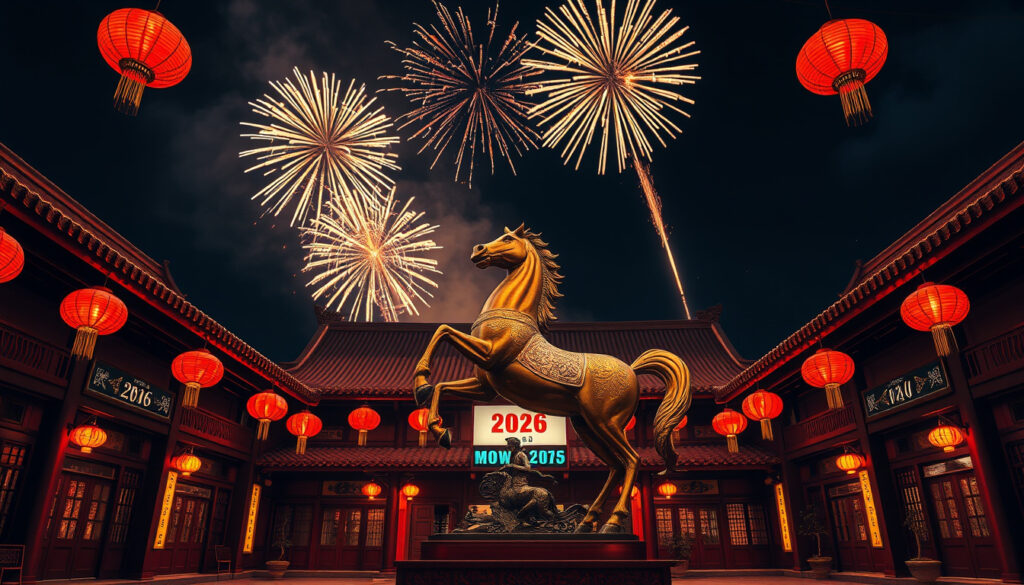
When Is Chinese New Year 2026? Dates, Traditions & Zodiac
There’s a reason Lunar New Year commands the largest annual human migration on the planet — and why February 2026 will see millions of families making the same calculations about travel, family gatherings, and whether they remembered to buy red envelopes in time. Chinese New Year isn’t just a date; it’s a two-week window where superstition and celebration collide in ways that shape real decisions for billions of people. For 2026, the zodiac wheel lands on the Fire Horse — a combination that hasn’t appeared since 1966. Here’s everything you need to navigate it.
Typical Date Range: New moon between January 21 and February 20 · 2026 Start Date: February 17 · Duration: 15 days · 2026 Zodiac Animal: Horse · End of Celebrations: Lantern Festival around March 3
Quick snapshot
- February 17, 2026 marks the start of the Year of the Fire Horse (Smithsonian Institution)
- 15-day Spring Festival runs through March 3, 2026 (Calm)
- How widely modern urban families observe all traditional taboos versus selective ones
- Whether regional variations in taboo adherence follow generational or geographic patterns
- Little Year prep activities begin February 9, 2026 (ChineseNewYear.net)
- Year of the Fire Horse concludes February 5, 2027 (Calm)
- Plan travel and family gatherings before February 17 for best availability
- Review taboo calendar if observing traditions matters for your household
| Field | Detail |
|---|---|
| Official Name | Spring Festival |
| Calendar Basis | Lunisolar |
| 2026 Animal | Horse |
| Start 2026 | February 17 |
| Duration | 15 days |
What date is Chinese New Year and how long does it last?
Chinese New Year falls on the day of the new moon in the lunisolar calendar, which places it anywhere from January 21 to February 20. In 2026, that date is February 17 — a Tuesday — marking the beginning of the Year of the Fire Horse (Calm).
Typical date range
The window for Chinese New Year spans roughly 30 days each year because the lunar calendar doesn’t align perfectly with the Gregorian calendar. The new moon determining the date shifts slightly annually, which is why the holiday “jumps” between late January and mid-February.
2026 specific date
February 17, 2026 is not just the start of celebrations — it also marks the transition from the Wood Snake Year (January 29, 2025 – February 16, 2026) into the Fire Horse Year. The Wood Snake’s final day was February 16, 2026 (Moon Omens). The Smithsonian Institution confirms the 15-day Spring Festival framework anchored to this date.
Duration and end
The Spring Festival proper runs from February 17 to February 27, 2026 — an 11-day window — but the broader celebration period extends to the Lantern Festival, which concludes around March 3, 2026 (ChineseNewYear.net). That brings the total celebration to 15 days.
Is Chinese New Year in Jan or Feb?
The honest answer is: it depends. Chinese New Year is never in January for practical purposes — the earliest it can fall is January 21, and that hasn’t happened since 2014. The 30-day window technically allows January starts, but in practice, most years the holiday lands in February.
Why the date varies
The Chinese lunisolar calendar follows the cycles of the moon, not the sun. Each new moon marks a new month, and Chinese New Year specifically marks the beginning of the first month. Because lunar months are shorter than solar months, the calendar occasionally adds an extra month to keep seasons aligned — which creates the shifting date window.
Historical lunar calendar basis
The Chinese calendar has tracked agricultural cycles for over 3,000 years. Its lunisolar structure means the same date in the Gregorian calendar can fall on different days of the week or different weeks of the year — which is why the “when is Chinese New Year” question needs answering fresh each year.
In any given 19-year cycle, Chinese New Year falls in late January about 12 times and in February about 7 times. For 2026, it’s firmly in February.
What is the next Chinese New Year animal in 2026?
The Horse is the seventh animal in the 12-year Chinese zodiac cycle, which means the 2026 Lunar New Year welcomes the Year of the Fire Horse (Travel China Guide). Previous Horse years include 1918, 1930, 1942, 1954, 1966, 1978, 1990, 2002, and 2014.
Year of the Horse details
“Fire Horse” combines two elements: the zodiac animal (Horse) and the heavenly stem (Fire). This pairing occurs in the 60-year sexagenary cycle — so the last Fire Horse year was 1966–1967. The next won’t come until 1986–1987 (Wood Horse), and then 2046–2047 (Fire Horse again).
Zodiac cycle overview
The 12 animals — Rat, Ox, Tiger, Rabbit, Dragon, Snake, Horse, Goat, Monkey, Rooster, Dog, Pig — rotate annually. Combined with five elements (Wood, Fire, Earth, Metal, Water), each appearing in yin/yang forms, the cycle produces 60 unique combinations. Each Fire Horse year carries reputation for intensity: strong-willed, passionate, and ambitious personalities.
What to avoid during Chinese New Year?
Chinese New Year taboos share one theme: don’t accidentally push good fortune out the door. The first day — February 17, 2026 — carries the most restrictions, though some traditions extend through the 15th day.
Common taboos
The Confucius Institute, a Tier 1 authority on Chinese cultural traditions, lists the core prohibitions for the first day: no washing clothes, hair, or bathing (because it’s the Water God’s birthday); avoid saying unlucky words like “death,” “illness,” or “loss”; and do not break porcelain or glass, scold children, or take afternoon naps (Confucius Institute).
Hair washing rule
The hair-washing taboo stems from a linguistic connection: the Chinese character for hair shares the first character with the word for prosper. The Farmers’ Almanac notes that washing or cutting hair on the first day is seen as washing your fortune away (Farmers’ Almanac). In Hong Kong, this extends through the first few days and is closely observed — particularly the greeting “kung hei fat choi” (become wealthy) is exchanged frequently (Sassy Hong Kong).
Forbidden colors
Red scares away evil spirits — but avoid black and white. These two colors carry funeral associations in Chinese culture and are considered bad luck during the festive period (Farmers’ Almanac). Knives and scissors are also avoided because they may “cut off” fortune.
Most taboos focus on the first day or first few days. You don’t need to avoid everything for all 15 days — but if you’re observing traditions, prioritize February 17.
What are 6 things we must do to prepare for Chinese New Year?
Preparation traditionally begins with “Little Year” activities, which start February 9, 2026 — giving families roughly a week to complete preparations before the main celebration begins.
Preparation steps
Six core preparation activities frame the week before February 17:
- Deep clean the home — Housecleaning must be done before Chinese New Year’s Day to sweep away bad luck. The words for “dust” and “old” sound similar in Chinese, so removing dust symbolically removes old age (Las Genevistas).
- Buy new clothes — Purchasing new garments for the first day symbolizes a fresh start.
- Stock red envelopes (hongbao) — These envelopes containing cash gifts are given to children and unmarried relatives by married family members.
- Prepare symbolic foods — Long noodles symbolize longevity (don’t cut them); whole fish represents abundance — “fish” sounds like “surplus” (Las Genevistas).
- Stay up on New Year’s Eve — Families traditionally stay awake to guard against the “Sui” monster (Confucius Institute).
- Settle debts before the holiday — Demanding debt repayment during the holidays is considered bad luck (Las Genevistas).
Traditions like red envelopes
Red envelopes serve a dual purpose: they transfer lucky energy from elders to youngers, and the red color itself scares away evil spirits. Amounts often end in even numbers (like 8, which sounds like “prosperity”) and are typically given by married couples to unmarried recipients.
In Hong Kong, the phrase “kung hei fat choi” ( ) — meaning “congratulations and be prosperous” — is the standard greeting. Outside Chinese-speaking regions, the greeting “Gong Xi Fa Cai” serves the same purpose.
Upsides
- 15 days of family reunion and community connection
- Structured fresh start through cleaning, new clothes, and symbolic foods
- Clear tradition framework that guides social behavior
- Public holidays in China allow family travel
Downsides
- First-day taboos restrict practical activities (laundry, hair washing)
- No sweeping on New Year’s Day can create clutter anxiety
- Debt repayment must be settled before the holiday — tight timing
- Black and white clothing must be avoided — wardrobe planning needed
Step-by-step: How to navigate 2026 celebrations
Three distinct phases structure the 15-day celebration. Here’s how to move through each one practically:
Before February 17: Pre-celebration prep
Complete deep cleaning, buy new clothes and red envelopes, settle any outstanding debts, and stock pantry with symbolic foods (noodles, fish, dumplings). Little Year activities begin February 9 — start your checklist then.
February 17–23: Core celebration days
These seven days are public holidays in China. On the first day: no washing (clothes, hair, bathing), no sweeping, no knives/scissors, avoid unlucky words, wear red. Days 2–7 allow gradual relaxation of restrictions. Give and receive red envelopes, eat symbolic foods, visit family.
February 27–March 3: Closing period
The Spring Festival formally ends February 27, but the Lantern Festival (February 28–March 3) provides a gentler closing. Lanterns are displayed, sweet dumplings eaten, and the year’s luck is symbolically released. By March 3, most taboos lift and normal activity resumes.
The implication: families who treat February 9–16 as the action window have the luxury of time; those who wait until February 17 face a compressed and potentially stressful launch to what should be a joyful period.
Timeline: Key dates for 2026
Three anchors define the 2026 celebration window, with the Year of the Fire Horse extending well beyond the festive period:
| Date / Period | Event |
|---|---|
| February 9–16, 2026 | Little Year preparations begin |
| February 17, 2026 | Lunar New Year begins; Year of the Fire Horse starts |
| February 23, 2026 | Public holidays end in China |
| February 27, 2026 | Spring Festival ends |
| February 28–March 3, 2026 | Lantern Festival |
| February 5, 2027 | Year of the Fire Horse ends; Year of the Earth Goat begins |
What experts say
“Most Chinese New Year taboos have one theme: don’t accidentally push good luck out the door.”
— Dash Blog, Cultural Writer
“The Chinese character for hair is the same first character in the word for prosper. This means washing or cutting it off is seen as washing your fortune away.”
— Farmers’ Almanac, Traditions Editor
“You are not supposed to go to bed early on New Year’s Eve. On the contrary, you should stay up late and alert in order to keep the ‘Sui’ monster away.”
— Confucius Institute, Cultural Expert
For families planning gatherings, the practical stakes are straightforward: travel arrangements made before February 10 have the best availability. Those observing traditions should complete deep cleaning and debt settlement by February 16. The 15-day window offers enough flexibility that perfection isn’t required — the spirit of the observance matters more than rigid adherence to every rule. For anyone hosting mixed-generation households, the key is communicating which taboos your family observes before the holiday begins, so no one accidentally breaks a taboo out of ignorance.
The takeaway for hosts: send a quick message before February 17 listing which taboos your household follows — this simple step prevents awkward moments and lets guests participate comfortably.
Related reading: When Is Summer NZ – Official Dates, Months, Seasons Guide
Chinese New Year 2026 begins the Fire Horse zodiac traits, a rare cycle occurring every 60 years that deeply influences traditions and predictions.
Frequently asked questions
Why is Chinese New Year celebrated?
Chinese New Year originated as a harvest festival marking the end of winter and the beginning of spring. Over centuries, it evolved into a celebration of family, ancestry, and renewal — with origins tied to defeating the mythical Nian monster, which fears loud noises and the color red.
Why is Chinese New Year different each year?
Chinese New Year follows the lunisolar calendar, which tracks both the moon’s phases and the sun’s position. Because lunar months are shorter than solar months, the new moon date shifts annually — falling anywhere from January 21 to February 20.
What are red envelopes for?
Red envelopes (hongbao) contain cash gifts given by married elders to unmarried younger family members. The red scares away evil spirits, and the money transfers good fortune. Amounts often end in even numbers, particularly 8 (sounds like “prosper”).
Who is the luckiest Chinese zodiac?
The “luckiest” zodiac depends on the year and element combination. Dragon years are traditionally considered most fortunate, but each zodiac animal has favorable years depending on its position in the cycle and compatibility with the year’s element. The Horse generally brings energy and momentum.
Why is 2026 a lucky year?
2026 is a Fire Horse year — combining the passionate energy of Fire with the active, goal-driven nature of the Horse. Fire Horse years are associated with strong-willed, ambitious personalities. The 60-year sexagenary cycle means this combination only occurs once per generation.
What is the forbidden color for Chinese New Year?
Black and white are considered bad luck during Chinese New Year because they carry funeral associations. Red is the most auspicious color — it scares away evil spirits and represents life and energy. Other lucky colors include gold and yellow.
Why can’t I wash my hair on Lunar New Year?
The Chinese character for hair shares its first character with the word for prosper. Washing hair on the first day is interpreted as “washing your fortune away.” Similarly, cutting hair is avoided because “hair” and “prosper” remain linguistically connected. This taboo is observed particularly strictly in Hong Kong and southern China.
More related posts
 185 Pounds in KG: Exact 83.91 kg & 13 Stone 3 lbs
 Air New Zealand New Uniform: Designer, Features & 2025 Reveal
 Easy Workout at Home: Beginner Routines That Work (No Equipment)
 Novak Djokovic Net Worth 2026: $240M Fortune & Wife’s Role
 Codes for Hunty Zombie April 2026: 10+ Active
 Corsair Bay Beach Closure: What Happened and Next Steps
 Convert JPG to PDF Free: Top 5 Online Converters Tested (2025)
 Paul Thomas Anderson Movies Ranked: Complete Guide
