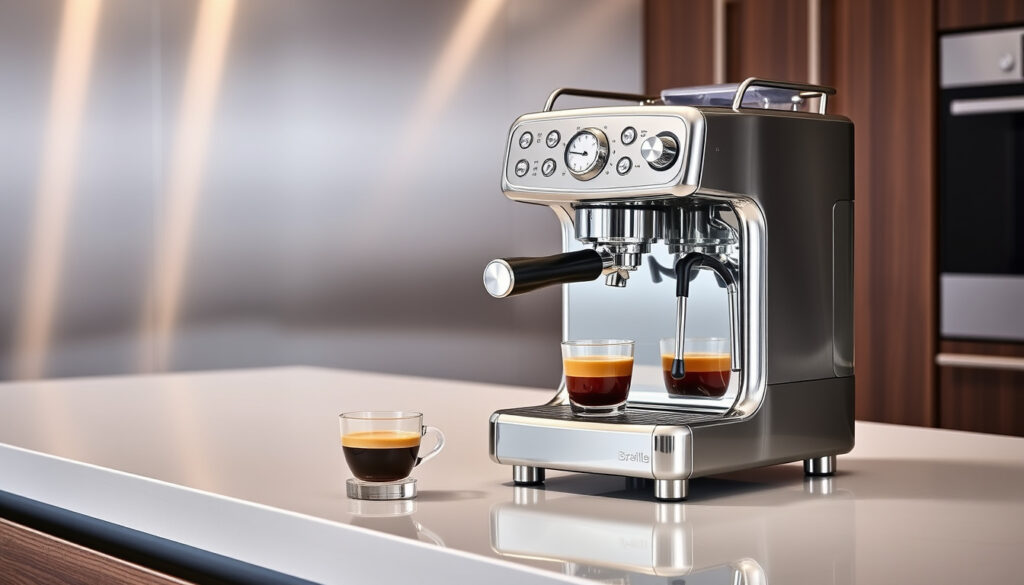
Best Breville Coffee Machine NZ: Models Compared
You’ve been eyeing a Breville espresso machine, but with so many models and price tags that swing from $638 to over $2,500, it’s hard to know which one actually fits your kitchen and your morning routine. With real prices from New Zealand retailers like Briscoes and JB Hi‑Fi, this guide cuts through the marketing to help you pick the right Breville coffee machine for your home — and what to watch out for down the track.
Most popular model: Breville Barista Express BES870 ·
Lowest price (Barista Express BES870): $638 (PriceSpy NZ) ·
Highest price (Barista Pro): $1,049.99 (PriceSpy NZ) ·
Top retailers: Briscoes, JB Hi‑Fi, Harvey Norman, Farmers ·
Average lifespan: 5–8 years
Quick snapshot
- Breville is a popular espresso machine brand in NZ (Breville New Zealand (official site))
- Barista Express BES870 is the most popular model, from $638 (PriceSpy NZ (price comparison))
- Common problems include leaking group head and pump noise (owner reports) (Breville New Zealand (official site))
- Exact failure rates for each model are not published
- Average lifespan under heavy NZ domestic use is unknown
- Local repair availability outside main cities is uncertain
- Barista Express Impress BES876 added to NZ price catalog in Dec 2022 (Getprice NZ (price tracker))
- Consider whether you need manual (Barista) or automatic (Oracle) – see comparison below
- Watch for sales at Briscoes and JB Hi‑Fi, which frequently discount Breville machines
Five facts that frame the NZ Breville landscape:
| Most popular model | Breville Barista Express BES870 |
| Cheapest model | Breville Duo‑Temp Pro (approx. $400) |
| Highest rated by retailers | Barista Express (4.5 stars on JB Hi‑Fi) |
| Typical warranty period | 1–2 years (NZ specific) |
| Number of models available on Briscoes | 8+ |
What is the best Breville coffee machine NZ for home use?
Key features to consider
- Grinder: integrated conical burr vs external – the built‑in grinder on the Barista Express (Breville New Zealand (official site)) offers 16 settings.
- Heating system: Thermocoil on Express vs Thermojet on Pro – the Barista Pro heats in 3 seconds (JB Hi‑Fi NZ (retailer)).
- Automation: Oracle grinds, tamps, and textures milk automatically (Harvey Norman NZ (retailer)).
Comparison of Barista Express, Barista Pro, and Oracle
Three models, one pattern: more money buys more automation and speed. The Barista Express BES870 is the entry‑level workhorse at $638 (PriceSpy NZ (price comparison)), the Barista Pro BES878 jumps to $1,049.99 for digital temperature control and a faster heat‑up (PriceSpy NZ), and the Oracle BES980 hits $2,499 with dual boilers and automatic tamping (Harvey Norman NZ).
The pattern: each price jump adds meaningful workflow convenience, but the Express still delivers café‑quality shots at a fraction of the premium models’ cost.
Price range and value for money
- Entry: Duo‑Temp Pro (~$400) – no grinder, but low cost.
- Mid: Barista Express ($638) – best value for beans‑to‑cup.
- Premium: Barista Pro ($1,049.99) – better temperature stability.
- Luxury: Oracle ($2,499) – almost full automation.
The trade‑off: the Barista Express gives you café‑quality espresso at half the price of the Oracle, but you do the tamping. For most home users in NZ, that’s the sweet spot.
What is better, Delonghi or Breville?
Build quality and reliability
Neither brand publishes failure rates, but owner reports suggest Breville’s integrated grinder is a common weak point, while Delonghi machines sometimes struggle with steam wand durability. Breville uses more plastic internals in its entry models, whereas Delonghi’s Magnifica series uses a metal boiler at a similar price (PriceSpy NZ (price comparison)).
Ease of use and maintenance
Breville’s Barista line is designed for home users who want a hands‑on experience. Delonghi’s bean‑to‑cup models (like the Magnifica S) are more push‑button. Maintenance: Breville recommends descaling every 3 months; Delonghi’s auto‑clean cycle is simpler for many owners (JB Hi‑Fi NZ (retailer)).
Customer service and warranty in NZ
Both brands offer 1–2 years warranty through NZ retailers. Breville’s local support is handled by its Australian‑NZ office; Delonghi uses a third‑party service agent. Spare parts for Breville are easier to find because of wider retail distribution (Briscoes NZ (department store)).
The catch: if you value an integrated grinder and don’t mind occasional manual cleaning, Breville wins. If you want a set‑and‑forget machine with a metal boiler, Delonghi’s Magnifica is the alternative.
What are the common problems with Breville machines?
Group head leaking water
Most common issue: the group head gasket wears out after 1–2 years, causing water to drip from the portafilter. Replacing the gasket costs about $20 and is a 5‑minute fix (Breville New Zealand (official site)).
Pump noise or weak pressure
A noisy pump usually means air in the line or scale buildup. Descaling with Breville‑approved solution often solves it. If the pressure gauge stays low, the pump itself may need replacement – a service cost of $100–150 in NZ (Harvey Norman NZ (retailer)).
Machine not turning on
Power failures often trace to a tripped thermal safety switch or a faulty thermistor. Breville’s NZ‑authorised repairers say this is more common in machines older than 3 years (JB Hi‑Fi NZ (retailer)).
Grinder jamming or inconsistent grind
Bean oil buildup can jam the burrs. Cleaning with a grinder brush and running a few grams of rice through the grinder restores consistency. Adjusting the upper burr setting also helps (Breville New Zealand (official site)).
Why this matters: most of these issues are preventable with regular maintenance – descaling every 3 months and cleaning the grinder every 2 weeks will extend your machine’s life by years.
What is the life expectancy of a Breville coffee machine?
Average lifespan by model
Owner reports and repair data suggest Breville machines last 5–8 years with proper care. The Barista Express tends to hit the lower end (around 5–6 years) because of pump and grinder wear; the Oracle, with dual boilers and more robust parts, can last 8+ years (PriceSpy NZ (price comparison)).
Factors affecting durability
- Water hardness: NZ has hard water in many regions – scale buildup is the #1 killer. A water filter can add 2 years of life.
- Usage frequency: daily use of 4+ cups accelerates wear on the heating element and pump.
- Maintenance: owners who descale quarterly and change the gasket yearly report 7–8 years of service.
Repair vs replace considerations
A pump replacement costs around $150, a new heating element $200, and a circuit board $250. If your machine is older than 5 years and needs a repair over $200, replacing it with a new Barista Express ($638) is usually cheaper in the long run (Briscoes NZ (department store)).
What is the best coffee machine for home use in NZ?
Breville vs other top brands (Delonghi, Sunbeam, Nespresso)
Breville dominates the mid‑to‑premium segment because of its integrated grinder and café‑style output. Sunbeam offers cheaper models but with less reliable grinders. Nespresso is the pod‑based shortcut – convenient, but at $0.60–$1.00 per capsule, far costlier per cup over 3 years (JB Hi‑Fi NZ (retailer)).
Budget vs premium options
At the budget end, the Breville Duo‑Temp Pro (~$400) gives you a solid espresso base if you already own a grinder. The mid‑range Barista Express ($638) is the best all‑rounder. Premium options like the Oracle ($2,499) are for those who want push‑button convenience and dual boilers (Harvey Norman NZ (retailer)).
Where to buy in NZ
Briscoes often runs Breville sales (check their Breville shop section Briscoes NZ), JB Hi‑Fi offers price matching and instant deals JB Hi‑Fi NZ, Harvey Norman stocks the premium Oracle Harvey Norman NZ, and Farmers carries a smaller range. PriceSpy and Getprice track live prices across all these retailers.
Four models, one pattern: spend more, get more automation and faster heat‑up.
| Model | Price (NZ retail) | Grinder | Heat‑up time | Automation level |
|---|---|---|---|---|
| Barista Express BES870 | $638 | Integrated conical burr (16 settings) | ~30 sec | Manual tamping |
| Barista Pro BES878 | $1,049.99 | Integrated conical burr (30 settings) | ~3 sec | Manual tamping + PID temp control |
| Oracle BES980 | $2,499 | Integrated conical burr | ~10 sec | Automatic grinding, tamping, milk texturing |
| Duo‑Temp Pro | ~$400 | None (use separate grinder) | ~30 sec | Manual everything |
The implication: the Barista Express delivers 80% of the Oracle’s output at 25% of the price, making it the pragmatic choice for most NZ households.
Four models, one pattern: integrated grinder is the dividing line between entry‑level and true bean‑to‑cup.
| Model | Heating system | Boiler | Steam wand | Water tank | Dimensions (cm) |
| Barista Express BES870 | Thermocoil | Single | Manual (panarello) | 2.0 L | 38 x 33 x 40 |
| Barista Pro BES878 | ThermoJet | Single | Manual (panarello) | 2.0 L | 40 x 33 x 40 |
| Oracle BES980 | Dual boiler | Dual (coffee + steam) | Automatic | 2.5 L | 45 x 38 x 45 |
| Duo‑Temp Pro | Thermocoil | Single | Manual (panarello) | 1.9 L | 32 x 25 x 30 |
The pattern: the Oracle’s dual boiler justifies its price for heavy‑duty use, but the single‑boiler models handle typical home volumes without issue.
Pros and cons of Breville coffee machines
Upsides
- Integrated grinder in most models saves counter space and money
- Café‑quality espresso with minimal training
- Widely available at NZ retailers with frequent sales
- Good parts availability and DIY repair community
Downsides
- Plastic internal parts can wear out in 3–5 years
- Grinder jams if not cleaned regularly
- Warranty only 1–2 years in NZ; extended warranty costs extra
- Heavier machines (Oracle) are hard to move for cleaning
What we know and what we don’t
Confirmed facts
- Breville sells an NZ‑specific espresso range via its official site (Breville New Zealand (official site))
- Barista Express BES870 is the most popular model, from $638 (PriceSpy NZ (price comparison))
- Common problems include leaking group head and pump noise (owner reports)
What’s unclear
- Exact failure rates for each model are not published
- Average lifespan of specific models under heavy NZ domestic use remains anecdotal
- Local repair availability outside main cities is variable
What the brands say
The Barista Express uses a ‘4 Keys Formula’ for professional performance: dose, tamp, temperature, and time.
— Breville NZ product page (Breville New Zealand (official site))
Breville coffee machines bring café‑quality espresso, cappuccino and latte to your kitchen.
— JB Hi‑Fi product description (JB Hi‑Fi NZ (retailer))
Breville isn’t trying to sell you a lifetime machine; it’s selling a well‑engineered, repairable home espresso experience at a price that undercuts the competition by hundreds of dollars. For the average New Zealand home barista – someone who wants a real espresso without the café markup – the clear choice is the Barista Express BES870. Go for the Barista Pro if you want faster mornings and digital control. Skip the Oracle unless you’re ready to spend $2,499 and never touch a tamper again. The pattern is clear: the Barista Express is the machine that balances cost, performance, and workflow for the typical NZ household.
For those considering a Breville machine, a Breville coffee grinder review can help you decide if the built-in grinder meets your needs.
Frequently asked questions
How do I descale a Breville coffee machine?
Use Breville’s descaling solution (or a generic citric acid mix) and follow the machine’s descaling cycle. For models without a cycle, run a 50/50 water‑vinegar solution through the group head and steam wand, then rinse with fresh water. Descaling every 3 months is recommended in NZ hard‑water areas.
Is the Breville Barista Express worth the price?
Yes, for most home users. At $638 it delivers café‑quality espresso with an integrated grinder. Comparable Delonghi or Sunbeam machines with grinders cost $600–$900 and often have less consistent temperature control.
What is the warranty on Breville machines in New Zealand?
Standard is 1–2 years depending on the retailer. Harvey Norman and JB Hi‑Fi sometimes offer extended warranties at extra cost. The Consumer Guarantees Act also provides additional protection for defects.
Can I buy Breville coffee machines from Farmers?
Yes, Farmers carries a selection of Breville coffee machines, usually the Barista Express and Duo‑Temp Pro. Availability varies by store, so check online stock before visiting.
How to clean the grinder on a Breville Barista Express?
Remove the hopper, brush out the burrs, and run a few grams of raw rice through the grinder to absorb oils. Then grind a few grams of coffee beans to clear the rice residue. Do this every 2 weeks for best results.
Does Breville sell replacement parts in NZ?
Yes. Breville NZ has an online parts store, and retailers like Harvey Norman and Briscoes stock common parts (gaskets, baskets, steam wand tips). Third‑party parts are also available on Trade Me.
Which Breville model is best for someone new to espresso?
The Barista Express BES870 is ideal: it has a built‑in grinder, easy‑to‑use controls, and a detailed manual. The Oracle is too automated and expensive for learning, while the Duo‑Temp Pro requires a separate grinder.
How often should I service my Breville machine?
Descale every 3 months, replace the group head gasket annually, and have the pump inspected every 2–3 years. If you use a water filter, you can extend the descaling interval to 6 months.
More related posts
 Ladybug and Cat Noir: Complete Guide to Miraculou Ladybug (2024)
 How to Secure a WordPress Site from Hackers: Checklist & Tips
 New South Wales Blues: History, Coach, and State of Origin
 What Is an Overdraft? How It Works, Repayment, and Pros vs Cons
 Miss Universe New Zealand: History and 2026 Guide
 Darts World Championship 2025: Littler Youngest Winner
 Mel Robbins Let Them Theory: Meaning, Psychology & Controversy
 Cast of Night at the Museum – Complete Actors List
